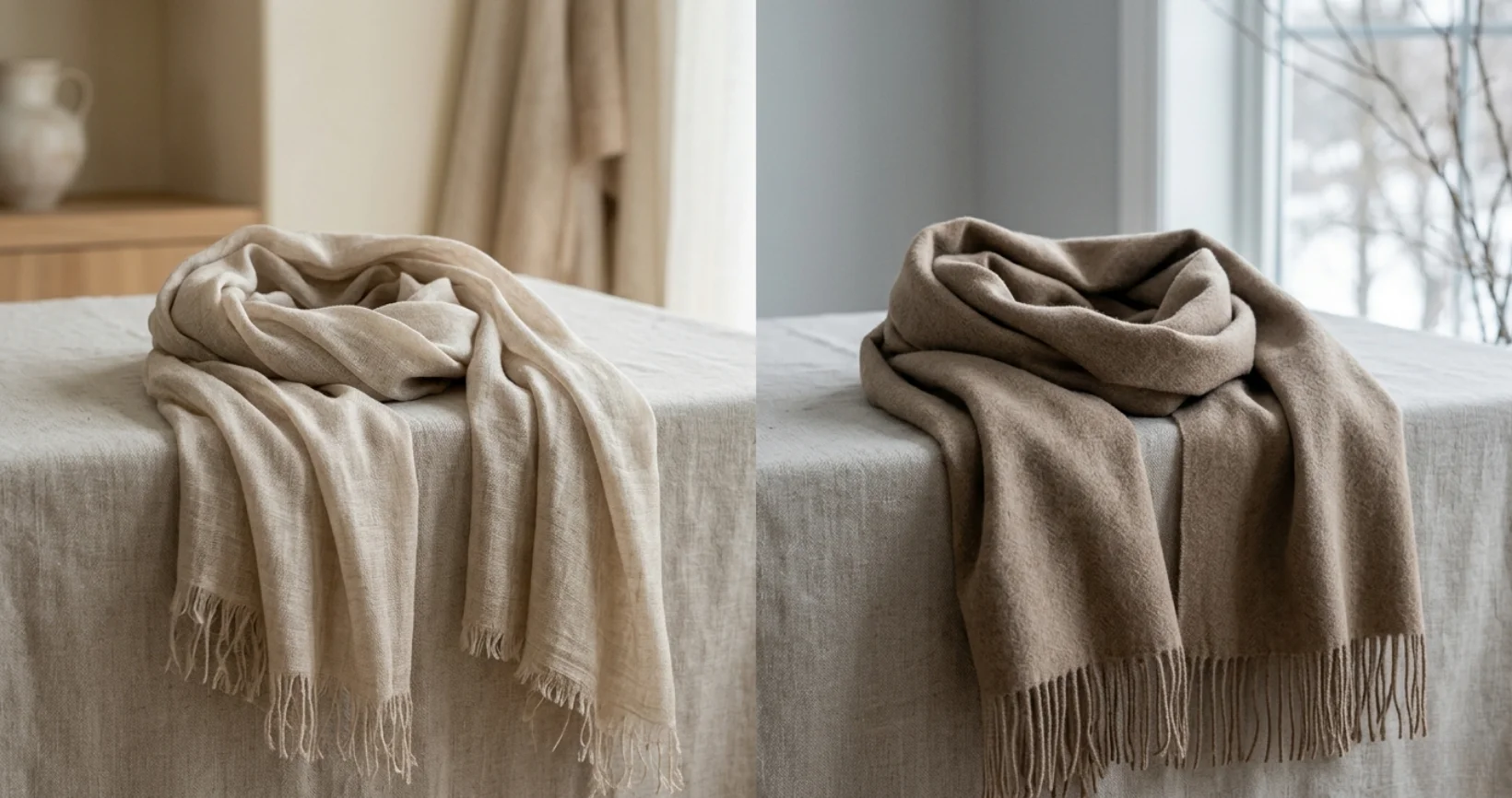
If you’ve ever stood in front of a luxury scarf display, or scrolled through a beautiful collection online, and wondered: “What’s the actual difference between cashmere scarves and pashmina?” you are far from alone. These two terms are often used interchangeably, sometimes incorrectly, and the confusion is completely understandable. So let’s clear it up once and for all, because if you’re investing in a luxury scarf, you deserve to know exactly what you’re buying.
What Is Cashmere?
Cashmere is a natural fiber harvested from cashmere goats, primarily found in the Gobi Desert region of Mongolia and China, as well as parts of Afghanistan, Iran, and India. The fiber comes from the soft undercoat of the goat, the ultra-fine, downy layer that keeps the animal warm during harsh winters.
What makes cashmere so special? It’s exceptionally soft, lightweight, and offers incredible warmth without bulk. A high-quality cashmere scarf feels like wearing a cloud, that’s not marketing hyperbole, it’s simply the nature of the fiber. It’s also incredibly durable when cared for properly, which is why a good cashmere piece can last decades.
What Is Pashmina?
Pashmina is a specific type of cashmere, but not all cashmere is pashmina. The word “pashmina” comes from the Persian word “pashm,” meaning soft gold. True pashmina refers to fiber from the Changthangi goat, a specific breed found at high altitudes in the Himalayan regions of Kashmir, Nepal, and Tibet.
Pashmina fibers are even finer than standard cashmere, typically measuring between 10 and 15 microns in diameter, compared to 15–19 microns for regular cashmere. This ultra-fine diameter gives genuine pashmina its extraordinary softness, featherlight weight, and the beautiful, fluid drape it’s known for.
Traditionally, pashmina is also hand-spun and hand-woven by artisan weavers in Kashmir, making each piece a work of art as much as a fashion accessory.
Cashmere vs Pashmina: Key Differences at a Glance
| Feature | Cashmere | Pashmina |
| Source | Cashmere goats (various regions) | Changthangi goat (Himalayas) |
| Fiber diameter | 15–19 microns | 10–15 microns |
| Weight | Lightweight | Ultra-lightweight |
| Softness | Very soft | Exceptionally soft |
| Drape | Excellent | Superior, fluid drape |
| Production | Machine or hand-processed | Traditionally hand-spun, hand-woven |
| Price | Luxury range | Premium luxury range |
How to Tell the Difference When Shopping
Unfortunately, the luxury scarf market has its share of misleading labeling. Here’s how to make sure you’re getting what you pay for:
· Check the fiber content label. Genuine cashmere should say “100% cashmere.” Pashmina blended with silk (a common and beautiful combination) should list both fibers and their percentages.
· Feel the weight. Pure pashmina scarves are remarkably light, almost weightless. If a scarf labeled “pashmina” feels heavy, it’s likely blended with lower-quality fibers.
· Look at the weave. Authentic pashmina is traditionally hand-woven, which means you may see very subtle irregularities; these are signs of genuine craftsmanship, not defects.
· Buy from reputable brands. The safest way to ensure authenticity is to buy from brands that are transparent about their sourcing and production.
Which Should You Buy?
Both cashmere and pashmina are exceptional choices; the right one depends on your priorities.
Choose cashmere if you want a durable, versatile luxury scarf that will serve you well across all seasons and occasions. Cashmere is slightly more robust, holds its shape well, and is available in a wider range of styles.
Choose pashmina if you’re looking for the ultimate in lightweight luxury, a scarf so fine and so soft it almost doesn’t feel like you’re wearing anything at all. Pashmina is also the more traditional, artisan choice, particularly if the handcrafted origin matters to you.
For those seeking beautiful, authentic cashmere scarves crafted with an eye for elegance, the cashmere collection at Maneesha Ruia offers a curated range that brings together quality fiber and sophisticated design.
And if you’re drawn to the featherlight luxury of genuine pashmina, the brand’s pure pashmina collection is a wonderful place to explore, each piece a testament to the timeless art of traditional weaving.
Caring for Your Luxury Scarf
All Maneesha Ruia scarves are dry clean only. Avoid steam ironing, and never iron directly on any embellishments, including lace, embroidery, beadwork, feathers, Swarovski crystals, or sequins. Fold carefully and store in a cool, dry place away from direct sunlight, preferably in the gift bag provided with your purchase.
Final Thoughts
Cashmere and pashmina are both extraordinary materials, and understanding the difference between them makes you a more informed, more confident luxury shopper. Whether you go for the robust versatility of cashmere or the featherlight refinement of pashmina, you’re investing in a piece that will outlast trends, outlast seasons, and become one of those accessories you reach for again and again.
Buy well, buy once, and wear it for a lifetime.