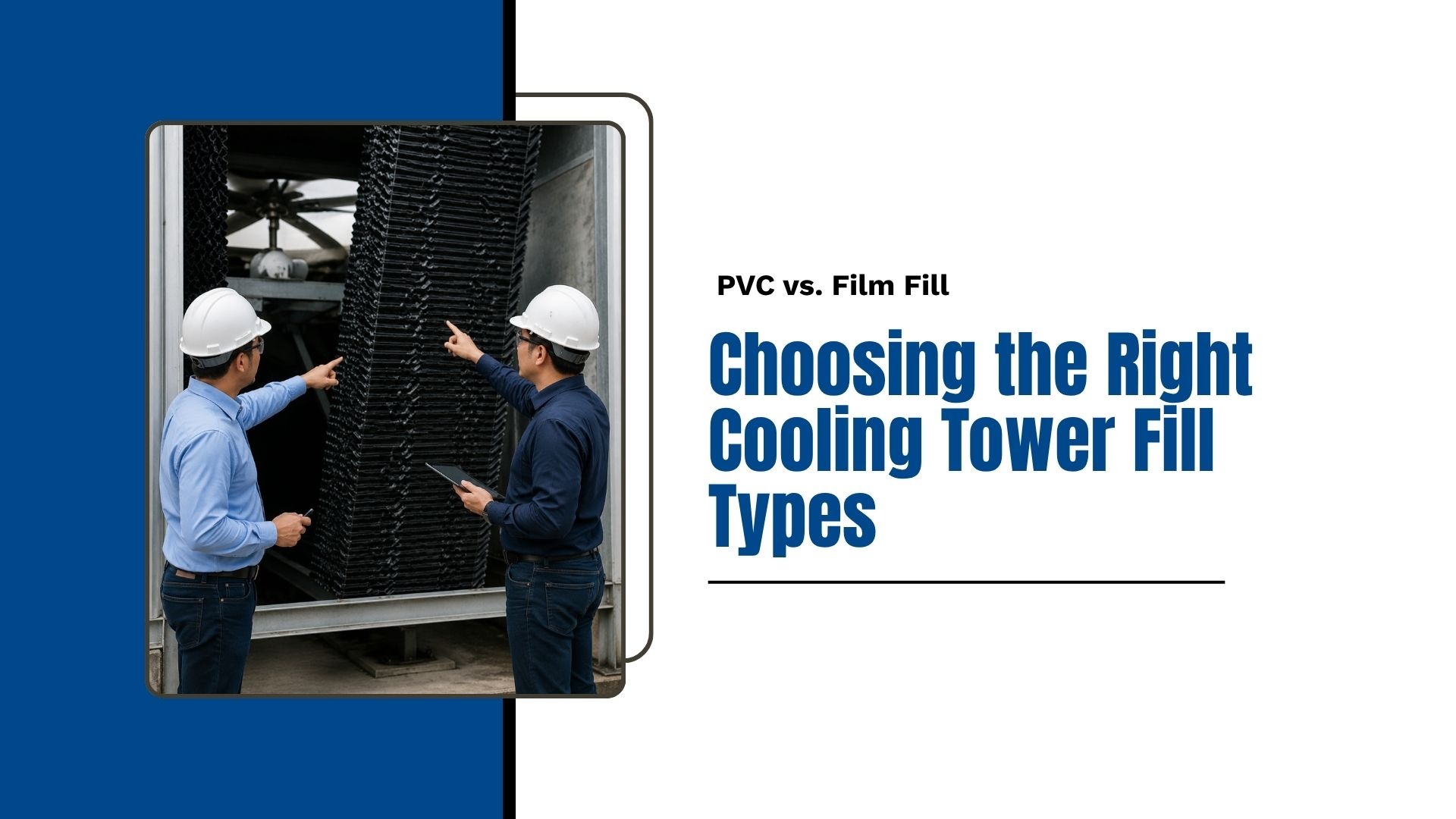
The right cooling tower fill depends on your water quality and performance goals. Among the main cooling tower fill types, PVC cooling tower fill delivers high thermal efficiency in clean water, while splash fill and low-fouling fill material handle dirty water far better.
The film fill vs splash fill decision comes down to a trade-off: film fill boosts heat transfer, but splash fill resists clogging. Match the cooling tower fill media to your actual operating conditions, not just upfront cost.
Table of Contents
- Introduction
- Understanding Cooling Tower Fill Types
- What Is Cooling Tower Fill?
- Common Cooling Tower Fill Types Used Today
- PVC Cooling Tower Fill Explained
- How PVC Fill Media Works
- Advantages of PVC Cooling Tower Fill
- Limitations to Consider
- Film Fill vs Splash Fill: Key Differences
- Heat Transfer Performance
- Fouling Resistance
- Maintenance Requirements
- Installation and Replacement Costs
- When Low-Fouling Fill Material Is the Better Choice
- Understanding Fouling Challenges
- Benefits of Low-Fouling Fill Material
- Industries That Commonly Benefit
- How to Choose the Right Cooling Tower Fill
- Evaluate Water Quality First
- Review Maintenance Resources
- Plan for Long-Term Reliability
- Expert Guidance Can Prevent Costly Mistakes
- Picking the Fill That Fits Your System
- Frequently Asked Questions
Understanding Cooling Tower Fill Types
What Is Cooling Tower Fill?
Cooling tower fill is the media inside the tower that spreads water into thin sheets or droplets. This spreading increases the contact area between water and air, which speeds up heat transfer.
More surface contact means faster cooling with less effort. The fill controls how efficiently your tower rejects heat, and that efficiency shapes your operating costs.
A few specific effects make fill selection critical:
- Heat transfer rate: Better water-air contact lowers the approach temperature and improves cooling capacity.
- Energy demand: Efficient fill reduces the load on fans and pumps, which cuts power use.
- Operating cost: Well-matched fill lowers both energy spending and unplanned maintenance over the equipment’s life.
Common Cooling Tower Fill Types Used Today
No single fill suits every system. Each design balances efficiency, fouling resistance, and cost in a different way, so knowing the options helps you match fill to your water.
The most common cooling tower fill media include:
- Film fill: Thin sheets of plastic that create large water surfaces for maximum heat transfer in clean water.
- Splash fill: Bars or slats that break water into droplets, ideal for dirty or high-solids water.
- PVC-based fill media: A widely used, cost-effective film fill made from durable PVC sheets.
- Low-fouling fill material: Specialized film fill with wider flutes or coatings that resist clogging.
- Application fit: Power plants and HVAC systems often use film fill, while heavy industrial sites lean toward splash or low-fouling options.
PVC Cooling Tower Fill Explained
How PVC Fill Media Works
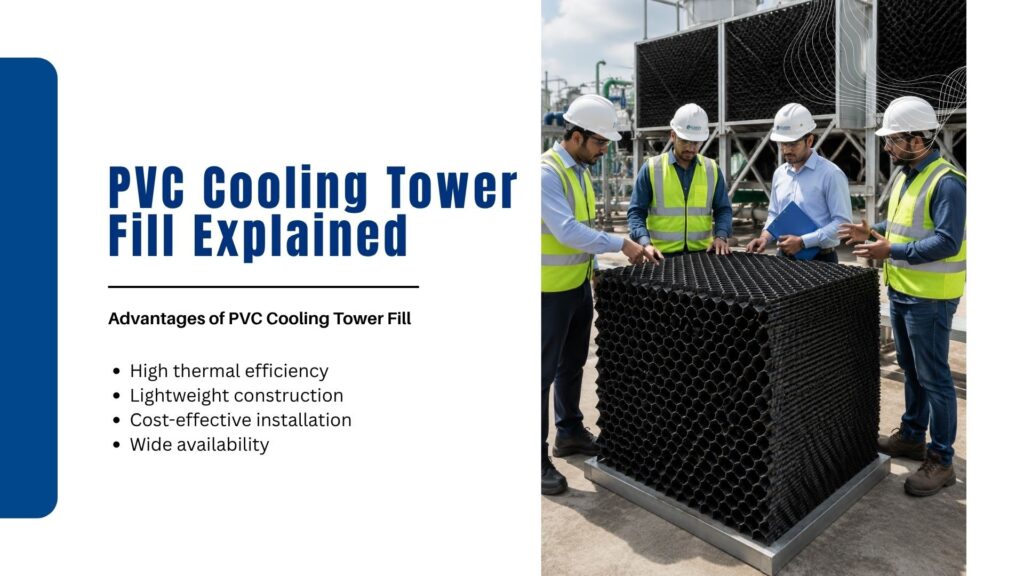
PVC cooling tower fill uses thin, corrugated plastic sheets stacked close together. Water flows down these sheets in a thin film, exposing a large surface to the rising air.
The tight spacing and engineered flute pattern force maximum water-air contact. This design makes PVC one of the most efficient cooling tower fill media for clean-water systems.
Advantages of PVC Cooling Tower Fill
PVC stays popular for good reason. It delivers strong performance at a low price, which appeals to operators who run clean cooling water. Before listing the benefits, it helps to know why PVC fits most standard HVAC and clean-process towers so well.
- High thermal efficiency: The film design packs more cooling into a smaller footprint than splash fill.
- Lightweight construction: PVC sheets are easy to handle, which speeds up installation and reduces structural load.
- Cost-effective installation: Lower material and labor costs make PVC a budget-friendly upgrade.
- Wide availability: PVC fill is a standard replacement part, so sourcing and restocking are simple.
Limitations to Consider
PVC’s strengths depend on clean water. The same tight spacing that boosts efficiency also traps debris, so dirty water quickly becomes a problem. Knowing these limits prevents a costly mismatch.
- Fouling sensitivity: Narrow channels clog when water carries suspended solids or biological growth.
- Reduced performance: Blocked passages cut airflow and water spread, which lowers cooling capacity.
- Poor fit for high-solids water: Systems using reclaimed or hard water often foul PVC film fill fast.
Film Fill vs Splash Fill: Key Differences
The film fill vs splash fill choice is one of the most important decisions in tower design. Each type wins in different conditions, so the right pick depends on water quality and maintenance capacity.
Heat Transfer Performance
Film fill creates large, continuous water surfaces, which makes it more efficient at transferring heat. Splash fill breaks water into droplets, which works but offers less contact area. For clean water and tight approach temperatures, film fill usually wins. For dirty water, splash fill keeps running where film fill would clog.
Fouling Resistance
Splash fill handles debris and suspended solids much better because its open structure lets particles pass through. Film fill, with its narrow channels, traps that same debris and fouls quickly. Operators with poor water quality often accept lower efficiency to gain reliability.
Maintenance Requirements
Film fill needs more frequent cleaning in dirty conditions, which raises labor costs and downtime. Splash fill demands less cleaning but may need periodic checks for displaced bars.
Installation and Replacement Costs
Film fill costs less upfront and installs faster thanks to its light, modular design. Splash fill carries higher labor and structural costs but can last longer in harsh water. Lifecycle cost, not sticker price, should guide the final call.
Choosing between these options is easier with a side-by-side view. The table below compares the main cooling tower fill types across the factors that affect performance, maintenance, and budget, so you can match fill to your real conditions.
| Factor | PVC Film Fill | Standard Film Fill | Splash Fill | Low-Fouling Fill |
| Thermal efficiency | Very high | Very high | Moderate | High |
| Fouling resistance | Low | Low to moderate | Very high | High |
| Best water quality | Clean | Clean | Dirty / high-solids | Variable / reclaimed |
| Maintenance need | High in dirty water | High in dirty water | Low to moderate | Low |
| Upfront cost | Low | Low to moderate | Moderate to high | Higher |
When Low-Fouling Fill Material Is the Better Choice
Understanding Fouling Challenges
Fouling happens when material builds up inside the fill and blocks water or air flow. In industrial systems, fouling is one of the top causes of lost cooling capacity.
Several sources drive fouling, and identifying them helps you choose fill that can cope. The main culprits include:
- Scale: Hard minerals deposit on fill surfaces and narrow water channels.
- Biological growth: Algae and bacteria form slime layers that block airflow.
- Suspended solids: Dirt, sand, and process debris collect in tight film fill channels.
Benefits of Low-Fouling Fill Material
Low-fouling fill material uses wider spacing and smoother surfaces to resist buildup. It trades a small amount of peak efficiency for far better reliability in tough water. This trade-off pays off when cleaning is expensive or hard to schedule.
- Better reliability: Wider flutes keep water and air moving even with suspended solids present.
- Reduced cleaning: Less buildup means fewer shutdowns and lower labor costs.
- Longer service life: Resisting fouling protects performance and delays replacement.
Industries That Commonly Benefit
Some operations face water conditions that punish standard film fill. For these sites, low-fouling fill material often prevents repeated failures and protects production uptime.
- Manufacturing facilities: Process contaminants and high heat loads strain conventional fill.
- Food processing plants: Organic matter and strict hygiene rules raise fouling risk.
- Chemical processing operations: Aggressive water chemistry damages tight-channel film fill.
- Reclaimed-water users: Lower-quality water carries solids that clog standard cooling tower fill media.
How to Choose the Right Cooling Tower Fill
Evaluate Water Quality First
Water quality drives fill selection more than any other factor. Before comparing different cooling tower fill types, it’s crucial to test your water. The wrong fill in dirty water will fail, no matter how efficient it looks on paper.
- Solids content: High suspended solids point toward splash or low-fouling fill.
- Water chemistry: Hardness and biological load predict how fast film fill will clog.
- Source type: Reclaimed or makeup water with debris rules out tight-channel PVC film fill.
Review Maintenance Resources
If a fill needs constant cleaning, it won’t work for sites with limited maintenance crews. When considering different cooling tower fill types, be realistic about the labor and downtime your site can handle before you commit.
- Available labor: Limited maintenance staff favors low-maintenance splash or low-fouling fill.
- Total cost of ownership: Add cleaning, downtime, and replacement to the purchase price for a true comparison.
Plan for Long-Term Reliability
The best cooling tower fill types balance efficiency with durability. A slightly less efficient fill that runs for years often beats a high-efficiency fill that clogs every season.
Expert Guidance Can Prevent Costly Mistakes
Cooling tower fill selection should rest on operating data, not price tags. Water test results, heat load figures, and maintenance history reveal which fill will actually perform.
Many failed fill replacements trace back to one mistake: buying on cost alone. A cheap PVC film fill in dirty water can foul within months, erasing every dollar saved.
Experienced cooling tower specialists can analyze your system data to recommend the best cooling tower fill types for your real-world conditions. Before you upgrade or replace your fill, consult with experts and review maintenance resources to confirm your choice is the right one.
Picking the Fill That Fits Your System
The best choice among cooling tower fill types depends on your water, your maintenance capacity, and your performance targets. PVC cooling tower fill and standard film fill deliver top efficiency in clean water, while the film fill vs splash fill trade-off rewards splash fill in dirty conditions. When fouling threatens reliability, low-fouling fill material protects uptime and extends service life.
Evaluate your system conditions before any fill replacement. Test your water, review your operating data, and weigh lifecycle cost so your next set of cooling tower fill media performs for years, not months.
Frequently Asked Questions
What are the main cooling tower fill types?
The main cooling tower fill types are film fill, splash fill, PVC-based film fill, and low-fouling fill material. Film fill offers high efficiency, while splash and low-fouling options handle dirty water better and resist clogging.
Is PVC cooling tower fill better than splash fill?
PVC cooling tower fill is more efficient and cheaper in clean water. Splash fill is better for dirty or high-solids water because its open structure resists fouling and needs less frequent cleaning.
What is the difference in film fill vs splash fill performance?
In the film fill vs splash fill comparison, film fill transfers heat more efficiently using thin water sheets. Splash fill offers lower efficiency but far better fouling resistance, making it ideal for poor water quality.
When should I use low-fouling fill material?
Use low-fouling fill material when water carries scale, biological growth, or suspended solids. It suits manufacturing, food processing, chemical plants, and any site using reclaimed or lower-quality cooling water.
How do I choose the right cooling tower fill media?
Test water quality first, then match the cooling tower fill media to your performance goals and maintenance resources. Clean water suits film fill, while dirty water favors splash or low-fouling fill.
Does cooling tower fill affect energy costs?
Yes. Efficient fill improves heat transfer, which lowers the load on fans and pumps. Poorly matched or fouled fill raises energy use and increases long-term operating costs.