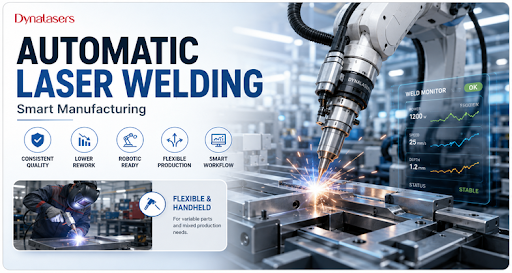
Factories are not moving toward automation just because it sounds modern. Most buyers care about very practical results: faster welding, steadier quality, less rework, fewer finishing steps, and a process that is easier to control.
That is why more manufacturers are paying attention to automatic laser welding machine manufacturers. Laser welding can support automation, but it can also work in handheld or semi-flexible production. For many factories, the real question is not “manual or automatic?” It is “which level of welding flexibility fits our parts, volume, and workflow?”
Why Laser Welding Is Gaining Ground in Smart Manufacturing
Laser welding is becoming more common in modern manufacturing because it can make the welding process more controlled. When the parameters, materials, and joint design are suitable, it can produce a clean seam with less heat input and less post-weld finishing.
For production teams, the advantages are easy to understand:
- Faster welding on suitable parts
- Cleaner weld appearance
- More stable weld quality
- Less grinding and polishing
- Lower distortion on thin materials
- Easier use with fixtures or robotic arms
- Better repeatability for batch production
The laser welding machine market has also changed. Buyers are no longer limited to large fixed systems. They can choose handheld laser welders, semi-automatic stations, fixture-based systems, robotic welding cells, or customized integration solutions.
This gives factories a more practical upgrade path. A workshop may start with handheld laser welding to solve daily fabrication and repair tasks. Later, if a product becomes stable and repeatable, the same process knowledge can support fixture-based welding or robotic integration.
Labor pressure is another reason laser welding is gaining attention. Skilled welders are not always easy to find. Laser welding still requires training, safety control, and process discipline, but in the right application, it can help trained operators achieve cleaner and more consistent results.
What Automatic Laser Welding Machine Manufacturers Should Provide
A good automatic welding system is not just a robot arm and a laser source. It needs a stable welding process behind it.
When comparing automatic laser welding machine suppliers, buyers should look at whether the supplier understands the full application. The machine itself matters, but so do fixtures, part positioning, weld path control, safety planning, and technical support.
| Requirement | Why It Matters |
| Repeatable parameters | Keeps weld quality stable across batches |
| Stable laser source | Supports consistent welding output |
| Fixture compatibility | Holds parts in the correct position |
| Safety guidance | Protects operators and nearby work areas |
| Application testing | Confirms the process before investment |
| Technical support | Helps solve setup and production issues |
For an automated laser welding equipment factory, fixture design is often as important as the laser system. Automation works well when the workpiece position is stable, the joint path is repeatable, and material conditions are controlled.
If the joint gap changes too much, or the fixture cannot hold the part accurately, automation may not improve quality. It may simply repeat the same welding defect faster.
Before choosing an automatic setup, buyers should ask:
- Is this part produced often enough to justify automation?
- Is the weld path stable and repeatable?
- Is the material thickness consistent?
- Does the process need wire feeding?
- What weld appearance is required?
- Can the supplier test real sample parts?
- Can the system work with fixtures or robotic arms later?
These questions help buyers avoid choosing automation too early or buying a system that does not match the real production task.
Where Handheld Laser Welding Still Fits
Even as automation grows, handheld laser welding still has a strong place in manufacturing.
Many factories do not produce only one repeated part. They handle repair work, urgent changes, prototypes, small-batch orders, field maintenance, and large workpieces that are difficult to fixture. In these situations, a fully automatic welding line can be too rigid or too costly.
Handheld laser welding is useful when:
- Workpieces change often
- Part volume is not stable
- Fixtures are not practical
- Repair work is common
- Parts are large or irregular
- Workshop space is limited
- Operators need to move between work areas
This is why handheld systems can still fit into smart manufacturing. They give factories flexibility before full automation makes sense.
A practical approach is to start with handheld welding, confirm the material response, train operators, and understand the real welding requirements. If the part later becomes repeatable, the same process can move toward semi-automatic fixtures or robotic laser welding solutions.
Dynalasers equipment can also be integrated with robotic arms when a project requires automation. This gives buyers room to use handheld systems for flexible work today while keeping the option to move toward automation when production volume and part stability justify it.
Dynalasers Welding Solutions for Future-Ready Workshops
Dynalasers offers laser welding systems for workshops, repair teams, OEM users, and industrial buyers who need practical equipment for real production conditions.
Depending on the series, Dynalasers systems can support welding, cutting, cleaning, spot welding, and rust removal. This is useful for factories that do not want separate machines for every related task.
For buyers looking at smart manufacturing welding equipment, Dynalasers provides a flexible path:
- Handheld welding for mixed production
- Multi-function use for workshop tasks
- Parameter guidance for faster setup
- Spare parts support
- Remote assistance
- 2-year warranty
- Robotic arm integration potential when automation is needed
This makes Dynalasers suitable for factories that need flexible welding now, while still keeping space for future automation.
Dynalasers Product Options for Different Welding Needs
M Series for Flexible Smart Workshop Tasks
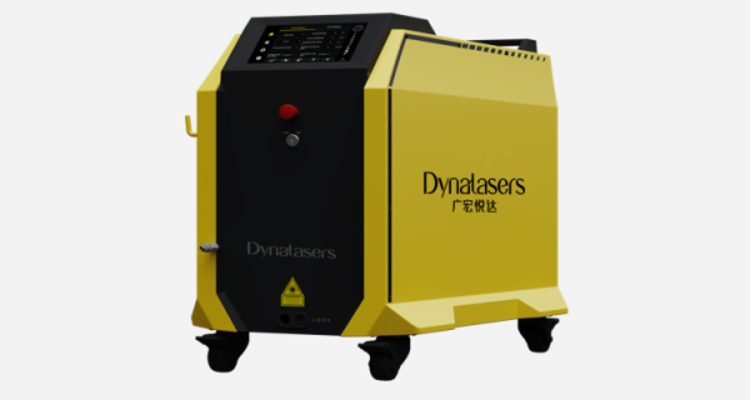
The Dynalasers M Series is designed for workshops that need flexibility. Models include M30, M50, and M70, with power from 800W to 1800W.
It supports continuous, pulse, spot, and turbo modes. Depending on configuration, it can support welding, cutting, and cleaning.
Best for
- Mixed fabrication tasks
- Medium-thickness sheet metal
- Repair and maintenance work
- Workshops needing welding and cleaning in one platform
- Buyers who want flexible handheld welding before automation
The M Series is a practical choice for workshops that handle changing jobs. It helps users move between welding, repair, and surface preparation tasks without depending on several separate systems.
D Series for Stronger Industrial Production Needs
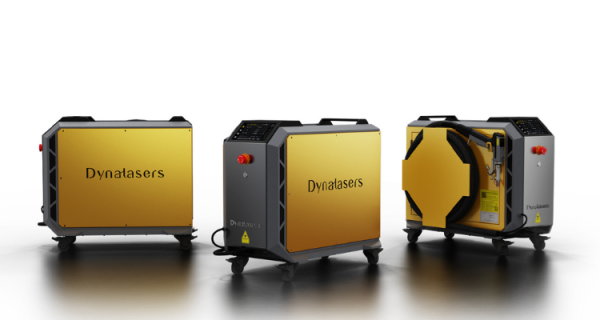
The Dynalasers D Series is built for stronger industrial welding. Models include D50P and D70P, with 1200W and 1800W power options.
It supports 5-in-1 capability: welding, cutting, cleaning, spot welding, and rust removal.
Best for
- Industrial repair
- Structural components
- Batch production
- Thicker stainless steel and carbon steel
- Buyers needing stronger multi-function capability
The D Series is better suited to factories that need more power and broader process coverage. It can support demanding industrial work while keeping more flexibility than a large fixed workstation.
S Series for Portable Manufacturing and Repair
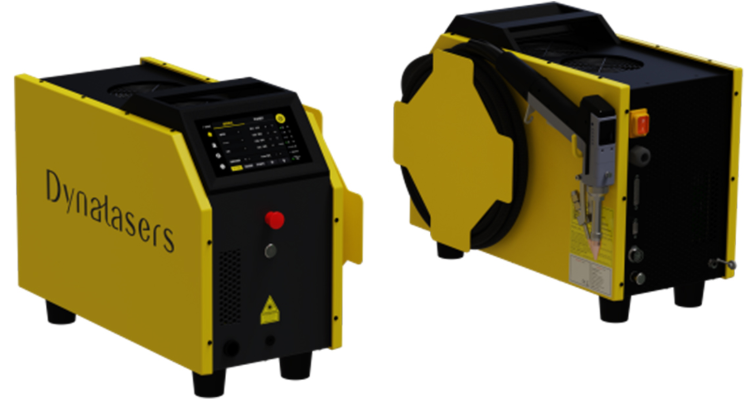
The Dynalasers S Series focuses on portability. It is suitable for field repair, mobile service, small workshops, custom parts, and small-batch manufacturing.
The S30 weighs less than 21 kg. The S40 weighs less than 22 kg. The welding gun weighs less than 0.48 kg.
Best for
- Mobile repair
- Field maintenance
- Small workshops
- Light production tasks
- Limited-space work areas
The S Series is not designed for the heaviest welding jobs. Its value is mobility, easy handling, and practical use where flexibility matters more than maximum power.
Handheld and Automated Welding Can Work Together
Smart manufacturing does not mean every welding job must become fully automatic. In many factories, the best setup is a mix of flexible and automated processes.
| Production Need | Suitable Approach |
| High-volume repeated parts | Robotic or automatic welding |
| Mixed fabrication work | Handheld or semi-flexible welding |
| Repair and maintenance | Portable handheld welding |
| Fixture-ready parts | Semi-automatic welding station |
| Long-term automation planning | Handheld first, robotic integration later |
For industrial automation welding systems, automation makes sense when the part is stable, the volume is high, and the fixture can hold the joint accurately. For repair work, changing parts, and small-batch production, handheld welding may be more practical.
The best system is not always the most automated one. It is the system that fits the production reality.
FAQs
Are automatic laser welding machines suitable for all factories?
No. Automatic laser welding works best for repeatable parts, stable fixtures, and higher production volume. Factories with mixed parts, repair work, or small batches may benefit more from handheld or semi-flexible systems.
How is laser welding used in smart manufacturing?
Laser welding can improve weld consistency, reduce finishing work, speed up suitable welding tasks, and support automation. It can be used in handheld systems, fixture-based stations, robotic cells, or flexible workshop setups.
Why do buyers still use handheld laser welders?
Buyers still use handheld laser welders because they are flexible. They are useful for changing parts, repair work, large workpieces, field maintenance, and small-batch production where full automation is not practical.
Which Dynalasers series fits flexible production?
The M Series is a strong fit for flexible workshop tasks. The D Series is better for stronger industrial welding and broader process coverage. The S Series is suitable for portable work, repair, and light production.
Conclusion
Smart manufacturing is not only about replacing manual work with automation. It is about choosing the right welding method for the part, volume, fixture, and production goal.
Automatic laser welding machine manufacturers help factories improve speed, consistency, and repeatability when automation is the right fit. At the same time, handheld systems remain important for flexible production, repair, and smaller batches.
Dynalasers supports both directions. Its M, D, and S Series help buyers handle flexible welding tasks today, while selected systems can also be integrated with robotic arms when automation becomes the right next step.