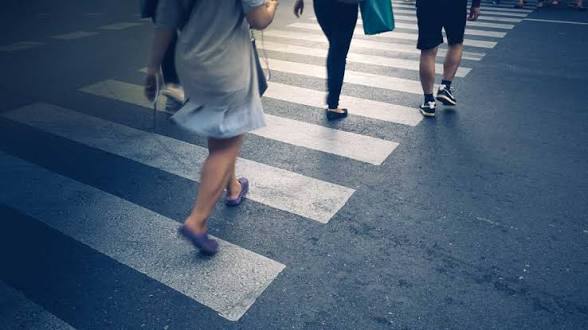
Thousand Oaks is widely celebrated for its beautifully designed master-planned neighborhoods, scenic open spaces, and extensive network of walking paths. Residents frequently take advantage of our local climate by walking through commercial centers, running along residential corridors, or strolling through quiet neighborhoods. However, as primary city arteries like Thousand Oaks Boulevard, Lynn Road, Moorpark Road, and Westlake Boulevard grow increasingly congested with daily commuters, navigating intersections on foot demands a much higher level of vigilance.
Even with our city’s proactive, ongoing infrastructure safety measures—including the active Sidewalk and Concrete Replacement Program, high-visibility continental crosswalk markings, and rapid-flashing pedestrian warning beacons—intersections and crosswalks remain a frequent setting for severe traffic conflicts. If you or someone you love regularly navigates the Conejo Valley on foot, safely executing a crossing requires an active, defensive mindset. We at Bojat Law Group see firsthand how a single moment of motorist distraction can disrupt a family’s life forever. A qualified Thousand Oaks pedestrian accident lawyer from our team emphasizes that understanding the specific traffic mechanics of our local streets and staying proactive remains your absolute best defense against negligent drivers.
The Safe Crossing Sequence
When you approach a busy intersection anywhere in the Conejo Valley, do not rely solely on paint on the asphalt or light signals to protect you. Follow this deliberate, step-by-step physical routine to ensure approaching motorists see you and have ample time and distance to come to a complete stop before you enter their path.
1.Press the pedestrian activation button:Activates extended timing parameters.
Many traffic signals across Thousand Oaks are optimized primarily for vehicular flow. Pressing the crosswalk button signals the traffic control system to include a dedicated pedestrian walk phase and extend the green light window, providing you with the necessary time to safely clear multiple lanes of traffic.
2.Look left, right, and left again:Verify the lanes before stepping off the curb.
Never step directly into the street the moment a signal changes. Always scan the lanes closest to you first (left), look across the median to evaluate opposing traffic flow (right), and then double-check the immediate oncoming traffic lane (left) to catch any drivers attempting to rush through a changing light.
3.Make direct eye contact with the driver:Never assume a motorist actually sees you.
Even if you have a clear “Walk” indicator or a flashing yellow crosswalk beacon is active, do not step into a lane until you look directly at the driver and verify they are slowing down, or you see the vehicle’s bumper physically dip as it comes to a complete, identifiable stop.
4.Continuously scan for turning vehicles:Watch carefully for right-on-red motorists.
Keep your eyes scanning the entire intersection while you are walking across the street. Drivers making a right-hand turn on a red light or executing a permissive left turn through an intersection are almost exclusively focused on finding a gap in opposing vehicular traffic, meaning they frequently fail to look for walkers.
Critical Safety Reminders for Pedestrians
To maximize your safety and reduce the risk of a severe impact, incorporate these practical, defensive habits into your daily walking or running routines:
- Eliminate Digital and Audio Distractions: Keep your smartphone inside your pocket or bag and remove headphones or earbuds when stepping off the curb. Non-verbal auditory cues—such as the sound of an accelerating engine, a downshifting transmission, or tires skidding on asphalt—frequently provide the split-second warning needed to avoid an oncoming vehicle.
- Increase Nighttime and Low-Light Visibility: Pedestrian accidents spike drastically between the hours of dusk and dawn when visibility drops across local roads. If you are walking a pet, exercising, or returning from a local restaurant at night, wear bright or retroreflective clothing, and consider carrying a small flashlight or utilizing your phone’s light to make your presence known to drivers from a safe distance.
- Walk Facing Oncoming Traffic When Sidewalks Terminate: While the city works continuously to expand accessible concrete paths, certain semi-rural or residential pockets of Thousand Oaks feature road segments where sidewalks end abruptly. If you must walk along the shoulder of a roadway, always walk on the side facing oncoming traffic so you can see vehicles approaching and take evasive action if a driver drifts.
Navigating California’s Pedestrian Laws and Shared Fault
Under California Vehicle Code (CVC) Section 21950, motorists are legally required to yield the right-of-way to a pedestrian crossing the roadway within any marked crosswalk or within any unmarked crosswalk at an intersection. This means that even if there are no white lines painted on the road, the connection points of an intersection create an inherent crosswalk where drivers must slow down and exercise care.
However, this legal shield does not absolve pedestrians of all responsibility. The same vehicle code states that a walker cannot suddenly leave a curb and walk or run into the path of an oncoming vehicle that is close enough to constitute an immediate hazard.
If a collision occurs, insurance companies will work tirelessly to shift the blame onto the injured walker to avoid a substantial payout. Because California follows a pure comparative fault framework, any percentage of liability assigned to you will directly reduce your final financial recovery.
Understanding Comparative Fault Impact
- Scenario A: A driver is texting and hits a pedestrian who is crossing legally inside a painted crosswalk. The driver is found 100% at fault, and the victim recovers 100% of their total damages.
- Scenario B: A driver is speeding, but a pedestrian steps out into a dark section of the road mid-block without a crosswalk. A jury may find the driver 70% at fault and the pedestrian 30% at fault. If total damages equal $100,000, the pedestrian’s final financial recovery is reduced by 30%, resulting in a final payout of $70,000.
What Types of Financial Damages Can You Recover?
When a multi-ton vehicle strikes a human being, the physical injuries are regularly catastrophic, involving extensive medical interventions and severe long-term lifestyle disruptions. A successful personal injury claim handles both types of legal losses:
| Loss Classification | Real-World Examples Included in Your Claim |
| Economic Damages | Emergency ambulance transport invoices, immediate surgical costs, hospital stay bills, diagnostic imaging (MRIs/CT scans), ongoing physical therapy, prescription medication costs, and all verifiable lost income or diminished future earning capacity due to physical limitations. |
| Non-Economic Damages | Physical pain and suffering, emotional distress, severe driving or walking anxiety, diagnosed post-traumatic stress, sleep disturbances, permanent physical disfigurement, and the loss of enjoyment of daily hobbies or family activities. |
Let Bojat Law Group Stand Up to the Insurance Companies
If you or a loved one has been struck by a motor vehicle while walking, you should never have to carry the compounding stress of medical bills, insurance paperwork, and legal deadlines alone. Insurance adjusters will routinely use aggressive tactics to downplay your soft-tissue injuries, concussions, or fractures, attempting to force a quick, lowball settlement before you understand your long-term medical prognosis.
At Bojat Law Group, our founding attorney, Sasha Bojat, approaches every pedestrian injury matter with an aggressive, trial-ready framework and a commitment to true accountability. We move rapidly to protect your interests, quickly securing time-sensitive evidence such as neighborhood security camera footage, nearby commercial dashcam video, eyewitness statements, and police traffic reports. We manage all communication, paperwork, and intense negotiations with the insurance carriers so you can dedicate your energy entirely to physical rehabilitation and healing. We operate strictly on a contingency-fee model—meaning you owe us absolutely zero out-of-pocket costs upfront, and we only collect a legal fee if we successfully win financial compensation on your behalf.
Contact a Trusted Thousand Oaks Pedestrian Accident Lawyer
Do not let an aggressive corporate insurance carrier dictate the value of your recovery or wrongfully blame you for an accident caused by a driver’s negligence or speed. Let our dedicated legal advocates build an ironclad foundation for your claim and fight for the comprehensive compensation your family deserves.
Contact Bojat Law Group today at (818) 877-4878 to schedule your completely free, confidential case evaluation with an elite Thousand Oaks pedestrian accident lawyer.