Some people may have heard the term ‘proxies’ but aren’t sure what they mean or why businesses use them. This guide breaks everything down simply—no technical jargon, no confusion.
People may come across the term “proxies” but are not aware of what they are and why they are applicable in businesses. This article simplifies all of this: no technical terms, no misunderstandings.
What does a residential proxy really mean?
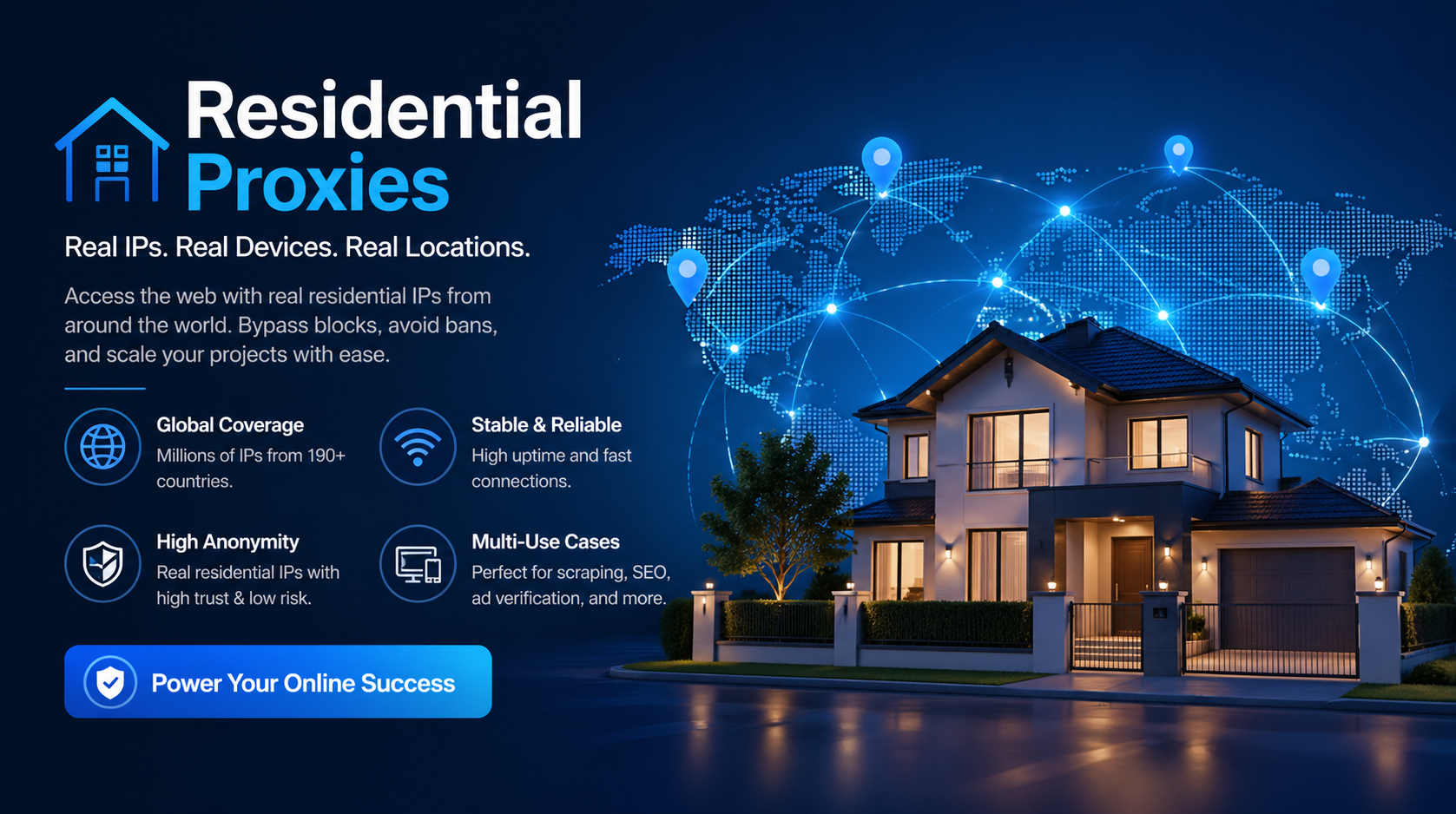
Consider residential proxies as the intermediaries between our gadgets and the internet. Rather than the websites displaying our actual IP address, they instead display a different one, namely, the address of a real home internet connection somewhere in the United States.
This matters because websites treat residential IP addresses as genuine users. They don’t flag, throttle, or block them the way they block suspicious data centre connections. These proxies make our internet requests look completely normal.
How Residential Proxies Work
The process is simple and happens in milliseconds:
Step-by-Step Flow
- You send a request (for example, opening a website)
- The request is routed through a residential IP address
- The website sees a real home user instead of you
- The response is sent back through the same route
- You receive the content without restrictions
When done correctly, websites cannot tell the difference.
Why Beginners Need Residential Proxies
When the majority of readers consider proxies, they believe that they are intended to be used by large corporations and tech professionals. That’s not true. Beginners use residential proxies for:
| Use Case | What It Solves |
| Price comparison shopping | Access region-specific deals |
| Streaming content | Bypass geographic restrictions |
| Social media management | Manage multiple accounts safely |
| Market research | Collect accurate local data |
| Ad verification | Check how ads appear in different locations |
| Travel booking | Find location-specific pricing |
None of these requires technical expertise—just the right provider.
Residential vs Datacenter Proxies: Simple Comparison
| Feature | Residential Proxies | Datacenter Proxies |
| IP source | Real home addresses | Server farms |
| Detection risk | Very low | High |
| Speed | Moderate (0.5–1s) | Fast (0.1–0.3s) |
| Cost | $2–5/GB | $0.50–1/GB |
| Best for | Avoiding blocks | Speed-focused tasks |
| Beginner-friendly | Yes | Requires more setup |
For beginners, residential proxies win every time. Lower detection risk means fewer headaches learning the ropes.
Why Evomi Works Well for Beginners
Choosing your first proxy provider can feel overwhelming. A Evomi beginner-friendly setup removes that complexity and makes getting started easy.
Key Benefits
- Simple dashboard — No technical background required
- 9.5 million US residential IPs—a massive pool means reliable connections
- Flexible sessions—sticky or rotating depending on your task
- City-level targeting — Point to specific US locations easily
- Open pricing – No secret charges or incomprehensible billing systems.
Being a beginner, the simple nature of the Evomi setup would take less time to set up and more time to do.
Common Beginner Mistakes to Avoid
- Purchasing without trial—Always try before you buy. Every quality provider offers trials.
- Choosing datacenter proxies to save money—higher block rates cost more time than money saved.
- Ignoring session types — Use sticky sessions for account logins. Use rotating sessions for research.
- Overlooking pool size — Small pools get congested. Start with providers offering 5M+ IPs.
FAQs:
Q: Are residential proxies legal?
A: Yes. They are legal to be used with proper purposes to conduct research, track prices of products or services, and avoid geographical boundaries. Ensure that the proxies are permissible in the terms of service of your target site.
Q: Do we need technical knowledge to use these proxies?
A: Not using beginner-friendly providers such as Evomi. The majority provide easy browser extensions or dashboard setup.
Q: What is the spending of beginners?
A: Start small. Most of the starting use cases fall within a $1020 trial, and you can see how it is performing in the real world before committing.
Q: Are rotating and sticky proxies differentiable?
A: Automatic changing of IPs with each request (good when researching). Sticky maintains the same IP over prolonged sessions (good for managing an account).
Q: What do the signs of a proxy being in operation look like?
A: To check whether you are properly connected to the proxy, you can visit whatismyip.com through our proxy connection, and as long as it displays a different location, then you are really connected to the proxy.
Getting Started Today
When we know the fundamentals, residential proxies are not difficult. Select an easy-to-use provider, make a small trial, and test it on our specific use case. It takes us less time to learn than we imagine
futuresbytes.co.uk