A video editor may know exactly how a scene should feel but have no idea which chord progression would create that emotion. A marketer might want music that sounds energetic without becoming childish, while a teacher may need a simple educational song despite never having arranged a melody. These people have genuine music needs even though music production is not their profession.
Traditionally, solving those needs meant searching stock libraries, hiring a composer, or learning enough production software to create something independently. Those options still have value, but they can be inefficient when the main task is simply communicating a creative direction and obtaining usable music. An AI Music Agent offers another approach by letting creators describe the desired result in normal language and turn that brief into musical material, making clear creative direction more important than advanced technical vocabulary.
Start With Purpose, Not Music Theory
People often assume that a good music brief needs technical terminology such as exact keys, chord progressions, or production techniques. For many content projects, that level of detail is unnecessary because the intended use already provides valuable direction.
A creator can begin by explaining whether the music will sit beneath a voiceover, introduce a podcast, support a product reveal, accompany a travel montage, or help teach a classroom concept. Each purpose immediately establishes practical boundaries around what the track needs to do.
Background music beneath narration usually needs enough space for speech, while a short opening theme has to establish its identity quickly. A reflective visual sequence may allow a slower build, whereas a product demonstration often needs a more consistent rhythm that supports the pace of editing.
Describe Emotion More Precisely
Simple words such as “happy” or “sad” are usually too broad to define a useful musical direction. A children’s birthday song, relaxed acoustic travel video, and bright electronic advertisement can all be described as happy while requiring completely different music.
Creators can improve the brief by combining emotional ideas and adding boundaries. “Optimistic but restrained,” “warm and nostalgic,” “confident without sounding aggressive,” or “playful but not childish” gives much more useful information than a single mood label.
Negative instructions can be just as valuable. A creator may want tension without horror, a modern sound without corporate advertising energy, or a cinematic atmosphere without dramatic orchestral build-ups. These contrasts communicate the desired result even when the person writing the brief does not know the technical reason behind the sound.
Add Musical Clues You Already Understand
After defining purpose and emotion, creators can add a few concrete musical details using knowledge they already have. Advanced production vocabulary is unnecessary if they can recognize whether they prefer piano, acoustic guitar, strings, synths, electronic percussion, or vocals.
Speed can be handled in the same way. Someone who does not understand BPM can still describe the track as slow, moderate, or fast and explain whether the energy should remain stable or gradually build.
A brief for a travel documentary, for example, might request hopeful and reflective background music with moderate energy, acoustic guitar, light percussion, and no dramatic orchestral climax. That gives the music system far more useful direction than simply requesting “travel music” without requiring the creator to understand composition theory.
Treat Each Result as Feedback
The first generated track does not need to be final because its most useful role may be showing the creator what the original brief failed to explain. If the music feels too energetic, the next instruction can reduce the intensity; if the melody competes with narration, the creator can request a more restrained arrangement.
The same process applies when the sound feels too commercial, too dramatic, or too playful. Instead of abandoning the direction completely, the creator can identify what feels wrong and adjust the brief accordingly. Each result becomes information that makes the next request more precise rather than a simple pass-or-fail outcome.
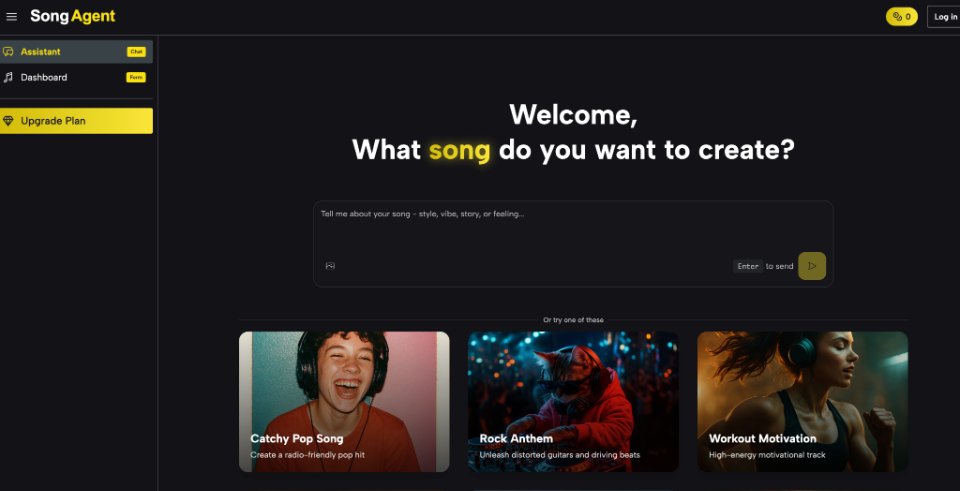
An AI Song Agent can support this iterative workflow by turning written instructions about mood, style, structure, and other musical characteristics into generated material. SongAgent also provides a broader set of music creation functions, giving non-musicians a way to explore ideas before deciding whether more advanced production work is required.
Judge the Result Through Its Purpose
Non-musicians sometimes feel unqualified to evaluate music because they cannot explain technically why a composition works or fails. For most content projects, however, the more important questions are practical and can be answered without formal music training.
A video editor can determine whether the track matches the pace of the footage and whether it competes with narration. A marketer can judge whether the emotional tone fits the product and audience, while a podcaster can hear whether the music leaves enough room for speech.
These are editorial judgments rather than composition exams. In many real production workflows, they matter more than being able to identify the specific chord, mixing technique, or harmonic decision responsible for the result.
Test Music in the Real Project
A track should never be approved simply because it sounds impressive by itself. Music that works through headphones can behave very differently after it is placed beneath dialogue, sound effects, graphics, or fast-moving visual edits.
For a video, the creator should test it under the actual voiceover. Podcast music should be evaluated beneath real speech, while an educational song should be judged according to whether the melody makes the lesson easier or harder to follow.
The opposite can also happen. A relatively simple track may seem unremarkable in isolation but become highly effective when paired with the right scene because it supports the content without demanding attention. Context is therefore a more reliable final test than standalone listening.
Know When a Specialist Is Still Useful
AI-assisted tools do not remove every reason to work with musicians, composers, producers, or audio engineers. A complex film score may need precise synchronization to picture, a recording artist may require detailed vocal production, and a large advertising campaign can involve sophisticated arrangement, mixing, and rights requirements.
The useful change is that many lower-complexity music tasks no longer have to begin with professional production software. A non-musician can explore ideas, build references, test different moods, and create prototypes before deciding whether specialist support is necessary.
This can also improve collaboration with professionals. Instead of approaching a composer with a vague request for something “modern and emotional,” the client can arrive with a more detailed brief and several examples of what does and does not work.
Check Rights and Delivery Requirements Early
Creators should decide where the music will be used before the project reaches its final stage. A personal experiment, monetized YouTube channel, client video, podcast, and commercial campaign may involve different practical requirements.
Before publishing generated music commercially, users should check the current usage terms attached to the service and plan they are using. They should also consider whether the project only requires a finished audio file or needs additional flexibility for editing, extending, or working with separate musical elements.
These questions are much easier to resolve during planning than a few minutes before publication. Making them part of the creative brief also helps creators select tools and outputs that genuinely fit the final production environment.
Creative Direction Is the Skill That Matters Most
AI music tools can reduce technical barriers, but they do not remove the need for judgment. A vague brief still creates a vague starting point, while a creator who understands the purpose, audience, mood, pacing, and boundaries of the music can provide much clearer direction.
That is encouraging for non-musicians because these are largely the same skills they already use in video, marketing, teaching, podcasting, and other creative work. They do not need to become professional composers simply to explain what a piece of music should accomplish.
For many creators, learning how to describe music clearly, evaluate it in context, and revise a creative brief may ultimately be more valuable than learning every control inside a professional digital audio workstation.