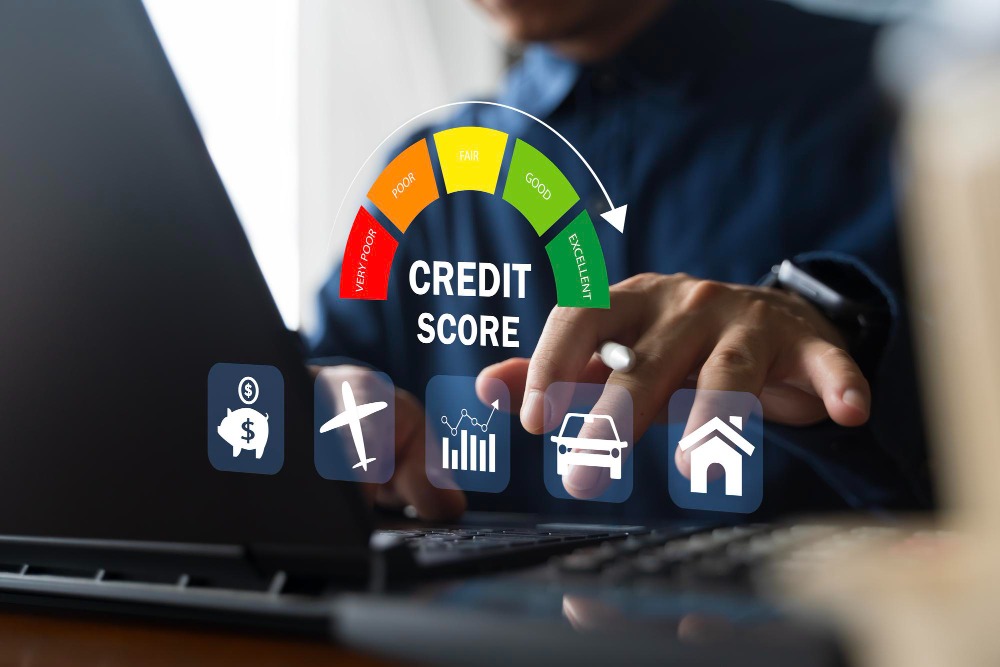
In the US, three digits from FICO can shape your whole financial life. The score runs from 300 to 850 and leans almost entirely on your past, how reliably you’ve repaid, how much you carry, how long your accounts have stayed open. No history, no number. Payment history alone drives more than a third of the math. Tens of millions of Americans, the credit invisible and the thin-file crowd, end up frozen out no matter how carefully they handle money. FICO has exported that template to dozens of markets, yet plenty of countries reshaped it past recognition or skipped it altogether.
So how does the rest of the world decide who deserves a loan? Consider Singapore, where a local bureau and a flipped scale do the work, or China, where your shopping habits can move your rating. Four markets, four different answers.
Singapore flips the scale
Singapore keeps a bureau score, much as the US does, but nearly everything about it reads differently. Credit Bureau Singapore runs a four-digit number from 1000 to 2000, and higher means safer, the opposite of the climb most Americans picture. Each band maps to a risk grade, from AA at the top down to HH at the bottom, and every grade carries a published probability of default. Land in AA, between 1911 and 2000, and your odds of missing payments sit below 0.3%. Slide to the bottom grade and the model marks your default risk above 3%. The report also logs every recent loan enquiry for two years.
The number alone won’t approve a loan. For personal loans in Singapore, banks and licensed lenders read it as one signal, then add their own scorecards built from income, employment, age, and account conduct. A separate bureau even tracks how much a person has borrowed across licensed moneylenders, so no single lender works blind. What stands out is the candor. Rather than a vague three-digit mystery, a borrower sees a grade pinned to a real default percentage, which makes the cost of a late payment concrete.
China scores your behavior
China took a sharper turn. Around 2011 only about one in three adults held a bank account, so the country couldn’t build credit on repayment records that didn’t exist. Ant Group, the fintech arm of Alibaba, answered in 2015 with Sesame Credit, an opt-in score inside the Alipay app that reads how you live rather than only how you borrow.
Sesame weighs five kinds of data.
- Repayment record on Alipay’s own credit lines
- Spending patterns drawn from years of online purchases
- Proxies for stability, like savings and insurance contributions
- Identity details such as age and profession
- The credit standing of the people you transact with
Running 350 to 950, it pulled hundreds of millions of first-time borrowers into a formal rating, near 500 million users at its peak. A strong score once unlocked deposit-free rentals and bigger credit lines. It also drew hard criticism over privacy and over judging people by their friends, and regulators later reined Ant in, folding parts of its credit data into a central-bank-licensed system. The point for a FICO world has nothing to do with copying it. Digital behavior can stand in for a credit file that doesn’t exist yet.
Germany makes one score unavoidable
Germany shows what happens when a single private score touches almost everyone. SCHUFA holds records on roughly 68 million people, draws data from thousands of banks and retailers, and fields about 140 million queries a year. Renting an apartment, signing a phone contract, opening a bank account, financing a car, each can hinge on your SCHUFA standing. Newcomers with no record watch ordinary life stall until they build one. Around seven million of those records carry a negative mark.
For years the math sat behind a wall. The old percentage score rested on criteria SCHUFA never disclosed, and critics called it a black box. That shifted in March 2026, when SCHUFA moved to a single figure from 100 to 999 built on twelve named factors, each with a published maximum value, so a person can finally see what drags their number down. The American argument over opaque scoring has run for decades. Germany just acted on its version.
Kenya skips the bureau
Kenya answered the access problem by routing around the bureau entirely. Seven in ten Kenyans use mobile money, and that footprint became the credit file. M-Shwari, launched in 2012 by Safaricom and a local bank, reads a customer’s phone and M-Pesa history, airtime top-ups, transaction frequency, how steadily money moves, then sets a limit and pays out a loan in seconds.
Apps like Tala and Branch pushed it further, scoring people from smartphone data and in-app repayment, often for borrowers no bureau ever recorded. One even reads the size of your contact list as a rough proxy for stability. Kenyans now pull more than fifty million such mobile loans a year, with limits that start tiny and grow as repayments land. The trade-offs bite, steep rates and deep access to personal phone data, and regulators have moved on both. Still, the core idea lands. A daily rhythm of small mobile payments can prove creditworthiness where a bank statement was never going to exist.
What the FICO world could take from this
None of these systems is clean. China’s reaches too far into private life, Germany’s hands enormous sway to one company, Kenya’s can cost borrowers dearly. The US doesn’t need to import any of them whole.
The ideas underneath still point somewhere useful. Singapore shows a score can be honest about what it predicts. China and Kenya show that behavior and digital footprints can speak for people a repayment history has never seen. Germany shows that a score this powerful owes the public some transparency. FICO wrote the template much of the world borrowed. The borrowers, it turns out, have a few things worth teaching back. A credit score is a choice about what to measure, and the US has more options than one aging formula.