Advancements in peptide research have introduced a new class of compounds that go beyond traditional single-pathway mechanisms. Among these, the Retatrutide Research Peptide stands out due to its ability to interact with multiple metabolic systems simultaneously.
In recent years, interest in retatrutide peptide UK has increased significantly as researchers explore more advanced solutions for studying metabolism, energy balance, and fat regulation. At the center of this growing interest is Retatrutide’s unique classification as a triple agonist peptide.
This article explains the science behind how Retatrutide works, breaking down its mechanism, receptor activity, and why triple agonist peptides represent a major shift in metabolic research.
What Is a Triple Agonist Peptide?
To understand Retatrutide, it is important to first understand the concept of a triple agonist.
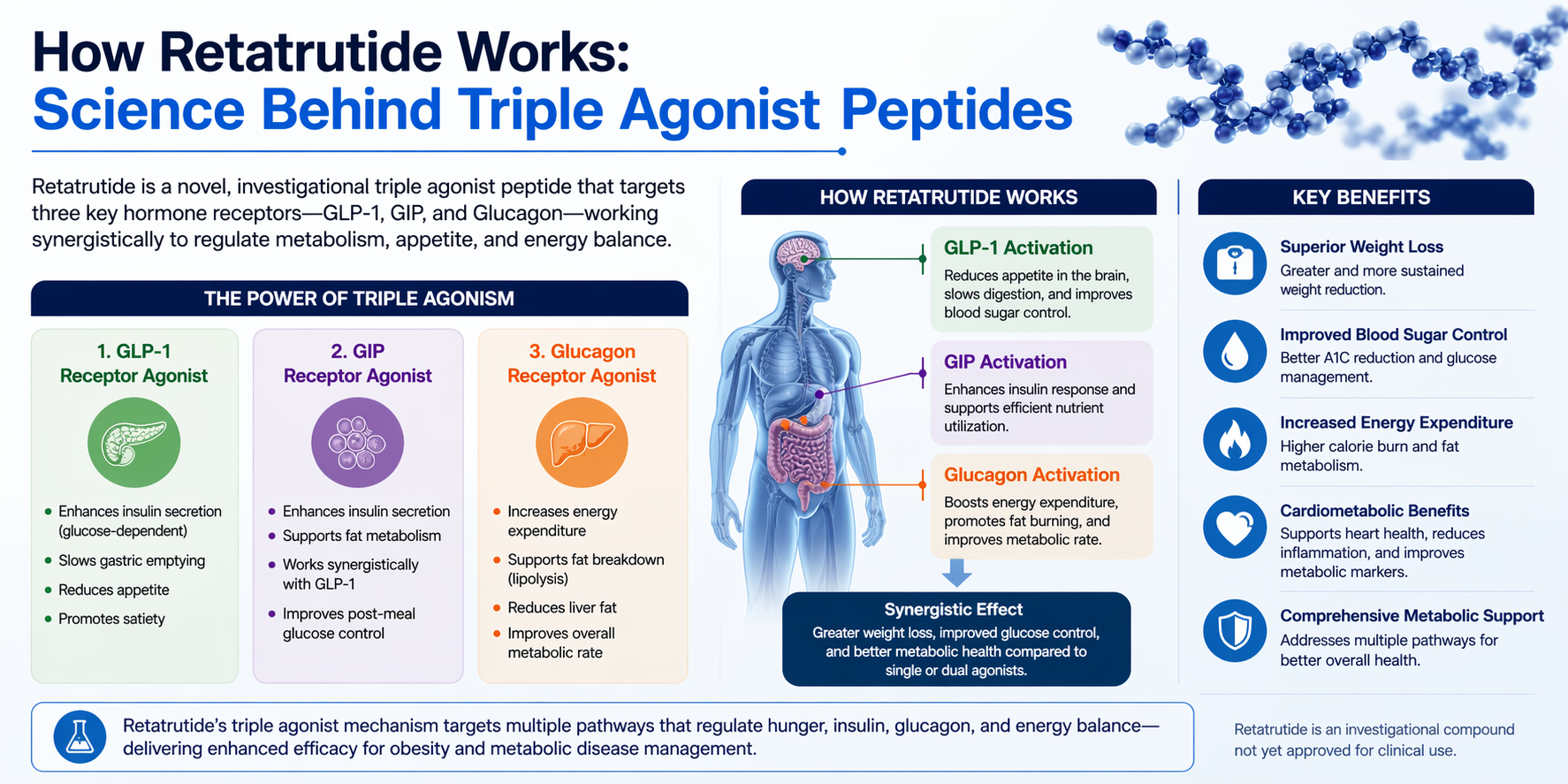
A triple agonist peptide is a compound designed to activate three different receptors at the same time. These receptors play key roles in regulating metabolism, appetite, and energy usage.
Retatrutide targets:
- GLP-1 (Glucagon-like peptide-1)
- GIP (Glucose-dependent insulinotropic polypeptide)
- Glucagon receptors
By activating all three pathways, the Retatrutide Research Peptide produces a more comprehensive metabolic response compared to traditional peptides.
The Science Behind Retatrutide’s Mechanism
Retatrutide works by coordinating multiple biological signals that influence how the body processes energy and nutrients.
1. GLP-1 Pathway (Appetite Regulation)
GLP-1 is a hormone involved in appetite control and digestion.
When activated:
- It signals fullness to the brain
- Slows gastric emptying
- Helps regulate food intake
This pathway is commonly targeted in metabolic research and forms the foundation of many earlier peptides.
2. GIP Pathway (Insulin Response)
GIP plays a role in insulin secretion and glucose metabolism.
Activation of GIP receptors:
- Supports insulin release
- Helps maintain glucose balance
- Enhances nutrient utilization
The inclusion of GIP activity adds a second layer of metabolic control to Retatrutide.
3. Glucagon Pathway (Energy Expenditure)
The glucagon receptor is responsible for increasing energy usage.
When activated:
- It promotes calorie burning
- Encourages fat metabolism
- Supports energy mobilization
This is the key factor that differentiates Retatrutide from dual agonist peptides.
Why Triple Agonist Activity Matters
Traditional peptides typically focus on one or two pathways. Retatrutide’s triple-action mechanism creates a more balanced and dynamic metabolic response.
Key Advantages:
- Simultaneous appetite control and energy expenditure
- Broader metabolic pathway activation
- More efficient research outcomes
This multi-layered approach is why retatrutide peptide UK is gaining attention among researchers.
Retatrutide vs Single and Dual Agonist Peptides
Understanding how Retatrutide compares to earlier peptides highlights its significance.
| Type | Receptors Targeted | Example | Impact |
| Single Agonist | 1 | GLP-1 peptides | Limited scope |
| Dual Agonist | 2 | Tirzepatide | Moderate scope |
| Triple Agonist | 3 | Retatrutide | Broad scope |
This progression shows how peptide research is evolving toward more comprehensive solutions.
Integrated Metabolic Effects
The Retatrutide Research Peptide does not work through isolated mechanisms. Instead, it integrates multiple processes to create a combined effect.
Combined Outcomes:
- Reduced appetite signals
- Improved insulin sensitivity
- Increased calorie expenditure
- Enhanced fat metabolism
This integration is what makes triple agonist peptides particularly valuable for research.
Scientific Interest in the UK
The growing popularity of retatrutide peptide UK reflects increasing interest in advanced metabolic research tools.
Researchers in the UK are focusing on:
- Multi-pathway metabolic studies
- Obesity and fat metabolism research
- Hormonal regulation
This has positioned Retatrutide as a key compound in ongoing scientific exploration.
Challenges in Triple Agonist Research
While promising, triple agonist peptides also present challenges.
Key Considerations:
- Complexity of multi-receptor interactions
- Need for controlled research environments
- Requirement for high-quality peptide sourcing
Understanding these challenges is essential for accurate and reliable research outcomes.
Importance of Peptide Quality
The effectiveness of any research depends heavily on the quality of the peptide used.
Researchers should prioritize:
- High purity levels
- Verified testing
- Proper storage and handling
Suppliers like Pure Peptides UK are known for providing research-grade compounds that meet these standards.
Future of Triple Agonist Peptides
The development of triple agonist peptides marks a major shift in how metabolic research is conducted.
Future Directions:
- More refined multi-receptor compounds
- Advanced metabolic studies
- Combination peptide research
The Retatrutide Research Peptide is likely to play a central role in this evolution.
Conclusion
The science behind Retatrutide highlights a new era in peptide research. By targeting three key metabolic pathways simultaneously, it offers a more comprehensive approach to studying energy balance, fat metabolism, and hormonal regulation.
The increasing interest in retatrutide peptide UK reflects the growing demand for advanced research tools capable of delivering deeper insights.
With proper handling and sourcing from trusted providers like Pure Peptides UK, researchers can explore the full potential of triple agonist peptides.
Retatrutide is not just another compound—it represents a significant advancement in the science of metabolic research.
FAQs
What is a triple agonist peptide?
A triple agonist peptide activates three different receptors simultaneously to influence multiple biological pathways.
How does Retatrutide work?
It works by targeting GLP-1, GIP, and glucagon receptors to regulate appetite, insulin, and energy expenditure.
Why is retatrutide peptide UK gaining popularity?
It is gaining attention due to its advanced mechanism and potential for comprehensive metabolic research.
What makes Retatrutide different from other peptides?
Its triple receptor activity makes it more advanced than single or dual agonist peptides.
Where can researchers source Retatrutide in the UK?
Researchers can obtain it from trusted suppliers such as Pure Peptides UK.