Buying your first oud can feel like walking into a conversation halfway through. The names are unfamiliar, the prices swing wildly, and half the advice online assumes you already know a dozen regional wood types. You do not need any of that to start well. You need to understand a few real distinctions, avoid two or three common traps, and pick something natural enough to show you what oud actually is. This guide covers exactly that, so your first bottle is one you keep reaching for.
First, know what you are buying
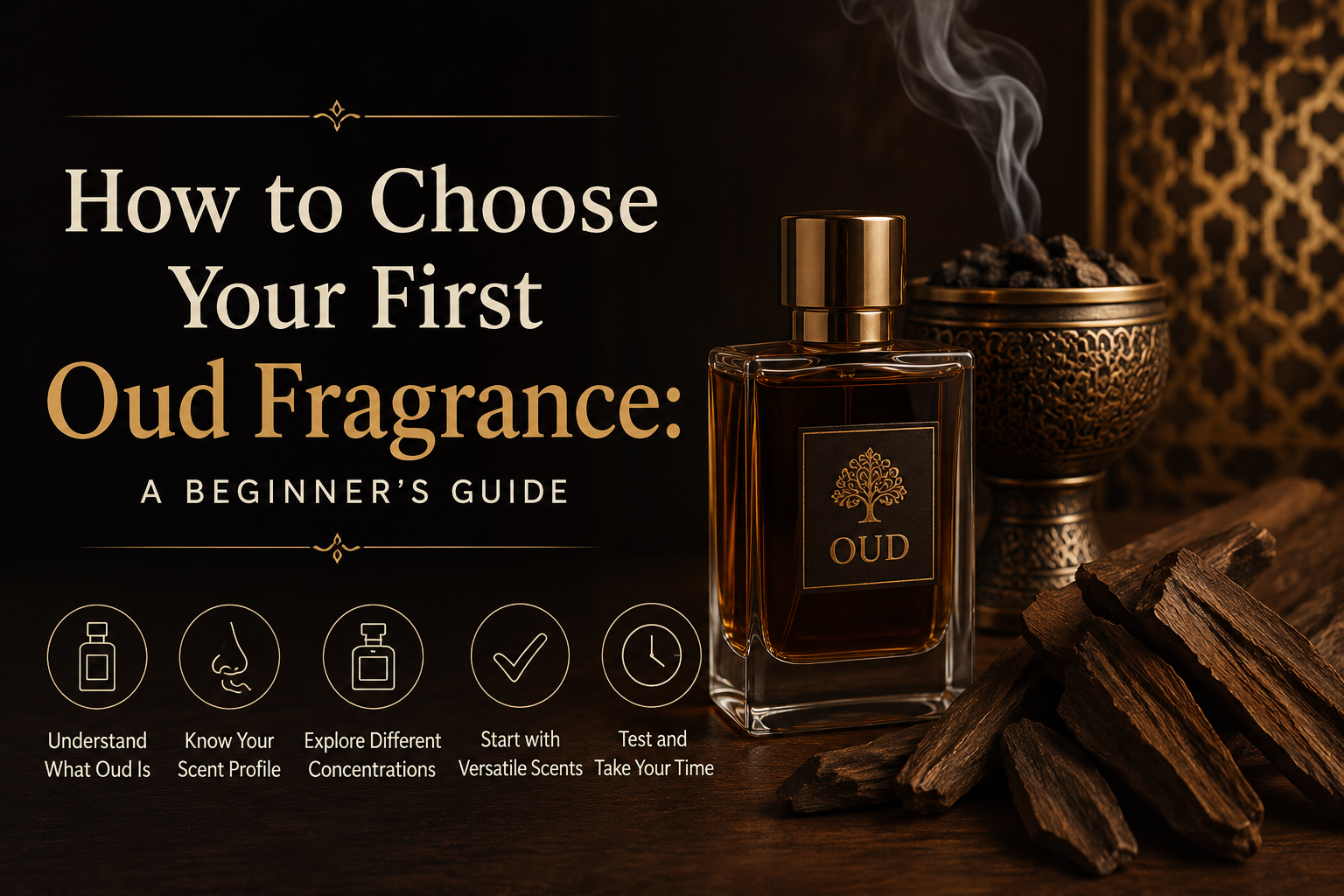
Oud comes from the resin-soaked heartwood of the Aquilaria tree, formed only after the tree is wounded and infected by a particular mould. That resin is agarwood, and the oil pressed from it is oud. It is genuinely rare. Most Aquilaria trees never produce usable agarwood, and the material is scarce enough that trade is regulated.
Every agarwood-producing species has been listed under CITES Appendix II since 2004, and top-grade agarwood has changed hands for up to 100,000 US dollars per kilogram. Keep that context in mind when you shop. A large bottle of very cheap oud is a red flag, not a bargain, because the real material simply does not exist at that price.
Oud oil or oud perfume?
This is the single most useful distinction for a beginner. Traditional oud is sold as an oil, sometimes called dehn al oud, applied in tiny amounts directly to the skin. It is concentrated, long-lasting, and projects close to the body rather than filling a room. An oud perfume, by contrast, usually means oud used as a note inside a wider composition, often diluted into an alcohol spray.
For a first purchase, a natural oud oil teaches you more. You smell the ingredient itself rather than a designer’s interpretation of it, and you learn how it develops on your own skin over several hours. It also tends to be gentler. Alcohol sprays can dry or irritate sensitive skin, while a pure oil warms with your body and settles in.
Why natural and alcohol-free matters
Much of what is marketed as oud on the high street contains little real agarwood. It is built from synthetic molecules in an alcohol base, tuned to smell roughly oud-like at first spray. Those blends can smell fine, but they are flat next to genuine oud, and the alcohol content is a frequent cause of irritation for anyone with reactive skin.
A natural, alcohol-free oud oil sidesteps both problems. There is no solvent drying your skin, no synthetic top note fading to nothing within an hour, and no hormone-disrupting additives to worry about. This is the exact standard YOUDH built its range around: 100 percent natural oud oil, alcohol-free, non-allergenic, and made in the UK. For a beginner, that combination removes most of the ways a first oud purchase can go wrong.
How to test and choose
Buy small to begin with. A few millilitres is plenty to learn your preferences, and it keeps your first experiment affordable given the price of real material. Apply one small dab to the inside of your wrist and leave it. Do not judge oud in the first two minutes; the opening is the rawest part and it softens considerably. Give it an hour, then smell again. What you notice at that stage, the warm and woody heart, is the fragrance you will actually wear.
If you prefer a lighter, easier entry point, look for a fresher oud blend before committing to a heavy, smoky one. YOUDH’s own range spans both, from a bright daytime option to a deep evening oud, so you can match intensity to occasion. Browsing a curated shortlist of the best oud fragrances is a sensible way to see the spread before you decide.
Common beginner mistakes to avoid
The first mistake is over-applying. Because a natural oud oil is concentrated, a single small dab is usually enough for the whole day. New buyers used to alcohol sprays often apply far too much, and oud rewards restraint. Start with less than you think you need; you can always add more tomorrow.
The second is judging too fast. Many people try oud, recoil at the raw opening, and write it off within minutes. That opening is the least representative part of the whole experience. Give any oud a full hour before forming an opinion. The third mistake is chasing price to the bottom. A suspiciously cheap, large bottle almost never contains meaningful real agarwood, and the disappointment it creates puts people off oud entirely. It is better to buy a small amount of something genuine than a large amount of something synthetic.
The fourth is ignoring the season and setting. A heavy, smoky oud can feel overwhelming in a warm office and perfect on a cold evening out. If your first oud is a bold one, save it for the right moment rather than deciding you dislike oud altogether.
Where oud comes from culturally
It also helps to know what you are stepping into. Oud has been central to fragrance traditions across the Gulf, South Asia and East Asia for over a thousand years, worn and gifted as a mark of hospitality and status. In those settings it has almost always been used as an oil, applied lightly and personally. Approaching your first oud the same way, as an oil rather than a spray, connects you to how the ingredient has actually been enjoyed for centuries, and it happens to be the version that smells best on skin.
Your first bottle, chosen well
Start natural, start small, and judge the scent on its dry-down rather than its first impression. Do that and your first oud will not be a gamble, it will be the thing that shows you why this ingredient has been prized for centuries. When you are ready to buy, a natural oud oil made in the UK is the cleanest place to begin, no synthetics, no alcohol, just the real material on your skin.