For the past several years, fuel has been one of the most unpredictable line items in a logistics budget. Diesel prices shift without warning, fuel surcharges complicate billing relationships with clients, and the cumulative effect on operating margins can quietly erode what looks like a healthy book of business. US logistics operators — regional carriers, last-mile delivery companies, and distribution fleets — have been absorbing these pressures for long enough that a significant portion have moved past asking whether electrification makes sense and started asking how to make it work operationally.
The shift toward electric vehicles in commercial fleets is no longer limited to pilot programs. It is showing up in fleet renewal cycles, procurement conversations, and infrastructure investment decisions. But the vehicle itself accounts for only part of the cost reduction that early adopters are seeing. The other part comes from how those vehicles are managed after they enter service — and that is where the operational story becomes more instructive.
What EV Fleet Management Platforms Actually Do in a Commercial Context
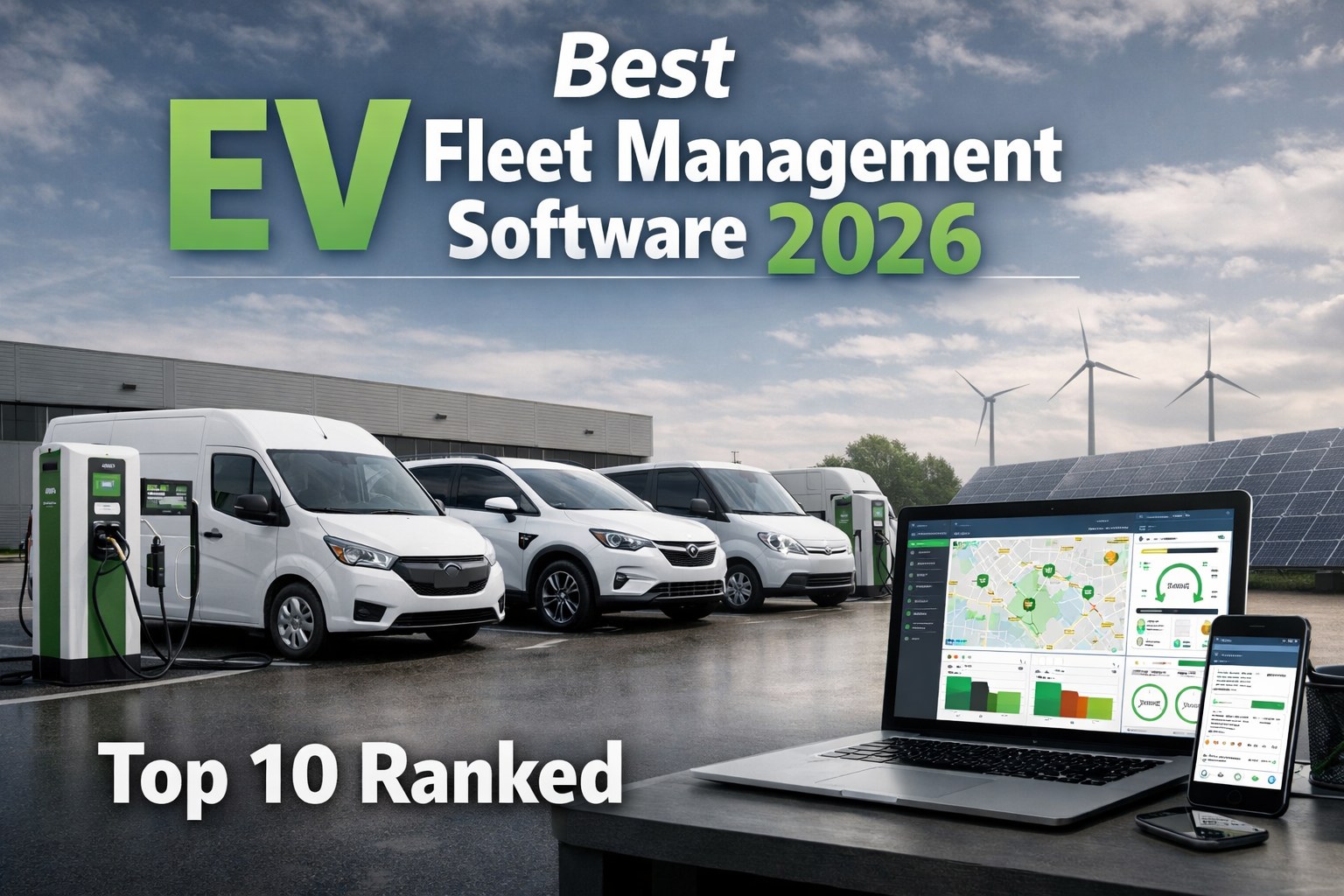
Managing a mixed or fully electric fleet is fundamentally different from managing a diesel fleet. The variables change. Fuel availability becomes charging availability. Maintenance patterns shift from reactive to predictive. Route decisions start incorporating energy consumption data that simply did not exist before. EV fleet management platforms are built to handle this operational complexity — not as monitoring dashboards, but as systems that connect vehicle behavior, energy consumption, driver input, and infrastructure status into a single operational layer that fleet managers can act on in real time.
The distinction matters because it determines how the platform integrates with existing dispatch, maintenance, and reporting workflows. A platform that only surfaces data without connecting to operational decisions creates more administrative work, not less. What logistics companies are finding useful are systems that can close the loop between information and action — adjusting routing based on charge state, flagging vehicles before they create service gaps, and providing the kind of consistency that keeps client commitments intact.
Routing and Energy Efficiency as Interconnected Problems
In a diesel fleet, routing is largely about time and distance. Traffic conditions, delivery windows, and vehicle load are the primary inputs. In an electric fleet, energy consumption becomes an equally important variable. A route that is efficient in terms of mileage may not be efficient in terms of battery draw, particularly when it involves significant elevation change, heavy stop-and-go traffic, or ambient temperature extremes that affect range.
EV fleet management platforms address this by incorporating energy modeling into route planning. Instead of treating routes as fixed paths with variable traffic, the system treats them as energy commitments — and evaluates whether each vehicle can meet that commitment given its current state of charge, expected load, and real-world conditions. For logistics operators running time-sensitive deliveries, this matters because it reduces the risk of a vehicle falling short mid-route, which creates service failures that are expensive to recover from and difficult to explain to clients.
Charging Infrastructure as an Operational Constraint
Charging infrastructure is not just a facility concern — it is a scheduling and utilization concern that directly affects whether a vehicle is available when it is needed. Fleet operators who manage their own charging assets quickly discover that without coordination between the vehicles and the chargers, bottlenecks form during peak return periods, some vehicles sit at full charge occupying equipment unnecessarily, and others arrive at the depot needing a fast charge that the available infrastructure cannot always provide on short notice.
Platforms that manage charging across a fleet — rather than treating each vehicle as an isolated charging event — can distribute demand across available chargers, prioritize vehicles based on their next scheduled dispatch, and identify when a charger is underperforming before it creates a service gap. This kind of coordination is what allows a larger electric fleet to operate with the same reliability expectations that a diesel fleet has historically offered, without the assumption that refueling is always instantly available.
Where the Cost Reduction Actually Comes From
The conversation about fuel cost savings in electric fleets often stops at the straightforward comparison between electricity costs and diesel costs per mile. That comparison is real and meaningful, but it only explains part of what logistics companies are seeing when they report reductions in total operating costs. The fuller picture involves maintenance, workforce efficiency, and the cost of operational failures that are harder to quantify but very real in practice.
Maintenance Cost Reduction Beyond the Engine
Electric vehicles have fewer moving parts than their internal combustion equivalents. Brake wear is reduced through regenerative braking. There is no oil to change, no transmission fluid, no exhaust components to inspect or replace. These reductions are well documented and represent genuine savings over a vehicle’s service life. What is less discussed is how platform-level monitoring extends those savings further.
When a platform continuously tracks battery health, motor performance, and component temperatures, it can identify degradation patterns before they become failures. For a fleet operator, a vehicle that fails during a route is not just a repair cost — it is a missed delivery, a recovery vehicle dispatch, a rescheduled client, and a customer service interaction that no one in the organization wants to have. Predictive maintenance data reduces the frequency of those events, and that reduction has a real dollar value that compounds over time across a large fleet.
Driver Behavior and Its Effect on Energy Consumption
Energy consumption in an electric fleet is not solely determined by route and conditions — driver behavior plays a meaningful role. Hard acceleration and delayed regenerative braking both draw more energy than smooth, anticipatory driving. In a large fleet, the variation between drivers can be significant enough to affect both per-vehicle range and overall energy costs.
Fleet management platforms provide visibility into driving patterns at the individual vehicle level, which allows fleet managers to identify where coaching would have an operational impact. This is not about surveillance for its own sake. It is about understanding which behaviors are affecting both energy efficiency and vehicle longevity, and addressing them through training rather than absorbing the cost silently. As the US Department of Energy notes, driver behavior is one of the more controllable variables in managing the total cost of EV operation — and platforms that surface this data make the conversation between managers and drivers grounded in specifics rather than generalizations.
Operational Consistency as a Business Requirement
For logistics companies, reliability is not a feature — it is a prerequisite for retaining clients. A carrier that delivers on time most of the time is not a reliable carrier. The threshold for what clients tolerate has narrowed considerably, particularly in sectors like e-commerce fulfillment and healthcare distribution where delivery windows carry contractual weight. This context shapes how fleet operators think about any new operational system: the primary question is not whether it saves money in ideal conditions, but whether it holds up under real-world variability.
Managing Fleet Availability Across a Mixed Environment
Many logistics companies are not running pure electric fleets — they are in transition, operating a combination of electric and diesel vehicles while they work through procurement cycles and infrastructure investment. Managing a mixed fleet adds complexity because the two vehicle types require different protocols for fueling, maintenance, and monitoring, and they carry different risk profiles for operational failure.
EV fleet management platforms that can integrate with broader fleet management systems — or that provide clear API access for integration — allow operators to maintain a unified view of availability and scheduling across vehicle types. This matters for dispatch decisions, coverage planning, and maintenance scheduling. A fleet manager should not need to consult two separate systems to understand whether adequate capacity exists for tomorrow’s runs. The operational value of a single, coherent view is not theoretical — it reduces the administrative overhead that grows rapidly as fleet size increases.
Reporting and Compliance in a Changing Regulatory Environment
Several US states have introduced or are actively developing regulations that affect commercial fleet emissions, and federal programs continue to evolve around clean vehicle incentives and reporting requirements. Logistics companies operating at scale need accurate, accessible data on their fleet’s energy consumption, emissions profile, and vehicle utilization to respond to these requirements without creating a separate reporting burden on their operations teams.
Platforms that generate this data as a byproduct of normal operations — rather than requiring manual logging or separate tracking systems — reduce the administrative cost of compliance. They also position companies to participate in incentive programs that offset the capital cost of electrification, which affects the payback timeline on the fleet investment itself. That payback timeline is one of the primary variables in how quickly cost savings materialize in practice.
Closing Observations
The reported cost reductions that US logistics companies are seeing with electric fleets are not the result of lower electricity prices alone. They are the compounded result of better route decisions, reduced maintenance incidents, more efficient charging operations, and improved visibility into the variables that drive operational cost. The vehicle provides the foundation. The management platform is what allows that foundation to produce consistent, measurable results.
For logistics operators still evaluating whether to accelerate electrification or hold back, the experience of early movers suggests that the operational infrastructure — how vehicles are monitored, dispatched, charged, and maintained — carries as much weight as the vehicles themselves. Companies that treat fleet management capability as a parallel investment to vehicle acquisition are the ones reporting the most significant cost outcomes. Those that treat it as an afterthought tend to find that the savings they expected take longer to materialize, and that operational inconsistency offsets what the lower energy cost provides.
The cost case for electric commercial fleets is becoming clearer each year. What is also becoming clearer is that realizing that case requires operational discipline, integrated systems, and a willingness to manage the new variables that come with electrification — rather than expecting them to manage themselves.