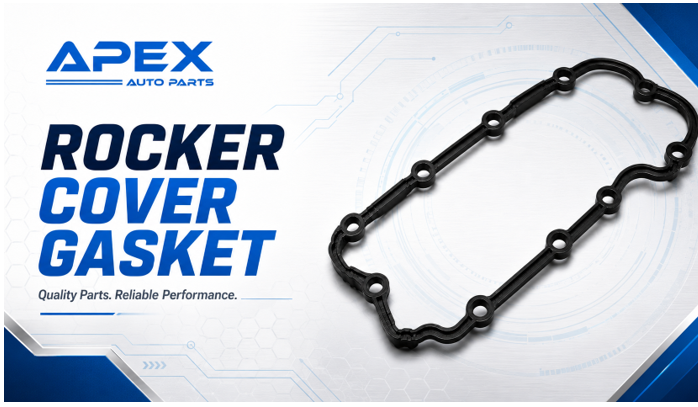
A rocker cover gasket leak may seem like a small engine issue at first. Many drivers see a little oil around the top of the engine and think it can wait. Some only notice a light burning smell after a drive. Others may not see anything until the engine bay becomes dirty and oily.
The problem is that a small oil leak can slowly affect other engine parts. Oil does not always stay in one place. It can run down the side of the engine, reach hot parts, enter spark plug wells, or collect around wires and rubber parts. This is why a rocker cover gasket leak should never be seen as only a messy engine bay problem.
This guide looks at the points many basic guides miss. It explains how to tell if the leak is really from the rocker cover gasket, whose parts can be damaged if the leak is ignored; when a gasket alone is enough; and when the full rocker cover may need to be changed. It also explains why the right part matters, especially for modern engines and BMW models.
Why A Small Rocker Cover Gasket Leak Can Turn Into A Bigger Problem
A rocker cover gasketsits near the top of the engine, so oil can spread across many areas once the seal starts to fail. At first, the leak may appear only as a wet line near the edge of the cover. Over time, oil can move down the engine and collect around parts that were not meant to be covered in oil.
Engine heat makes the problem worse. When oil comes into contact with hot metal, it can produce a strong burning oil smell. If the leak is heavy, you may also see light smoke from the engine bay. This can be worrying for drivers, especially after a long trip or when sitting in traffic.
The leak can also make it harder to find other issues. A dirty engine bay hides fresh leaks. When oil spreads everywhere, it becomes difficult to see where the leak started. This is one reason early repair is better. A small, clean leak is easier to trace than an old leak that has spread over many parts.
Ignoring the problem can also lead to extra repair costs. What starts as a gasket job can later turn into damaged ignition parts, dirty sensors, weak hoses, or oil-soaked wiring. A cheap delay can become an expensive mistake.
Is the oil leak really from the rocker cover gasket?
Not every oil leak near the top of the engine is caused by the rocker cover gasket. This is an important point because replacing the wrong part wastes money and does not fix the leak.
Oil can leak from several places around the engine. It can come from the oil filler cap, breather pipes, oil filter housing, camshaft seals, vacuum pump seals, or other nearby parts. In some engines, oil can travel from one area, making it appear the rocker cover gasket is leaking.
A proper check should start with a clean engine area. The old oil should be wiped away, then the engine should be run and checked again. This helps show where fresh oil is coming from. If the engine is already covered in old oil and dirt, guessing won’t do.
A mechanic may also use a light, a mirror, or leak tracing dye to find the true source. This can save money by preventing parts from being replaced without proof.
Here are signs that the rocker cover gasket may be the true leak source:
- Fresh oil around the edge of the rocker cover
- Oil is sitting near the top of the engine
- Oil dripping down from the cover line
- Burning oil smell after driving
- Oil in spark plug wells
- Repeat oil marks after cleaning the area
If the oil starts higher than the rocker cover, the source may be another part. If the oil starts at the gasket line and moves downward, the rocker cover gasket is more likely to be the cause.
Hidden Damage Caused By A Rocker Cover Gasket Leak
Many drivers only think about oil loss when they see a leak. Oil loss is serious, but it is not the only risk. A leaking rocker cover gasket can affect other parts around the engine.
One common issue is oil reaching the ignition coils or spark plug wells. When oil enters this area, the engine may run rough. It may shake at idle, lose power, or misfire. A misfire can make driving less smooth and can also damage other parts if ignored.
Oil can also weaken rubber parts. Hoses, seals, and belts are not meant to stay covered in engine oil. Over time, oil can soften rubber, causing it to swell or crack. This can create new leaks and new faults.
Wiring can also suffer. Oil can collect around plugs and connectors. This may cause poor contact, sensor faults, or warning lights. In modern cars, even a minor electrical fault can lead to poor performance and costly repairs.
The exhaust side of the engine is another concern. If oil leaks onto a hot exhaust manifold or heat shield, it can burn and create smoke. This can also send a bad smell into the cabin through the air vents.
A rocker cover gasket leak may also make MOT checks harder if there is heavy oil around the engine. A small misting of oil may not always be a major concern, but a clear leak should be taken seriously.
When A Gasket Replacement Is Enough
In many cases, replacing the rocker cover gasket is enough to stop the leak. This is most likely when the rocker cover is still straight, the sealing surface is clean, and the leak is caused by an old, hard gasket.
A good gasket replacement should not be rushed. The old gasket must be removed fully. The surface must be cleaned with care. The new gasket must sit in the right place. The bolts must be tightened evenly and to the right level.
If the job is done properly, the new gasket can seal well and stop oil from escaping. This is why careful fitting matters just as much as the part itself.
A gasket replacement is often enough when:
- The rocker cover is not cracked
- The cover is not warped
- The bolt holes are not damaged
- The leak is only from the old gasket
- The engine has no heavy pressure issues
- The sealing surface is clean and flat
- The correct gasket is used
If these points are checked, the repair has a much better chance of lasting.
When The Full Rocker Cover May Need Replacing
Sometimes, a new gasket alone will not fix the leak. This often happens when the rocker cover itself has aged, warped, cracked, or lost its shape.
Modern rocker covers are often made of plastic or other lightweight materials. These materials can change shape over time due to exposure to heat. If the cover is no longer flat, the gasket cannot seal evenly. Oil will find the weak point, and the leak may return.
Some covers also include built-in components, such as breather systems or pressure-control components. If these parts fail, the engine may build excessive pressure in the cover area. This can push oil past the gasket even if the gasket is new.
This is why repeated leaks should be checked carefully. If a rocker cover gasket has been replaced but the leak comes back quickly, the cover may be the real issue.
The full rocker cover may need replacing if:
- The cover is cracked
- The cover is warped
- The gasket has already been changed, and it still leaks
- The breather system has failed
- Bolt areas are damaged
- The cover does not sit flat
- Oil pressure inside the cover area is too high
Replacing only the gasket may cost less at first, but it can cost more later if the cover is already faulty.
Why Part Quality Matters
A rocker cover gasket works in a hot, oily environment. It must remain soft enough to seal but strong enough to withstand heat and pressure. A weak gasket may fit at first, but it may start leaking again after a short time.
This is why part quality matters. A cheap gasket can harden prematurely, fit poorly, or fail under heat. The wrong gasket may also look close to the right one, but not seal properly.
Before buying a rocker cover gasket, make sure it matches the exact vehicle, engine code, and model year. This is very important for BMW engines because small differences between models can affect fitment.
A good part should fit correctly, sit flat, and be made from a material that can handle engine heat. It should also come from a trusted parts seller, not from an unknown source with unclear fitment details.
Buying the right part the first time saves time, labour, and stress. It also lowers the chance of repeat leaks.
A Quick Note From Apex Auto Parts
Apex Auto Parts is based in the UK and sells car engine parts online for drivers, garages, and repair shops. If you want to learn more about gasket failure signs.
You can read our full guide here: Common Failures in the Rocker Cover Gasket.
BMW Rocker Cover Gasket Leaks: Why Owners Should Be Extra Careful
BMW engines are often known for oil leaks around the top of the engine, especially as they age. A BMW rocker cover gasket leak should be checked early because oil can spread quickly in a tight engine bay.
In many BMW models, the rocker cover area sits close to ignition coils, sensors, and hot engine parts. This means a small leak can cause more than a dirty engine. It can lead to burning smells, smoke, rough running, or repeated misfires if oil reaches the wrong area.
BMW owners should also be careful when matching parts. Many BMW engines have different versions, even when the model badge looks similar. A gasket that fits one engine may not fit another. Checking the engine code is the safest way to avoid mistakes.
If the car has had a gasket replacement before and the leak has returned, the rocker cover should be checked as well. The issue may not be the gasket alone. The cover or breather system may be part of the problem.
DIY Repair or Garage Repair: Which Is Better?
Some drivers think about replacing a rocker cover gasket at home. For simple engines, this may be possible for someone with the right tools and some repair knowledge. But on many modern cars, the job is not always simple.
Parts may need to be removed to reach the rocker cover. Wires, coils, pipes, and engine covers may be in the way. If anything is fitted back badly, new faults can appear.
The biggest risk with a DIY repair is poor sealing. If the surface is not cleaned thoroughly, the gasket moves during fitting, or the bolts are tightened too tightly, the leak may return. Over-tightening can also crush the gasket or damage the cover.
A garage repair is often safer if the engine is tight, the car is a BMW, or the leak is near ignition parts. A good mechanic can also check whether the cover itself is still in good condition.
DIY may be fine if:
- The engine is easy to access
- You have the right tools
- You understand the fitting steps
- You can tighten bolts correctly
- The cover is not damaged
- Garage repair is better if:
- The engine bay is tight
- The car has misfires
- Oil is in spark plug wells
- The leak keeps coming back
- You are unsure about the source
- The rocker cover may be warped
The goal is not just to replace the part. The goal is to stop the leak properly.
Questions To Ask Before Repair
Before booking the job or buying parts, it helps to ask a few simple questions. These questions can prevent the same leak from recurring.
Ask whether the leak has been confirmed as a rocker cover gasket leak. If the answer is only a guess, the engine should be checked more carefully.
Ask whether the rocker cover will be checked for cracks or warping. This is important because a damaged cover can make a new gasket fail.
Ask whether the spark plug wells will be checked for oil. If oil has reached that area, ignition parts may also need cleaning or replacement.
Ask whether the correct gasket will be matched to the engine code. This is very important for BMW and other modern cars.
Ask whether the engine will be cleaned after the repair. Cleaning helps confirm that the leak has stopped and makes future checks easier.
These questions may seem simple, but they help improve the repair.
What To Check After A Rocker Cover Gasket Replacement
After the gasket has been replaced, the job is not complete until the engine is checked again. A good repair should stay dry after the engine has warmed up and cooled down.
The first thing to check is fresh oil around the cover edge. A small amount of old oil may still be present if the engine was not cleaned, but fresh, wet oil after repair is not a good sign.
The second thing to check is smell. A burning oil smell may remain for a short time if old oil is burning off the hot parts. But if the smell continues after several drives, the leak may still be active.
The third thing to check is engine smoothness. If the car had a misfire before, it should now run better once the oil has been cleaned from the ignition area. If it still runs rough, more checks may be needed.
The fourth thing to check is the oil level. Keep an eye on the dipstick or oil level reading for a few days. If the oil level keeps dropping, there may be another leak.
A follow-up check after a week is a good idea. It gives enough time for any fresh oil to show.
How To Lower The Risk Of Future Leaks
No gasket lasts forever, but good care can help reduce the chance of early failure. Engine heat is the main enemy, so keeping the engine healthy matters.
Regular oil changes help because clean oil flows more freely and keeps the engine in better condition. Old oil can leave dirt and sludge, which can add stress to seals and moving parts.
The cooling system also matters. If the engine runs hotter than it should, the gasket will age faster. A weak thermostat, low coolant level, or cooling fault should be addressed early.
Breather parts should also be checked. If pressure builds inside the engine, it can force oil past seals. This can make a new gasket leak sooner than expected.
Simple care tips include:
- Change oil on time
- Use the correct oil grade
- Fix cooling issues early
- Check breather pipes and valves
- Do not ignore burning-oil smells
- Clean old leaks before checking new ones
- Use the right gasket for the engine
- Replace a damaged cover, not just the gasket
These steps help protect the repair and keep the engine cleaner for longer.
Final Thoughts
A rocker cover gasket leak is easy to ignore, but it should not be left for too long. The leak may start small, yet it can spread to ignition parts, wiring, hoses, belts, sensors, and hot engine surfaces. Once that happens, repair costs can rise.
The key is to find the real source of the oil leak before replacing parts. If the gasket is the problem and the cover is still good, a proper gasket replacement can fix it. If the cover is warped, cracked, or has a failed breather system, the full cover may need attention.
For BMW owners, extra care is needed because heat, tight engine space, and engine design can make leaks more serious. Always match parts by engine code and use good-quality parts.
A clean, dry engine is easier to inspect, safer to run, and better for long-term care. Fixing a rocker cover gasket leak early is one of the simplest ways to avoid bigger engine trouble later on.
FAQs
1. How can I tell if oil is leaking from the rocker cover gasket or another part?
Clean the oily area first, then run the engine and check where fresh oil appears. If oil starts around the edge of the rocker cover, the gasket may be leaking. If oil starts higher or from another part of the oil system, the leak may be from a different seal or pipe.
2. Can a rocker cover gasket leak cause a misfire?
Yes, it can. If oil leaks into the spark plug wells or around ignition coils, the engine may misfire. You may feel shaking, rough idling, or weak power. The gasket leak should be fixed, and the ignition area should be cleaned and checked.
3. Should I replace the rocker cover or only the gasket?
Only the gasket may be enough if the cover is flat, clean, and not cracked. The full rocker cover may need to be replaced if it is warped, damaged, or has a failed breather system. Repeated leaks after gasket replacement often mean the cover needs checking.
4. Why did my new rocker cover gasket start leaking again?
A new gasket can leak again if the surface was not cleaned, the bolts were not tightened properly, the part was of poor quality, or the rocker cover is warped. It can also leak if engine pressure is too high due to a breather fault.
5. Is a burning oil smell always from the rocker cover gasket?
No. A burning oil smell can come from several leaks. The rocker cover gasket is a common cause because oil can drip onto hot parts, but oil filter housing leaks, turbo oil leaks, or other seals can also create the same smell.
6. Is it safe to keep driving with a rocker cover gasket leak?
The car may still drive, but it is not smart to leave the leak for long. Oil can spread, the oil level can drop, and nearby parts can be damaged. If there is smoke, a strong smell, a misfire, or fast oil loss, get it checked quickly.