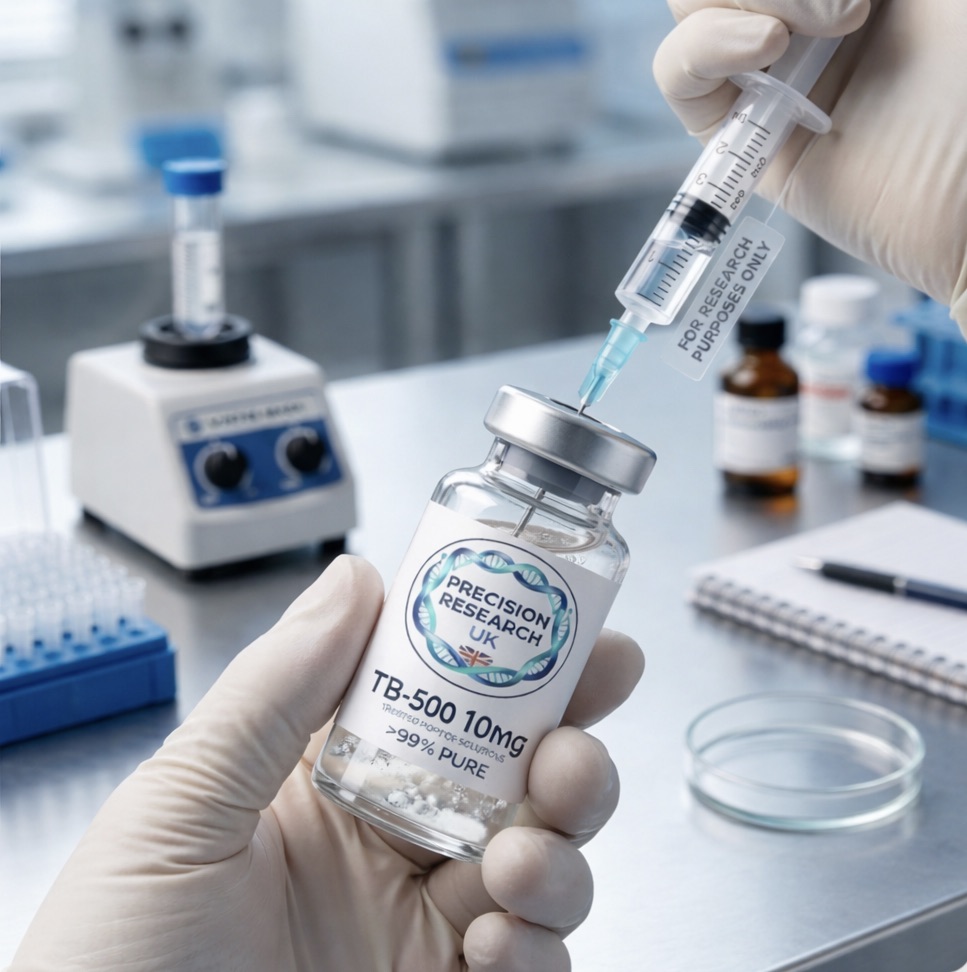
In modern biomedical and performance science research, interest continues to grow around regenerative peptides and their role in cellular repair and tissue recovery processes. Among these investigational compounds, TB500 has gained attention as a subject of study in experimental models focused on healing, inflammation response modulation, and structural tissue regeneration. Researchers explore its biological behavior to better understand how small peptide sequences may influence complex repair pathways in muscles, tendons, and connective tissues. The interest is not limited to athletic or performance contexts alone, but extends into broader cellular biology, where tissue regeneration mechanisms are critical for advancing therapeutic science and regenerative medicine understanding. This article explores the scientific concepts, proposed mechanisms, and research relevance of TB500 in structured detail.
What is TB500 and why is it studied?
TB500 is a synthetic peptide fragment derived from a naturally occurring protein called thymosin beta-4, which is widely present in many human and animal tissues. In research environments, it is studied for its potential role in cellular migration, wound repair, and tissue remodeling processes. Scientists investigate how peptide fragments like TB500 may influence the movement of cells toward damaged areas, a process considered essential in regeneration biology.
The interest in this compound arises from its simplified structure compared to the full-length parent protein, making it easier to study in controlled laboratory settings. Researchers aim to isolate specific functional properties that might contribute to tissue repair without the complexity of full protein interactions. This makes TB500 a useful model compound in experimental studies focused on healing mechanisms and regenerative signaling pathways.
How does TB500 function in biological systems?
In theoretical and laboratory-based studies, TB500 is believed to interact with actin, a key protein involved in cell structure and movement. Actin plays a critical role in cellular migration, allowing cells to shift position during processes such as wound healing and tissue regeneration. By influencing actin dynamics, TB500 is thought to indirectly support cellular mobility and organization in damaged tissues.
Another area of interest is its possible involvement in angiogenesis, the formation of new blood vessels. Improved blood supply is a crucial factor in tissue recovery, as it delivers oxygen and nutrients to injured areas. Researchers examine whether TB500 contributes to signaling cascades that promote vascular development in experimental models. While these mechanisms are still under investigation, they represent key pathways of interest in regenerative science.
Why is TB500 researched in tissue repair pathways?
Tissue repair is a complex biological process involving inflammation control, cell migration, extracellular matrix remodeling, and vascular support. TB500 is studied because it may interact with multiple phases of this healing process. In experimental models, researchers analyze whether peptide fragments can accelerate or optimize these stages.
One reason for its popularity in research is its potential ability to support fibroblast activity. Fibroblasts are essential cells responsible for producing collagen and maintaining structural integrity in connective tissues. Understanding how TB500 influences these cells may provide insight into improved recovery models for tendon, ligament, and muscle injuries in laboratory studies.
Additionally, its role in reducing excessive inflammation is another area of exploration. Controlled inflammation is necessary for healing, but prolonged inflammatory states can delay recovery. TB500 is examined for its possible balancing effects in these biological environments.
What are the molecular mechanisms associated with TB500?
At the molecular level, TB500 is studied for its interaction with cytoskeletal proteins and intracellular signaling pathways. One of the primary mechanisms under investigation involves its influence on actin polymerization, which governs how cells change shape and move through tissues.
Another potential mechanism includes modulation of gene expression related to cell survival and repair. Researchers explore whether TB500 can influence signaling proteins that regulate apoptosis, migration, and proliferation. These processes are essential in determining how quickly and effectively tissues respond to injury.
Some studies also investigate its possible interaction with growth factors, which are signaling molecules that regulate cell division and tissue regeneration. Although these mechanisms are still being explored, they provide a framework for understanding how small peptides might influence large-scale biological responses.
How is TB500 studied in performance science models?
In performance science research, TB500 is evaluated within controlled experimental frameworks that simulate physical stress, injury, and recovery. These models may include muscle injury simulations, tendon stress analysis, or cellular damage assays in laboratory conditions.
Researchers observe how cells respond in the presence of TB500 under these controlled conditions, measuring variables such as migration speed, recovery rate, and structural repair quality. The goal is not only to determine whether it has an effect, but also to understand the pathways involved in that effect.
Such studies are important for developing broader insights into recovery science. Even when results are preliminary, they contribute to a growing body of knowledge about peptide-based interactions in biological systems.
What are the potential research applications of TB500?
The potential applications of TB500 in research settings are diverse. One major area is regenerative medicine, where scientists aim to understand how tissues can be repaired or rebuilt after injury. TB500 may serve as a model compound for studying accelerated healing processes.
Another application lies in musculoskeletal research, particularly involving tendons and ligaments, which are known for slow healing due to limited blood supply. By studying TB500, researchers hope to identify pathways that could improve vascularization and cellular repair in these tissues.
It is also studied in the context of inflammation research, where balancing immune response is critical. Excessive or chronic inflammation can hinder recovery, so compounds that may influence inflammatory signaling are of significant interest in experimental biology.
What safety considerations exist in research settings?
In laboratory environments, TB500 is handled under strict research protocols. Since it is not approved for general therapeutic use, its study is limited to controlled experimental conditions. Researchers follow standardized safety procedures to ensure proper handling, storage, and disposal.
One important consideration is the lack of long-term human clinical data in many experimental contexts. This means that conclusions drawn from studies are primarily theoretical or preclinical. Scientists emphasize the importance of avoiding assumptions about real-world therapeutic outcomes until more comprehensive research is available.
Additionally, variability in experimental design can influence results. Differences in dosage models, cellular environments, and testing methods must be carefully controlled to ensure accurate interpretation of findings.
Why is TB500 important for future scientific exploration?
TB500 represents a broader category of research into peptide-based regenerative science. Its importance lies not necessarily in confirmed applications, but in its potential to help scientists understand how small biological molecules influence complex healing systems.
As research continues to advance, compounds like TB500 may contribute to the development of new approaches in tissue engineering, regenerative medicine, and molecular biology. Even when findings are preliminary, they provide valuable insights into how the body responds to injury at a cellular level.
The study of such peptides also helps bridge gaps between biochemistry and clinical science, offering a deeper understanding of how biological systems coordinate repair and adaptation under stress conditions.
Conclusion: what can be learned from TB500 research?
Research into TB500 continues to contribute to the expanding field of regenerative and performance science. While many of its mechanisms remain under investigation, its potential role in cellular migration, tissue repair, and inflammation modulation makes it an important subject of study. Scientists use it as a tool to better understand the fundamental processes that govern healing and recovery at the molecular level.
Ultimately, TB500 serves as a window into the broader possibilities of peptide research, highlighting how small molecular structures may influence large biological systems. Continued exploration in this field may help uncover new pathways for understanding tissue regeneration and cellular resilience in future scientific studies.
READ ALSO: The Benefits of Sapphire FUE for Modern Hair Restoration