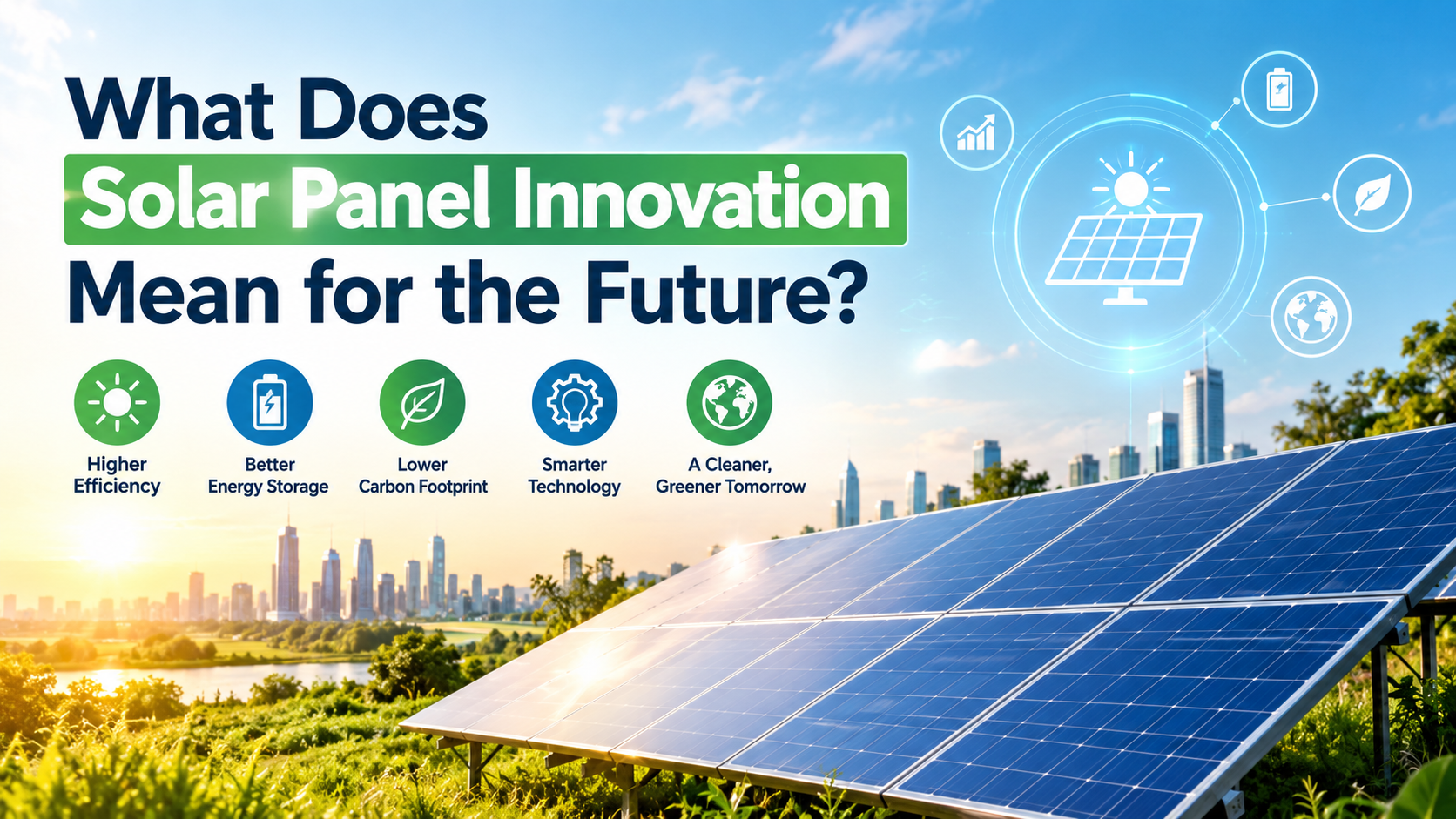
If you are considering installing domestic or commercial solar panels, you may be wondering how developments in solar technology could affect the future. Solar panels have already changed significantly over the years, with improvements in efficiency, design and energy storage helping to make renewable electricity more accessible.
Innovation within the solar industry continues to focus on improving how much electricity panels can generate, how they can be integrated into buildings, and how generated electricity can be stored and used.
For both homeowners and businesses, these developments could create more opportunities to generate and manage renewable energy in the years ahead.
How Is Solar Panel Technology Changing?
Solar panels have become more efficient and adaptable as the technology has developed.
Manufacturers and researchers continue to explore new materials, cell designs and manufacturing processes that could allow panels to produce more electricity from the same amount of available space.
This is particularly important where roof or ground space is limited.
For a homeowner, improved efficiency could mean generating more electricity from a relatively small roof area. For a business, it could allow a larger proportion of the energy used on commercial premises to be generated on site.
More Efficient Solar Cells
One of the key areas of solar innovation is the development of more efficient solar cells.
Traditional solar panels use silicon-based photovoltaic cells, and continued improvements to these cells have helped increase the amount of electricity that can be generated from sunlight.
Researchers are also exploring technologies such as perovskite solar cells and tandem cells, which combine different materials to potentially capture a wider range of sunlight.
While some emerging technologies are still being developed and tested, continued research could lead to further improvements in solar panel efficiency.
What Could This Mean for Domestic Solar Panels?
For homeowners, increased solar panel efficiency could make it easier to generate useful amounts of electricity from a smaller installation.
This could be particularly beneficial if you have limited roof space or if parts of your roof are affected by shading.
Future developments may also make solar panels easier to integrate into different types of homes, rather than being limited to traditional roof-mounted systems.
As solar technology develops, you may have more options when considering how renewable electricity can be incorporated into your property.
What Could This Mean for Commercial Solar Panels?
Businesses can also benefit from developments in solar technology.
Commercial buildings such as warehouses, offices, factories and retail premises can often have substantial roof areas that could be used for solar generation.
Improved panel efficiency could allow businesses to generate more electricity without necessarily requiring additional roof space.
This could be particularly useful for businesses with high electricity consumption, where generating more renewable electricity on site may help reduce their reliance on electricity from the grid.
Solar Panels Are Becoming More Integrated Into Buildings
Solar technology is also developing beyond traditional panels mounted onto existing roofs.
Building-integrated photovoltaics, often referred to as BIPV, can incorporate solar technology directly into building materials such as roofs, façades and glazing.
This could create new possibilities for both domestic and commercial buildings.
Instead of viewing solar panels as an additional feature installed onto a building, future designs could make solar generation part of the building itself.
Solar and Battery Storage
Solar panel innovation is also closely connected to developments in battery storage.
One of the challenges with solar generation is that electricity production depends on sunlight. Your panels may generate significant amounts of electricity during the day but much less in the evening.
Battery technology can help address this by storing surplus electricity for later use.
As battery technology develops, improvements in capacity, efficiency and cost could make it increasingly useful for both homes and businesses.
For homeowners, this could help you make greater use of your own solar electricity. For businesses, larger battery systems could potentially provide additional flexibility in how electricity is generated, stored and consumed.
Smarter Energy Management
The future of solar technology is not just about generating more electricity. It is also about managing that electricity more intelligently.
Smart energy management systems can monitor solar generation, electricity consumption, battery storage and other connected technologies.
For example, a home system could help coordinate solar panels with battery storage, electric vehicle charging and heating.
A business could use similar technology to manage electricity consumption across its premises and make better use of the renewable energy it generates.
As these systems become more sophisticated, solar panels could become part of a wider connected energy system rather than operating independently.
Solar Panels and Electric Vehicles
The growth of electric vehicles could also create new opportunities for solar energy.
If you have solar panels at home, you could potentially use some of the electricity they generate to charge an electric vehicle.
Businesses can also combine commercial solar panels with electric vehicle charging facilities for company vehicles, employees or customers.
Smart charging technology could make this even more useful by allowing charging to take place when solar generation is higher or when electricity demand is lower.
This creates another opportunity to use locally generated renewable electricity.
Making Better Use of Commercial Roof Space
For businesses, innovation could make existing buildings increasingly valuable as sources of renewable energy.
Large roofs on warehouses, industrial units and other commercial buildings can provide significant areas for solar installations.
As panel efficiency improves, these spaces could potentially generate greater amounts of electricity without requiring additional land.
This could allow businesses to incorporate renewable generation into existing infrastructure rather than relying entirely on separate solar farms or other forms of generation.
What About Solar Panel Durability?
Innovation is also focused on improving the durability and reliability of solar panels.
A solar installation is intended to operate for many years, so materials and manufacturing processes need to withstand changing weather conditions and regular exposure to the elements.
Improving durability can help extend the useful life of solar technology and reduce the need for replacement.
Research into materials and panel construction can therefore be just as important as increasing electricity generation.
Recycling and the Solar Industry
As more solar panels are installed, the question of what happens to panels at the end of their useful life becomes increasingly important.
Innovation in solar panel recycling could help recover valuable materials from old or damaged panels and reduce the amount of waste associated with the technology.
This is an important consideration for the long-term development of renewable energy.
The environmental benefits of solar technology are not only about how electricity is generated, but also about how the equipment itself is manufactured, used and eventually recycled.
Could Solar Panels Become More Affordable?
Technological development can also influence the cost of solar energy.
As manufacturing processes improve and the solar industry grows, there may be opportunities to reduce production and installation costs.
However, the price of a solar installation depends on many factors, including the equipment, labour, property, system size and wider market conditions.
Future innovation may therefore make solar technology more accessible, but the overall cost will continue to depend on the individual installation.
A More Flexible Energy System
One of the most significant possibilities for the future is greater integration between solar panels and the wider electricity system.
Homes and businesses could potentially combine solar generation with battery storage, electric vehicles, smart appliances, heating systems and other technologies.
This could allow electricity to be generated, stored and consumed in more flexible ways.
For example, surplus solar electricity could be stored during periods of high generation and used later when demand increases.
At a larger scale, thousands of connected solar and battery systems could potentially contribute to a more flexible electricity network.
Will Solar Panels Replace Traditional Energy Sources?
Solar panels are unlikely to be the only technology involved in the future energy system.
Instead, solar generation is likely to work alongside other renewable technologies, energy storage, electricity networks and different forms of energy generation.
Wind power, hydroelectricity, battery storage and other technologies can all contribute to meeting energy demand.
The development of solar technology is therefore part of a much broader transition towards a more diverse and lower-carbon energy system.
What Does This Mean for You?
For homeowners and businesses, continuing innovation means that the solar technology available in the future may offer different options from those currently available.
You may have access to more efficient panels, improved battery storage, smarter energy management and new ways of integrating solar generation into your property.
However, you do not necessarily need to wait for future technology before considering solar panels.
Current systems can already provide renewable electricity, and the most suitable option will depend on your property, energy consumption and individual requirements.
In Conclusion
Solar panel innovation could have a significant impact on the future of renewable energy, with developments in efficiency, battery storage, smart energy management, building integration and recycling continuing to shape the industry.
For homeowners, these developments could make it easier to generate and use renewable electricity within their properties. For businesses, improvements in panel efficiency and energy management could provide new opportunities to make better use of commercial buildings and reduce reliance on electricity from the grid.
Solar technology is continuing to evolve, but the overall direction is towards making renewable electricity generation more efficient, flexible and integrated.
If you are considering solar panels for your home or business, understanding how the technology is developing can help you consider not only what a system can offer you today, but also how solar energy could form part of your longer-term energy strategy.