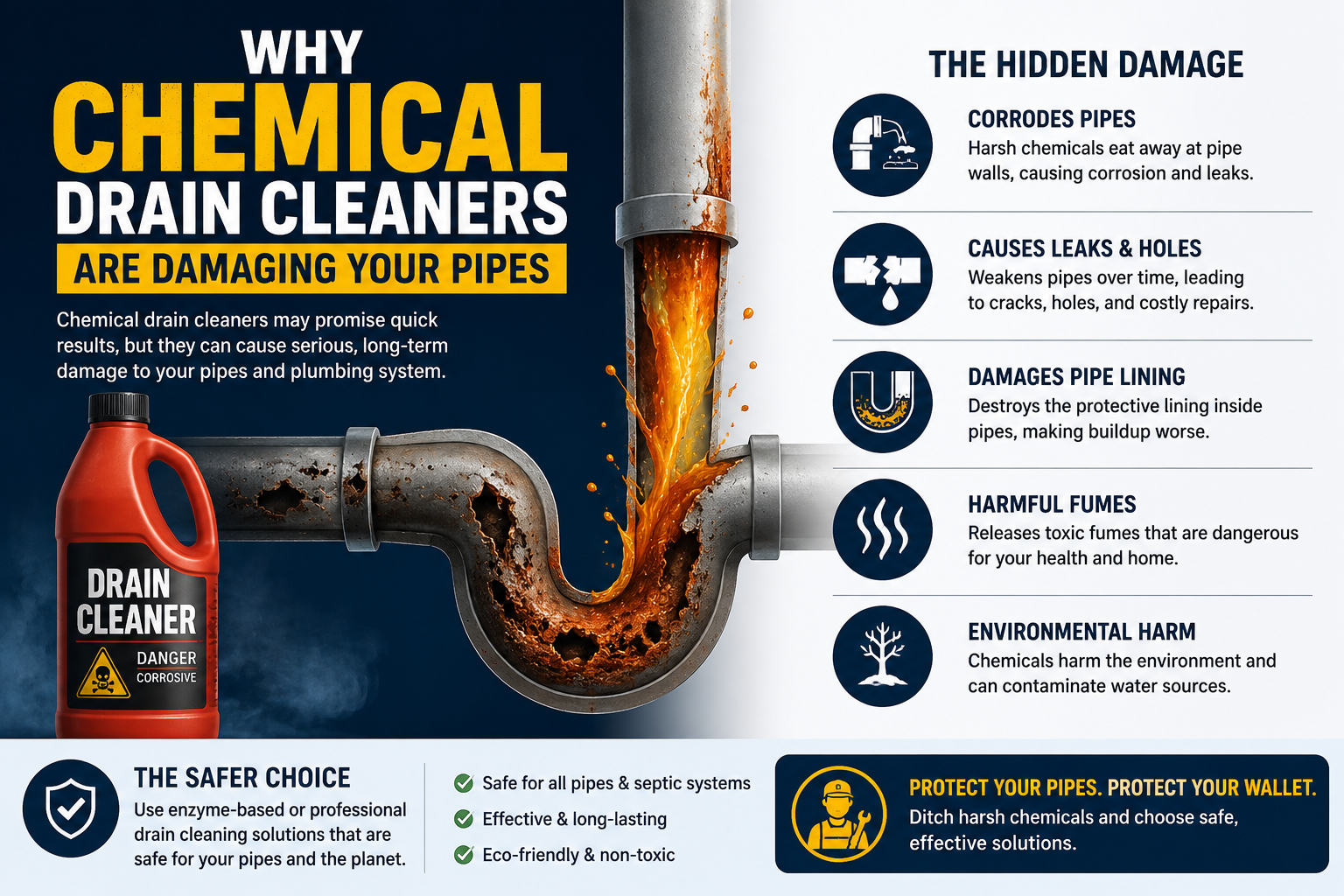
When a sink starts draining slowly or a shower begins to pool around your feet, the first instinct for many homeowners is to reach for a bottle of chemical drain cleaner. It’s cheap, it’s available at every grocery store, and the label promises fast results. Pour it in, wait a few minutes, and the clog disappears — problem solved, right?
Not quite. What those labels don’t tell you is that the same harsh chemicals dissolving your clog are also slowly eating away at your pipes. That quick fix you reach for again and again can quietly cause expensive, long-term damage to your entire plumbing system — damage that often costs far more to repair than the clog ever would have.
In this article, we’ll break down exactly how chemical drain cleaners harm your pipes, why they often don’t even fix the real problem, and what safer alternatives actually work. If your drains are clogging frequently, that’s usually a sign of a deeper issue that a bottle of chemicals can’t solve — and a professional clogged drain service can diagnose and clear it without putting your pipes at risk.
How Chemical Drain Cleaners Actually Work
To understand the damage, it helps to know what’s happening inside that bottle. Most chemical drain cleaners fall into three categories: caustic (containing lye or potash), oxidizing (bleach, peroxides, nitrates), and acidic (sulfuric or hydrochloric acid).
All of them work by triggering a chemical reaction that generates intense heat to dissolve hair, grease, and organic matter. That reaction can raise temperatures high enough to soften or warp pipes. In other words, the very mechanism that clears your clog is also the one that’s degrading the pipe walls around it.
The Hidden Damage to Your Pipes
Corroded and Weakened Pipes
The heat and harsh chemistry of these products are tough on every type of pipe. Older metal pipes corrode and thin out over time, while the reaction eats away at protective coatings. Each application chips away at your pipes’ structural integrity a little more.
Damage to PVC and Plastic Pipes
If you have PVC or other plastic piping — common in modern homes — the heat generated by chemical cleaners can soften, warp, or even melt the pipe. This can cause joints to weaken, leaks to form, and sections to fail entirely.
Worn-Out Seals and Joints
Even if the pipes themselves survive, the rubber gaskets, seals, and joints that hold your plumbing together are vulnerable. Repeated chemical exposure dries them out and degrades them, leading to slow leaks that are hard to detect until water damage appears.
Why Chemical Cleaners Often Don’t Even Work
Here’s the frustrating irony: chemical cleaners frequently fail to solve the actual problem. They may punch a small hole through a clog so water flows again, but the bulk of the blockage often remains, ready to build right back up.
Worse, they’re useless — and dangerous — against certain problems. They won’t touch a clog caused by tree roots, a collapsed pipe, or a foreign object. And if the chemicals pool on top of a stubborn clog without draining, you’re left with a pipe full of caustic liquid that becomes a hazard for you or any plumber who later opens the line.
Health and Safety Risks
Beyond your plumbing, these products pose real risks to the people using them. The fumes can irritate your eyes, nose, throat, and lungs, and splashes can cause serious chemical burns to skin and eyes.
Storing them around the house is risky too, especially with children or pets nearby. And when these chemicals get flushed into the water system, they contribute to environmental pollution that affects local waterways and wildlife.
Safer Alternatives That Actually Work
The good news is that you have plenty of effective, pipe-friendly options:
- A plunger — Simple, cheap, and surprisingly effective for many common clogs.
- A drain snake or auger — Physically breaks up and pulls out blockages without any chemicals.
- Baking soda and vinegar — A natural fizzing reaction that helps loosen minor buildup, followed by hot (not boiling) water.
- Enzyme-based cleaners — These use natural bacteria and enzymes to digest organic matter safely, gently, and without harming pipes.
- Boiling water for grease clogs — Often enough to clear minor grease buildup in metal pipes (avoid with PVC).
When to Call a Professional
If you’re plunging and snaking the same drain over and over, the clog keeps coming back, or multiple drains are slow at once, it’s time to stop fighting it yourself. These are signs of a deeper blockage in your main line that needs professional equipment to diagnose and clear.
A licensed plumber can use a camera inspection to find the exact cause and use methods like hydro-jetting to clear the line thoroughly — without the corrosive damage of chemicals. It’s a one-time fix instead of an endless cycle of pouring more chemicals down a pipe that’s slowly failing.
Frequently Asked Questions (FAQ)
Are chemical drain cleaners ever safe to use?
Occasional, careful use on a metal pipe may not cause noticeable harm, but repeated use on any pipe — and especially on PVC — is risky. There are almost always safer options worth trying first.
What’s the safest way to clear a clog at home?
Start with a plunger or a drain snake. For minor organic buildup, baking soda and vinegar or an enzyme cleaner are gentle, pipe-safe choices.
Can chemical cleaners damage a septic system?
Yes. They can kill the beneficial bacteria your septic system relies on to break down waste, disrupting the entire system.
How do I know if my pipes are already damaged?
Signs include recurring leaks, slow drains that don’t improve, discolored water, or a sulfur smell. A professional camera inspection can confirm the condition of your pipes.
Conclusion
That bottle of chemical drain cleaner might feel like a quick win, but it’s often working against you — corroding your pipes, degrading your seals, and rarely solving the real problem underneath. Over time, the damage adds up to repair bills that dwarf the cost of the clog you were trying to fix.
The smarter approach is to reach for safe, mechanical solutions first, and call a professional when a clog keeps coming back. Protect your pipes, your health, and your wallet by skipping the chemicals — your plumbing will thank you for it.