AI video is moving from short experiments into business workflows. Before Seedance 2.5 becomes more widely available, companies are already thinking about what longer, more controllable video generation could mean for marketing, training, ecommerce and content planning.
Businesses have spent the last few years learning what generative AI can and cannot do. Text tools changed how teams draft ideas. Image tools changed how campaigns and product visuals are planned. Video is now becoming the next area to watch, but it brings a harder question: can AI video move beyond eye-catching demos and become useful in everyday business work?
That is why Seedance 2.5 is getting attention ahead of wider availability. The interest is not only about another AI video model entering the market. It is about whether businesses can get closer to a workflow where an idea, a reference image, a short script and a clear prompt can turn into a usable first video draft.
For business teams, that shift matters because video demand keeps growing. Brands need product explainers, social clips, internal training videos, landing page visuals, campaign drafts and short-form storytelling. Traditional production still matters, but not every early idea can wait for a full shoot or a large editing process.
Why AI Video Is Becoming a Business Workflow Issue
Video has become one of the most useful ways to explain a product, introduce a service or build trust with an audience. The problem is that video is also expensive, time-consuming and difficult to revise. A small change in message, format or audience can mean re-editing the whole piece.
That is where AI video becomes interesting for businesses. It can help teams test ideas before they commit to production. A marketing team can explore a product scene. A founder can test a short explainer concept. A training team can draft a visual example before building the final version.
This does not mean every AI-generated clip is ready to publish. It means AI video can become a planning layer, helping teams see an idea earlier and improve it before spending more time or budget.
What Makes Seedance 2.5 Worth Watching
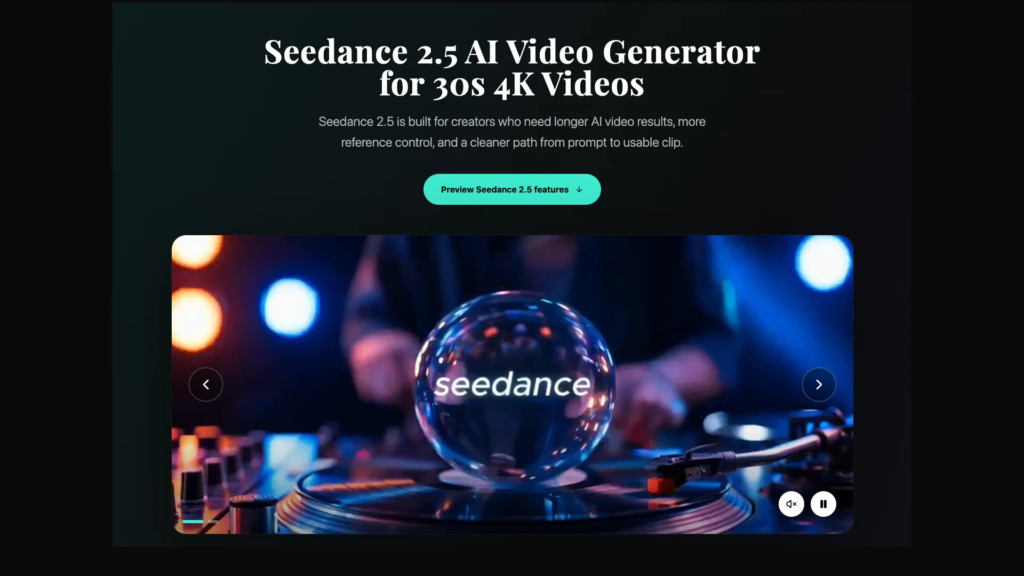
The current discussion around Seedance 2.5 focuses on longer clips, 4K output, richer reference inputs and more control over scenes. For business users, these points matter because short, disconnected clips are often not enough. A product story, service explanation or campaign concept usually needs more room to develop.
Longer generation could make a video feel less like a fragment and more like a complete draft. Reference control could help keep products, environments and visual styles closer to the original brief. Better scene direction could make the output easier to review with a team.
Until broader access and final details are fully clear, it is better to treat these as areas to watch rather than guaranteed results. Still, they explain why businesses are paying attention. The model is connected to problems that companies already face when trying to make video content faster.
Marketing Teams Need Faster Drafts
Marketing teams rarely struggle because they have no ideas. They struggle because every idea needs assets, timing, review and approval. A new product launch, seasonal sale or social trend can create a need for video before a team has time to produce one properly.
An AI video workflow can help by turning early concepts into visual drafts. These drafts may not replace a final edit, but they can help a team decide what is worth pursuing. That saves time because weak concepts can be dropped sooner, and stronger ideas can be refined with more confidence.
This is where a Seedance 2.5 AI video workflow could become useful for business content teams. The value is not simply speed. It is the ability to compare directions, test visual language and prepare better briefs for final production.
Reference Inputs Could Help Brand Consistency
Businesses care about consistency. A product should look like the real product. A brand scene should match the approved style. A character or setting should not change halfway through the clip. These details are easy to overlook in a quick demo, but they matter in professional communication.
Richer reference inputs are important because they give a model more than a text description. A business may want to use a product photo, a style frame, an existing video, audio timing or a brand mood board. If those inputs guide the final clip more clearly, AI video becomes easier to direct.
For teams preparing to test Seedance 2.5, the practical step is to collect good references before trying prompts. A vague request can produce a surprising result, but a clear brief with real assets is more likely to show whether the tool fits business needs.
Where Businesses May Use AI Video First
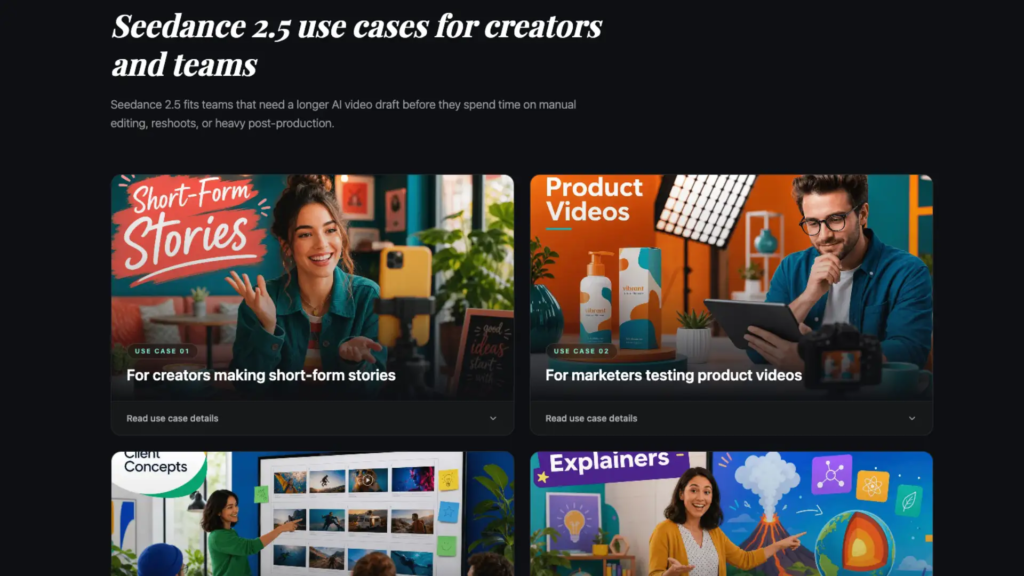
The first business use cases will probably be practical rather than glamorous. Teams may use AI video for rough campaign drafts, product teasers, internal explainers, social media concepts, ecommerce visuals and training examples.
These are areas where speed and iteration matter. A company does not always need a perfect final video at the first stage. It may need a quick visual draft that helps people make decisions. Does the product message work? Does the scene feel clear? Does the motion help explain the idea? Can the draft be adapted for different platforms?
When AI video answers those questions earlier, it becomes part of the business planning process rather than just a creative experiment.
What Businesses Should Prepare Before Wider Availability
Companies interested in Seedance 2.5 do not need to wait passively. They can prepare a small testing kit now. That kit should include a product or service brief, two or three reference images, one short script, one social video concept and a list of review standards.
The review standards matter. A business should not judge AI video only by whether it looks impressive. It should check whether the clip communicates the intended message, keeps the visual identity stable, leaves room for editing and can be reused or revised.
A simple checklist can help:
- Does the video explain the idea clearly?
- Are product and brand details consistent?
- Does the motion support the message?
- Can the clip be edited for social, web or internal use?
- Can the prompt and references be improved for another version?
Final Thoughts
Seedance 2.5 is attracting attention because businesses are looking for AI video tools that feel more useful, controllable and connected to real workflows. The strongest opportunity is not just making video faster. It is helping teams move from idea to first draft with fewer delays.
For companies watching the next stage of AI video, the smart approach is preparation. Gather references, define real use cases and decide what a useful output should look like. When broader access becomes available, teams with a clear plan will be in a better position to judge whether Seedance 2.5 fits their creative and business needs.