For many teams, the value of AI video is not only a finished clip. It is the ability to test visual ideas earlier, compare directions faster, and turn rough concepts into something people can actually review.
Business video work often starts with a familiar problem: everyone understands the idea, but nobody can see it yet. A product launch needs a teaser. A startup needs an explainer. A marketing team wants several social concepts. A founder wants to show a service flow before paying for production. Written briefs help, but video is easier to judge when it can be seen.
The release of Seedance 2.5 matters because it points to a more practical role for AI video. Instead of treating generation as a novelty, teams can use it as an early prototyping layer – a way to move from discussion to visual draft while the idea is still flexible.
Business Teams Need Drafts, Not Just Demos
A polished sample can be impressive, but it does not always solve a business problem. Teams need drafts that answer real questions. Does the product look right? Does the message make sense in motion? Is the pacing too slow? Does the visual style fit the brand? Could this become an ad, landing page video, training clip or short social post?
Those questions are easier to answer with a rough video draft than with another paragraph in a planning document. That is why AI video is becoming useful before production begins. It gives teams something to react to, correct and improve.
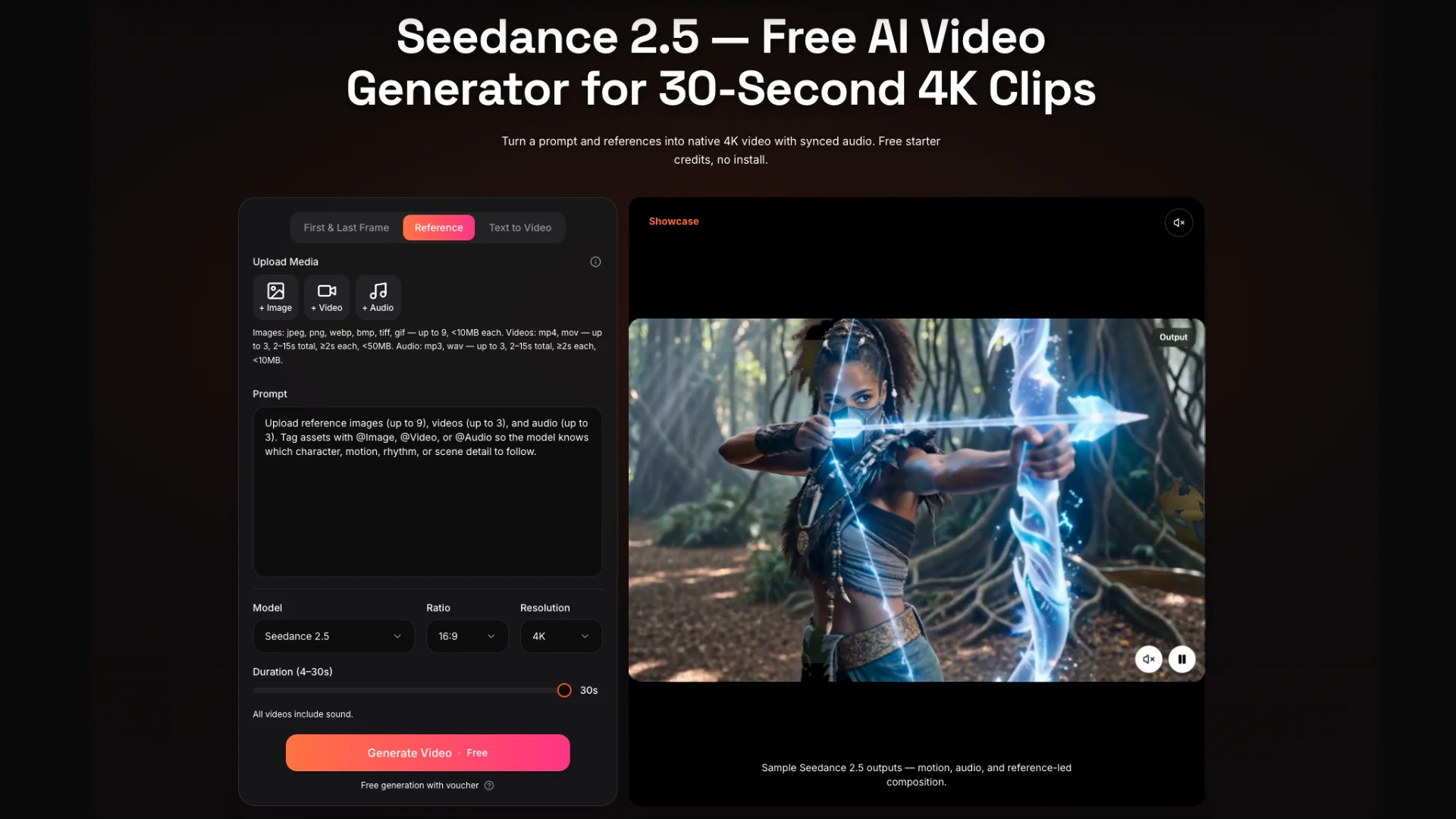
Seedance 2.5 fits into this shift because its feature direction is built around longer output, stronger references, 4K generation and more controllable editing. These are the kinds of things that matter when a draft has to survive review by more than one person.
Longer Video Makes Prototypes Easier to Judge
Short clips are useful for quick visual experiments. They can show a mood, product angle or camera movement. But many business ideas need more than a few seconds. A service explainer needs a sequence. A product teaser needs a reveal. A training example needs enough time for the viewer to understand what is happening.
Native 30-second generation gives creators more space to test whether an idea can hold together. A longer clip does not automatically make a better video, but it makes the review more meaningful. Teams can see where the story works, where the motion breaks, and where the message becomes unclear.
This is especially useful for early approvals. A team can compare two or three directions before spending time on a full production process.
Reference Assets Help Keep the Work Grounded
Most business videos are not created from a blank page. They usually start with existing materials: a logo, product photo, website screenshot, brand palette, campaign line, founder note, customer problem, or previous video. These references keep the work connected to the real business.
That is why reference-guided generation is important. Images can define the product. Video references can suggest motion. Audio can help with timing or atmosphere. Text can explain the scene and purpose. When those pieces work together, the AI system has less to invent and more to follow.
A Seedance 2.5 business video workflow makes sense in this context because teams do not only need creativity. They need continuity. The generated draft should still feel connected to the product, message and brand direction.
Where Faster Prototyping Helps
There are several practical places where AI video prototyping can help business teams:
- Product launch teasers that need quick concept testing before final production.
- Landing page videos that explain a feature or customer problem.
- Social media drafts for testing several hooks or visual styles.
- Training clips that turn a process into a simple visual sequence.
- Investor or sales presentations that need a clearer version of an idea.
In each case, the goal is not to replace every production step. The goal is to reduce the time between idea and feedback. A team can see what works earlier, which makes the later creative process more focused.
Revision Is Where the Real Value Appears
Good business content rarely comes from the first draft. A headline changes. A product angle improves. A feature becomes more important. A scene needs to be shorter. A brand detail needs to be corrected.
If an AI video tool forces teams to restart every time they spot an issue, the workflow becomes fragile. If it supports more flexible review and editing, it becomes easier to treat the output as a real working draft.
That is why local editing and prompt adherence are practical features, not just technical claims. They help teams keep the good parts of a clip while improving what does not work.
A Simple Testing Plan for Teams
Teams that want to test Seedance 2.5 should avoid starting with vague prompts. A better first round is small and structured:
- Choose one real business use case.
- Prepare one or two reference images that define the product or style.
- Write a short prompt that explains the scene, motion and intended message.
- Generate a draft and review it for clarity, consistency and pacing.
- Make one revision at a time so the team can learn what improves the result.
- Save the prompt, references and notes for future comparison.
This kind of process keeps AI video from becoming random experimentation. It turns it into a useful part of content planning.
Final Thoughts
Seedance 2.5 is interesting for businesses because it arrives at a moment when video demand keeps rising and production time remains limited. Teams need faster ways to test ideas, but they still need control, clarity and brand consistency.
The real benefit is not simply faster generation. It is faster learning. A usable AI video draft helps teams see what an idea could become, decide what needs work, and move toward production with fewer blind spots.