Comparing 5 Used Ford Cars by Payload Capacity
Payload capacity is an important consideration when choosing a used Ford vehicle for work, recreation, or everyday hauling. Whether you need to carry tools, equipment, camping supplies, or other cargo, understanding how much weight a vehicle can safely handle can help you narrow your options. When exploring Carbondale, IL, Ford Dealership inventory, it is useful to compare different Ford models and remember that payload ratings can vary significantly depending on the year, engine, drivetrain, cab, and equipment.
1. Ford F-150
The Ford F-150 is a versatile full-size pickup available in numerous configurations. Its payload capacity varies considerably according to the selected powertrain and equipment. For example, Ford’s current specifications show maximum payload figures ranging from around 1,700 pounds to more than 2,400 pounds depending on configuration.
When considering a used F-150, do not rely on the model name alone. Check the specific truck’s door-jamb payload information and factory specifications. A lighter configuration may provide substantially different carrying capability from a heavily equipped model. This makes the F-150 particularly useful for buyers who want to match the truck closely to their expected workload.
2. Ford Ranger
The Ford Ranger offers a smaller footprint than the F-150 while still providing useful hauling capability. Current Ranger specifications show maximum payload capacities that can reach approximately 1,788 pounds, although the exact rating depends on engine and drivetrain configuration.
For used buyers, the Ranger can be worth considering when a midsize truck is sufficient for the intended cargo. Its smaller dimensions can also make it easier to maneuver and park than a full-size pickup. Before purchasing, verify the particular vehicle’s payload rating rather than assuming every Ranger has the same capacity.
3. Ford Maverick
The Ford Maverick occupies a different position in Ford’s truck lineup. It is a compact pickup designed to combine everyday practicality with useful bed-carrying capability. Current Ford specifications list a maximum available payload of 1,500 pounds.
For buyers who regularly carry lighter loads, this capacity may be enough for tools, recreational equipment, household materials, or weekend projects. The Maverick can also make sense for drivers who want a truck without the larger dimensions of a full-size model. When comparing used examples, check the exact configuration and equipment because payload ratings can differ.
4. Ford Super Duty F-250
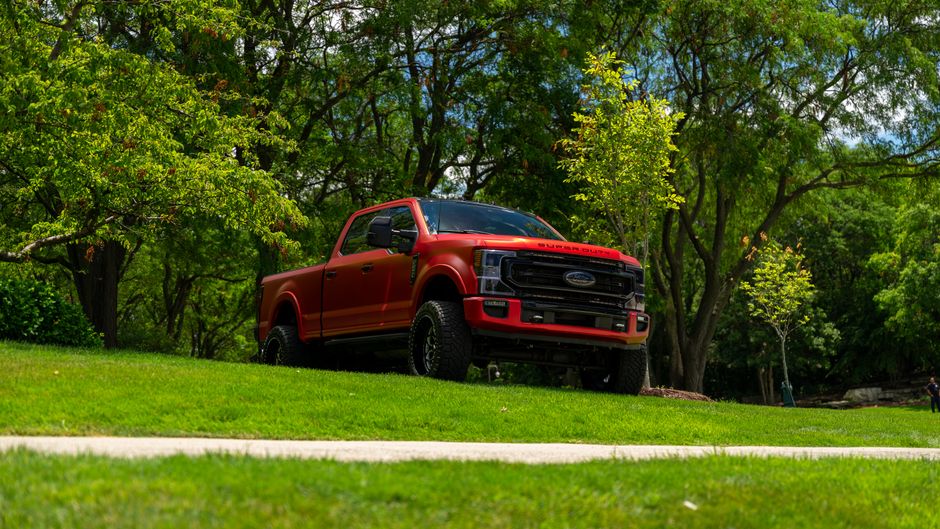
The F-250 Super Duty is designed for substantially heavier-duty hauling than smaller Ford trucks. Current Super Duty specifications show that maximum payload can reach several thousand pounds, with the exact rating depending on configuration, engine, cab, drivetrain, and equipment. Ford’s current Super Duty lineup lists a maximum available gas payload of 8,000 pounds.
A used F-250 may be appropriate for buyers who routinely carry heavy equipment or materials. However, larger trucks can have different operating costs and driving characteristics than smaller pickups. Evaluate the vehicle according to your actual needs instead of choosing a heavy-duty model simply because it offers a higher maximum rating.
5. Ford F-350 Super Duty
The F-350 takes the Super Duty platform into even more demanding hauling applications. Depending on its configuration, an F-350 can offer substantial payload capability. Ford notes that payload varies according to accessories and vehicle configuration, making it important to check the specifications for the individual truck.
When shopping for a used F-350, inspect the suspension, brakes, tires, frame, and drivetrain carefully, especially if the truck was previously used for commercial hauling. Maintenance records can also provide valuable information about how the vehicle was operated and serviced.
Compare Payload With Your Actual Needs
Maximum payload figures are useful for comparing models, but they should not be treated as universal numbers for every used vehicle. The weight of passengers, cargo, accessories, and aftermarket equipment can all affect how much capacity remains available.
Think about what you normally carry. A driver transporting small tools and recreational equipment may not need the capability of a Super Duty. Someone regularly hauling heavy construction materials may need considerably more capacity than a compact pickup can provide.
Check the Specific Vehicle’s Rating
One of the most important steps when buying a used Ford truck is checking the specific vehicle rather than relying solely on general model specifications. Different engines, drivetrains, cab configurations, packages, and optional equipment can change payload capacity.
Look for the vehicle’s manufacturer information and payload certification label. If the seller provides factory documentation, compare it with the vehicle’s identification information. This helps ensure that the capacity you’re considering actually applies to the truck you’re buying.
Inspect Condition Before Buying
Payload capacity only tells part of the story. A used truck that has been regularly loaded near its limits may show wear on suspension components, brakes, tires, wheels, and drivetrain parts.
During your inspection, look for uneven tire wear, suspension sagging, leaks, damaged frame components, and unusual noises. Ask for maintenance records and find out how the vehicle was previously used. A professional pre-purchase inspection can also identify mechanical issues that may not be obvious during a test drive.
Consider Payload and Towing Together
If you plan to tow a trailer, payload capacity remains important because the trailer’s tongue weight counts toward the truck’s payload. This means a vehicle may have plenty of towing capacity but less remaining payload once passengers, cargo, and trailer tongue weight are included.
Review both ratings together when choosing a used Ford truck. Selecting a vehicle based only on its maximum towing figure can lead to an inaccurate assessment of its practical hauling capability.
Conclusion
Comparing Ford vehicles by payload capacity requires more than looking at a single number. The Maverick can provide useful capacity in a compact package, while the Ranger offers additional capability in a midsize format. The F-150 provides broad configuration choices, and the F-250 and F-350 Super Duty models are designed for heavier hauling requirements. Because payload varies by configuration and equipment, always verify the rating of the specific used vehicle and consider its condition, maintenance history, and intended workload before buying.