
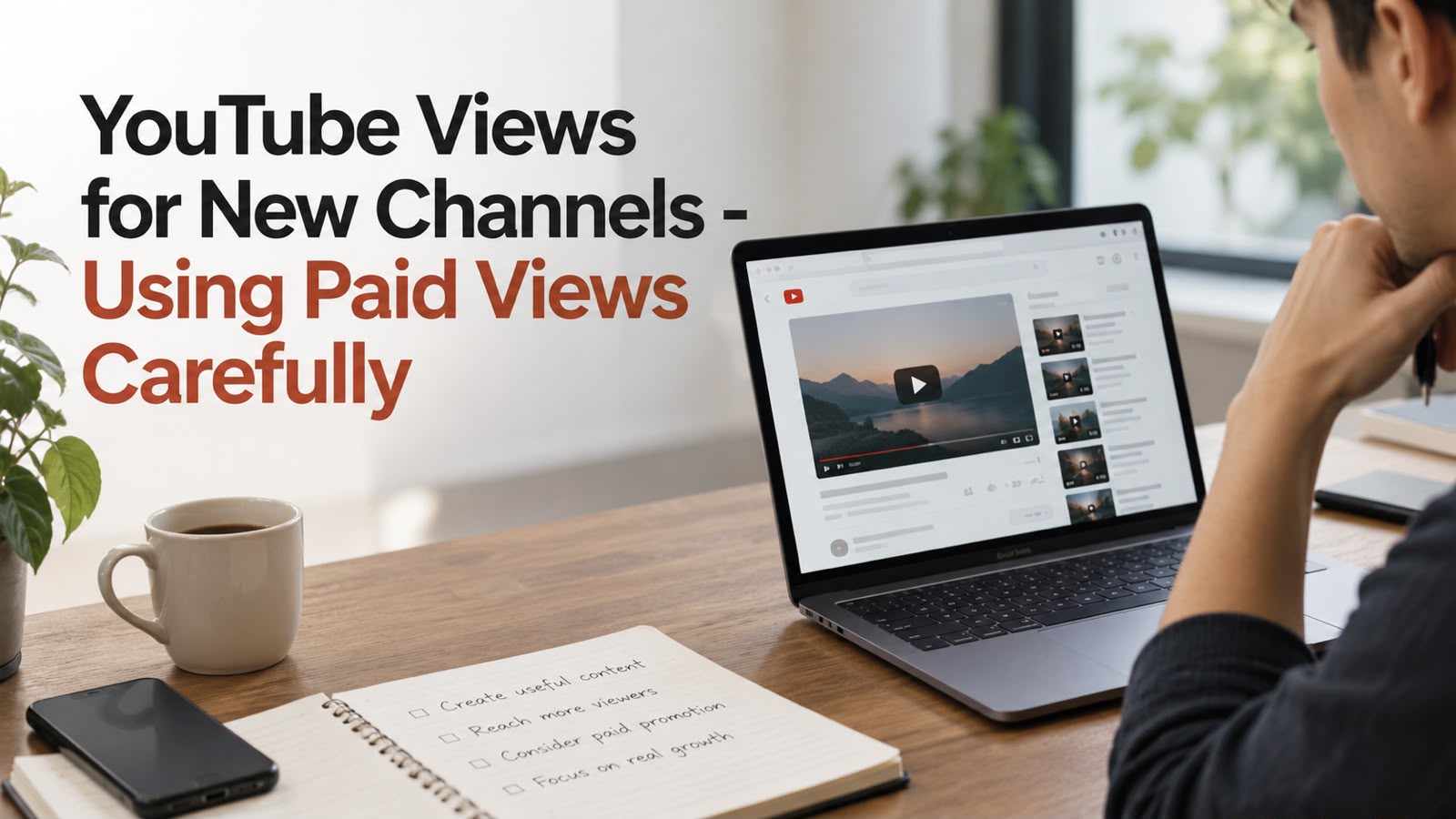
A new YouTube channel can publish a useful video and still struggle to attract its first viewers. Without an established audience, creators have fewer returning subscribers, limited performance history, and little information about which topics resonate. Paid promotion can introduce a video to more people, but increasing the view count is not the same as developing an audience. Sustainable growth depends on whether viewers choose to watch, stay interested, and return for future uploads.
Creators researching how to buy youtube views should understand the difference between paid exposure, artificial engagement, and genuine audience development. An additional view has limited value when it produces no meaningful viewing behavior. Before spending money, new YouTubers should examine their thumbnails, titles, audience retention, and traffic sources. They should also understand YouTube’s engagement policies because some third-party methods of generating views can put a channel at risk.
What Does a YouTube View Actually Tell You?
A YouTube view indicates that a video has received a qualifying playback, but the public count does not explain how interested the viewer was. Two videos can display similar view totals while producing very different results for their creators.
Consider two hypothetical videos, each receiving 1,000 views. The first is eight minutes long and averages 45 seconds of viewing. The second has the same length but averages four minutes. Using those averages, the first produces approximately 12.5 hours of watch time, while the second produces about 66.7 hours. The view totals are identical, but the viewing behavior is substantially different.
Three measurements help explain this distinction:
- Views: The number of qualifying video playbacks recorded by YouTube.
- Watch time: The accumulated amount of time viewers spend watching the video.
- Audience retention: How effectively different moments of the video maintain viewer attention.
YouTube Studio provides these measurements through its analytics reports. Average view duration is particularly useful because it summarizes how long viewers watch per view. The audience retention graph offers more detail by showing where viewers continue watching or leave.
None of these measurements should be treated as an isolated formula for recommendation performance. YouTube uses multiple signals, and viewer behavior varies by video format, audience, and traffic source.
Why Thumbnails and Titles Deserve Attention First
Before viewers can appreciate a video’s content, they must decide whether it is worth opening. The title communicates the subject and expected benefit, while the thumbnail provides a visual reason to investigate further.
YouTube’s impressions click-through rate, commonly called CTR, measures how frequently viewers watch after seeing a counted thumbnail impression. A weak CTR can indicate that the packaging is not sufficiently appealing to the audience encountering it. However, CTR also varies according to where impressions appear, so comparisons require context.
For example, a new technology channel publishing a laptop comparison should make the comparison clear. A thumbnail containing unrelated dramatic imagery may attract curiosity, but it can also create expectations the video cannot satisfy.
Creators can improve their presentation through several practical decisions:
- Write titles that identify the actual subject and communicate a clear benefit.
- Use thumbnails with one recognizable visual focus and readable text when necessary.
- Avoid misleading claims that the video does not support.
- Check performance separately across search, browse, and suggested-video traffic when sufficient data is available.
- Change thumbnails or titles when evidence suggests a mismatch between viewer expectations and the content.
A stronger thumbnail may help a video attract relevant viewers without requiring additional paid traffic. More importantly, honest presentation improves the likelihood that viewers find what they expected after clicking.
When Can Paid Views Be Useful?
Paid video exposure can be useful when it reaches people who have a genuine interest in the subject. A creator introducing a niche tutorial, for example, may benefit from showing the video to viewers who regularly watch similar educational content.
However, the method used to generate those views matters more than the quantity purchased.
YouTube Promote and Google Ads offer official advertising options for distributing videos to audiences. These should not be confused with third-party services that sell view counts. YouTube’s fake engagement policy prohibits artificially increasing metrics through automated systems or other illegitimate methods, and it warns that violations by hired promotion providers can affect the creator’s channel.
Therefore, buying a numerical increase without understanding its source is not a sound growth strategy. Creators should establish whether a promotion method represents legitimate advertising and voluntary viewer activity before using it.
Paid exposure also cannot repair an uninteresting opening, confusing explanation, or misleading thumbnail. When the content fails to satisfy viewers, additional traffic simply exposes those weaknesses to more people.
How Does OZSM Fit Into YouTube Promotion?
OZSM (ozsm.net) is an SMM panel and social media service provider serving individual users, agencies, and resellers since 2021. Its service catalog includes YouTube views alongside other social media services, such as subscribers, likes, and watch time.
The platform lists different YouTube view service categories, including standard view services and advertising-related options. OZSM also provides services for other platforms, making its panel relevant to users managing campaigns across several social networks.
Orders use a relevant link or username rather than requiring the customer’s social media account password. For agencies handling multiple requests, the panel also offers mass-order functionality and an API for supported order management actions.
Nevertheless, a service appearing in a YouTube SMM panel does not establish that its traffic meets YouTube’s policies. Service descriptions should be evaluated individually, and claims about retention, targeting, or delivery characteristics should not be mistaken for independent verification of traffic quality.
For a new channel, the sensible question is not simply how many additional views a service offers. It is whether the method of obtaining those views is appropriate for the channel and compatible with YouTube’s rules.
Why Paid Views Do Not Replace Monetization Requirements
One common misunderstanding is that buying views automatically moves a creator closer to qualifying for the YouTube Partner Program.
YouTube distinguishes between public video performance and the metrics that count toward monetization eligibility. Watch hours and subscribers generated directly through advertising campaigns do not count toward the relevant YouTube Partner Program eligibility thresholds. Qualifying organic activity that occurs later is assessed separately.
Artificial traffic presents an additional problem. YouTube may disregard invalid views and take enforcement action against manipulated engagement. Purchased view totals therefore provide no reliable basis for predicting monetization eligibility or future advertising revenue.
Creators should also distinguish long-form videos from Shorts. Their eligibility measurements operate differently, and Shorts Feed watch hours do not count toward the long-form public watch-hour threshold.
A new channel pursuing monetization should concentrate on original content, qualified viewing activity, returning audiences, and compliance with YouTube’s policies. Paid exposure is a marketing expense, not a substitute for those requirements.
How to Evaluate a New Upload Before Spending Money
A useful approach is to assess the video before deciding whether promotion is justified. This avoids directing resources toward content that has obvious problems.
- Define the intended audience. Identify the viewer’s interest or problem. A channel about beginner photography needs a more specific audience than everyone who uses YouTube.
- Review the opening. The introduction should quickly establish what viewers will learn or experience. Remove unnecessary delays before delivering the promised content.
- Check the thumbnail and title. Make sure both represent the subject accurately and appeal to the same intended viewer.
- Examine available analytics. Review impressions, CTR, average view duration, audience retention, and traffic sources. Avoid drawing strong conclusions from very small samples.
- Choose a compliant promotional method. If paid distribution is appropriate, prioritize transparent advertising methods that reach interested viewers.
- Assess the result beyond views. Look for meaningful watch time, subsequent video viewing, and evidence that people are developing an interest in the channel.
This approach also helps creators identify when paid distribution is unnecessary. A video with an unclear topic or poor audience retention may benefit more from editing or better presentation than additional exposure.
What Should New Creators Measure After Promotion?
Campaign evaluation should separate the traffic generated by promotion from organic discovery whenever possible. Otherwise, a rise in total views can obscure whether the video is attracting an audience independently.
A practical assessment considers four questions: Did the campaign reach the intended audience? Did viewers spend meaningful time watching? Did they explore other content? Did organic discovery develop after the promotion?
YouTube Studio’s traffic source reports help distinguish views from search, suggested videos, browse features, and external sources. Creators can combine these reports with audience retention and returning-viewer information to develop a clearer picture.
Results require careful interpretation. A sudden increase in views followed by little additional interest does not establish lasting audience growth. Likewise, a modest number of relevant viewers who return for subsequent uploads may provide more useful feedback than a much larger disconnected audience.
Building a Channel Beyond the Initial View Count
New YouTubers benefit from treating their first uploads as opportunities to learn what their audience actually wants. The strongest growth decisions often come from identifying which questions viewers search for, which introductions maintain attention, and which subjects encourage them to watch another video.
OZSM offers YouTube view services for creators and marketing professionals considering external promotion, but any such service must be evaluated against YouTube’s engagement requirements. An increase in displayed views should never be interpreted as proof of authentic audience interest, improved recommendations, or future revenue.
For a new channel, the more durable objective is straightforward: create videos that attract the right people and give them a reason to keep watching. Paid exposure may introduce content to viewers when delivered through an appropriate method, but the video’s usefulness determines whether that introduction develops into an audience.