
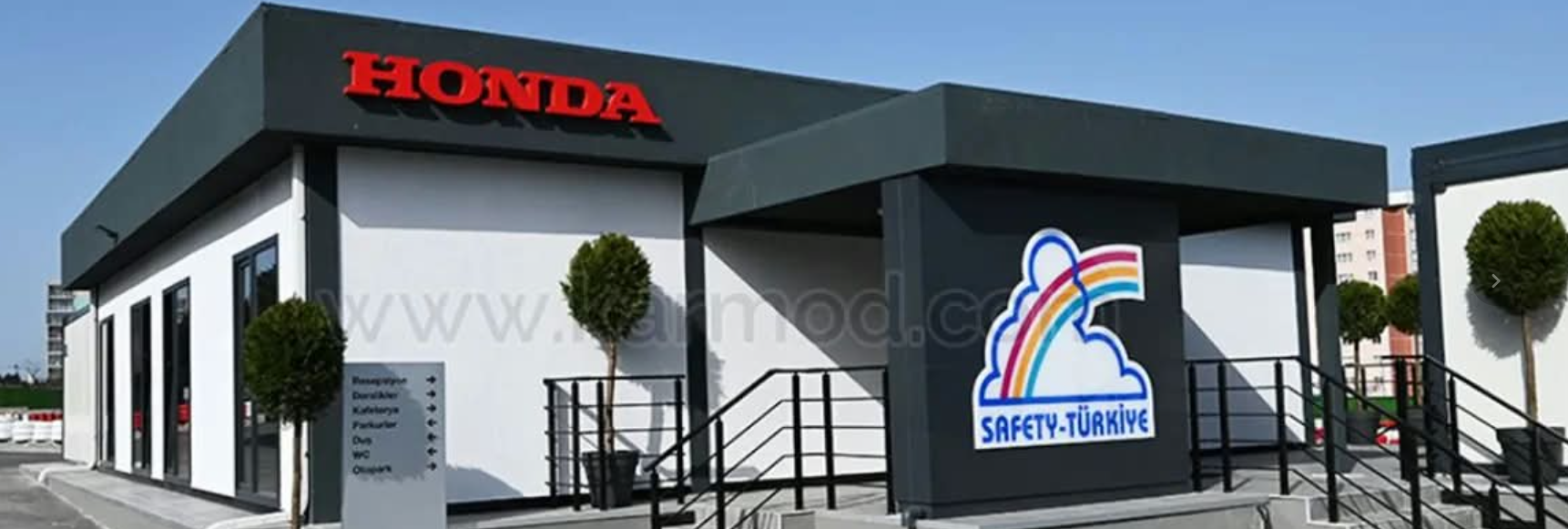
Businesses increasingly require flexible facilities that can support their operations without the complexity of constructing a permanent building for every new requirement. From industrial premises and construction sites to security checkpoints and temporary offices, compact modular accommodation has become an important consideration in infrastructure planning.
One construction method commonly associated with these buildings involves insulated sandwich panels. Their layered design combines protective external surfaces with an insulating core, making them suitable for various types of modular enclosure.
Understanding how these structures work can help organisations select accommodation that meets their practical and operational requirements.
Understanding Sandwich Panel Construction
A sandwich panel typically consists of two external facing layers bonded to an internal core.
The materials and thicknesses vary according to the intended application. Different specifications provide different levels of insulation, structural performance and fire resistance.
The prefabricated nature of these components allows them to be incorporated into modular structures during manufacturing.
This can reduce the amount of work required during final assembly and support a more consistent construction process.
For businesses considering compact site accommodation, insulated sandwich panel cabins for commercial applicationsoffer a practical alternative to conventional construction.
Such structures can be considered for different working environments, with dimensions and specifications selected according to the space available and the activities taking place inside.
The Importance of Thermal Performance
A comfortable internal environment is important for employees who spend extended periods inside a cabin.
Poorly insulated walls and roofs may allow significant heat transfer, creating uncomfortable conditions during periods of extreme temperature.
Insulated sandwich panels can help manage this transfer when their materials and thicknesses are appropriate for the application.
However, overall thermal performance also depends on windows, doors, roof junctions, ventilation and the quality of installation.
Any expected energy benefits should therefore be assessed using the complete building specification rather than the wall panels alone.
Where cabins accommodate personnel throughout the working day, suitable heating, cooling and ventilation arrangements may also be necessary.
Common Applications for Modular Panel Cabins
The versatility of panel construction makes it relevant to several industries.
Construction projects often require site offices, supervision points and administrative accommodation. These facilities may be needed for a limited period or throughout a longer development programme.
Industrial sites can use compact modular buildings for maintenance personnel, operational monitoring or entrance management.
Security applications represent another common use. A small enclosed workspace may provide suitable accommodation for staff responsible for monitoring entry points.
Ticketing facilities, visitor reception areas and commercial checkpoints can also benefit from purpose-built modular structures.
In each situation, internal layout and available floor space should be matched to the number of occupants and the equipment required.
Installation and Maintenance Considerations
Although modular buildings can simplify certain construction activities, proper installation remains essential.
The ground must be suitable for the proposed structure, and foundations or support arrangements should follow the manufacturer’s requirements.
Electrical services, drainage and other connections need to be considered before delivery.
Panel joints, openings and roof details should be installed correctly to reduce the risk of water penetration.
Routine maintenance should include checking external surfaces, seals, doors and windows.
The type of panel core and its verified fire performance should also be reviewed against applicable building requirements.
Choosing a Suitable Modular Building Manufacturer
A modular building should be evaluated according to its intended purpose rather than appearance alone.
Organisations should consider the dimensions, panel specifications, expected service life and available customisation options.
Manufacturers such as Karmod provide modular cabin solutions for various workplace and site-support requirements, allowing project planners to explore different building configurations.
Technical documentation and installation requirements should form part of the purchasing decision.
Supporting Flexible Business Infrastructure
Sandwich panel construction provides an approach to creating practical and adaptable workspaces.
When properly specified, insulated modular cabins can accommodate a variety of commercial activities while helping organisations respond to changing space requirements.
Careful planning, appropriate materials and regular maintenance remain essential to achieving reliable long-term performance.