Ford Safety Features Worth Discussing at the Dealership for Everyday Driving
Safety is one of the most important topics to discuss when choosing a vehicle for everyday driving. Modern Ford models offer a range of driver-assistance and safety technologies designed to help drivers monitor their surroundings, respond to potential hazards, and stay more comfortable in different traffic situations. Buyers considering a vehicle can also speak with a St Louis Ford Dealer to learn which safety features are included with a particular trim. Understanding what these systems do and where their limitations are can make it easier to choose a vehicle that fits your daily driving needs.
Pre-Collision Assist and Automatic Emergency Braking
Pre-Collision Assist is one of the key technologies worth discussing at the dealership. The system can monitor the road ahead and warn the driver about potential collisions. On equipped vehicles, Automatic Emergency Braking can apply braking assistance when a collision appears imminent and the driver has not responded sufficiently.
Ford has offered versions of this technology as part of its broader driver-assistance systems, with capabilities that can include pedestrian detection.
For everyday driving, this technology can be particularly relevant in busy traffic, where vehicles may suddenly slow or stop. However, it should be viewed as a driver aid rather than a replacement for attentive driving.
Blind Spot Information System
Changing lanes is a routine part of commuting, but vehicles traveling alongside your car can sometimes be difficult to see. Ford’s Blind Spot Information System, commonly known as BLIS, is designed to alert the driver when another vehicle is detected in a blind-spot area.
Depending on the model, BLIS may also be available with Cross-Traffic Alert or Trailer Coverage. These additional capabilities can be useful when reversing from parking spaces or changing lanes while towing.
When visiting a dealership, ask for a demonstration so you can see how the warning appears in the side mirror or instrument display.
Lane-Keeping Technology
Unintentional lane departures can happen during long commutes, highway driving, or moments when a driver becomes distracted. Ford’s Lane-Keeping System uses cameras to monitor lane markings and can provide warnings or steering assistance when the vehicle begins moving away from its lane.
Some Ford systems also include Road Edge Detection and Lane Centering capabilities. These technologies can provide additional assistance in maintaining the vehicle’s position on the road.
The dealership is a good place to ask how the system works on the specific Ford model and trim you are considering, since available features can vary.
Adaptive Cruise Control
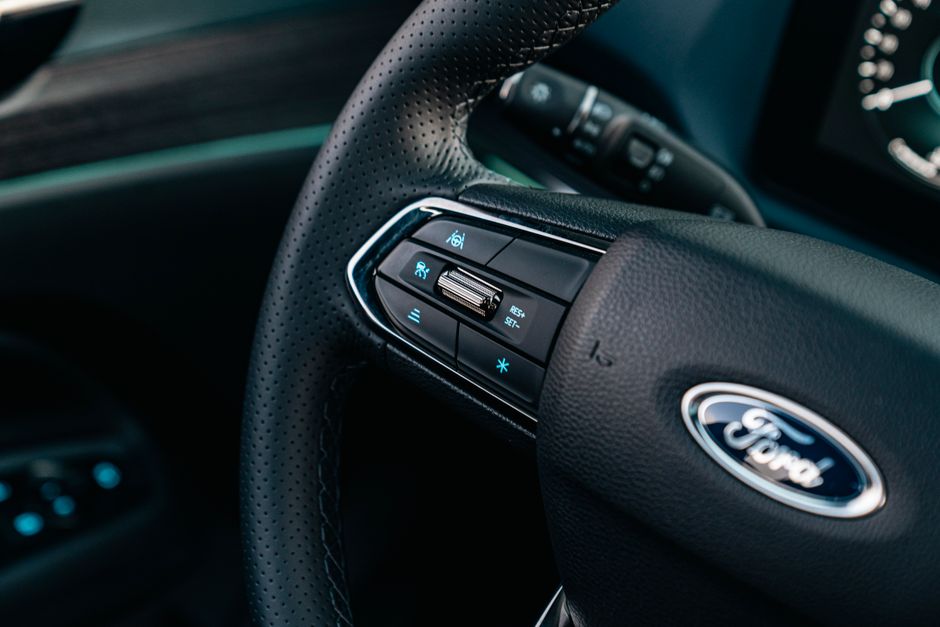
Traditional cruise control helps maintain a selected speed, while Adaptive Cruise Control can adjust speed based on traffic ahead. Ford describes its available Adaptive Cruise Control as a system that can maintain a selected distance from the vehicle in front and automatically reduce or increase speed as traffic changes.
This can be helpful during highway commuting and stop-and-go traffic. Some versions include Stop-and-Go functionality, while other configurations can add features such as Lane Centering and Speed Sign Recognition.
Ask the dealership whether the vehicle you’re considering includes these functions or requires a particular package or trim.
Cross-Traffic Alert and Reverse Assistance
Backing out of a driveway or crowded parking space can present visibility challenges. Cross-Traffic Alert is designed to monitor traffic approaching from the sides while the vehicle is reversing and provide warnings when another vehicle is detected.
Some Ford vehicles also offer Reverse Brake Assist, which can provide braking assistance when the system detects a potential collision while reversing. Current Ford models list combinations of Reverse Brake Assist, rear parking sensors, rearview cameras, and other related technologies.
These features can be especially useful for drivers who frequently park in busy shopping centers, garages, or urban areas.
Intersection Assist
Intersections can involve multiple directions of traffic, making them an important area for driver-assistance technology. Ford’s Intersection Assist uses camera and radar technology to help detect potential oncoming traffic conflicts during certain turns. If the system identifies a potential collision, it can alert the driver and, under appropriate conditions, apply braking assistance.
When comparing Ford models, buyers can ask whether Intersection Assist is included and how it operates under different driving conditions.
Parking and Camera Technology
Parking assistance can make everyday driving more convenient while also helping drivers understand their surroundings. Depending on the model, Ford vehicles can offer rearview cameras, parking sensors, 360-degree camera systems, and active parking assistance.
A 360-degree camera can provide a broader view around the vehicle, which may be useful when maneuvering in tight spaces. Ford has also highlighted the availability of 360-degree camera technology on models such as the Ranger.
During a dealership visit, it is worth testing these features rather than simply reading their names on a specification sheet.
BlueCruise for Highway Driving
Some Ford models offer BlueCruise, a hands-free driving-assistance system designed for designated highways. Ford describes BlueCruise as a Level 2 driver-assistance system, meaning the driver remains responsible for monitoring the road and being ready to take control. A driver-monitoring system helps ensure that the driver’s attention remains directed toward the road.
This technology can be useful for certain highway journeys, but it does not make the vehicle autonomous. Drivers should understand where the system can operate and its operating limitations before using it.
What to Ask at the Dealership
Safety equipment can differ between Ford models, model years, trims, and optional packages. Instead of assuming that every Ford includes the same technology, ask the dealership to identify the safety features available on the exact vehicle you’re considering.
Useful questions include:
- Which driver-assistance features are standard on this trim?
- Which features require an optional package?
- How do the warning systems work?
- What conditions can limit their operation?
- Can I see a demonstration during the test drive?
These questions can help turn a general discussion about safety into a practical evaluation of the vehicle.
Conclusion
Ford’s modern safety technology covers many aspects of everyday driving, from collision warnings and blind-spot monitoring to lane assistance, adaptive cruise control, parking technology, and highway driver assistance. The exact combination varies by vehicle and trim, so understanding each feature before making a decision is important. A dealership discussion and test drive can give buyers an opportunity to see how these systems work in practice and learn where their limitations lie. Ultimately, these technologies are designed to support an attentive driver, not replace the driver’s responsibility behind the wheel.