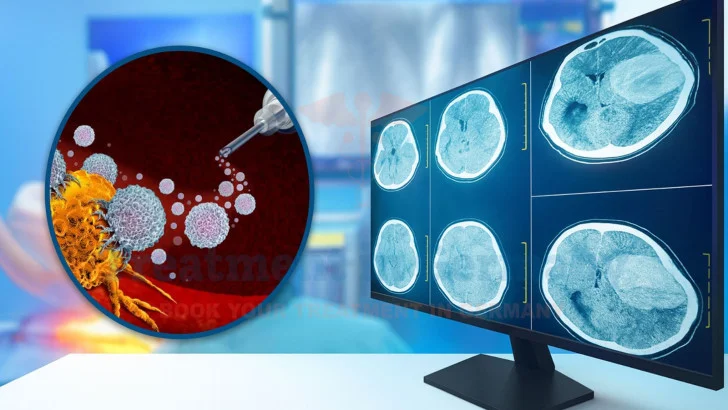
A diagnosis of glioblastoma leaves patients and families facing complex treatment and care decisions. Standard treatment remains surgery, radiotherapy, and temozolomide-based chemotherapy; yet recurrence is common and long-term survival remains limited. For this reason, many international patients explore glioblastoma treatment in Germany, where specialized neuro-oncology centers combine established therapies with advanced options such as dendritic cell vaccination, immunotherapy programs, and molecularly guided treatment strategies.
Glioblastoma multiforme accounts for about 14.5% of all central nervous system tumors and roughly 48.6% of malignant ones, which makes it the dominant form of serious glioblastoma brain cancer. Despite multimodal treatment, median overall survival for glioblastoma remains approximately 15 months, highlighting the need for continued research into more effective therapies [1]. This is where newer approaches such as immunotherapy and dendritic cell therapy enter the picture, usually combined with standard care.
For families weighing cancer treatment in Germany, the practical side and logistical considerations can add complexity to an already challenging situation. TIG GmbH helps international patients identify appropriate neuro-oncology specialists in Germany and coordinates consultations, treatment planning, and travel logistics.
What Is Glioblastoma? Understanding GBM Cancer
It is a WHO grade 4 tumor, the highest grade on a biological scale of aggressiveness. Unlike many solid tumors, glioblastoma is classified primarily by histologic and molecular features and assigned a WHO grade rather than a traditional TNM cancer stage. Although glioblastoma is often referred to as “stage 4 glioblastoma,” brain tumors are classified by grade rather than stage. In practice, “stage 4 glioblastoma” usually refers to WHO grade 4 glioblastoma.
Glioblastoma infiltrates surrounding brain tissue at a microscopic level, making complete surgical removal difficult even when scans suggest a successful resection. Under the current WHO classification, glioblastoma refers specifically to IDH-wildtype glioblastoma, CNS WHO grade 4. Tumors previously termed “IDH-mutant glioblastoma” are now classified as astrocytoma, IDH-mutant, CNS WHO grade 4, and generally have a more favorable prognosis than IDH-wildtype glioblastoma [1]. whether described as stage 4 malignant glioblastoma or stage 4 GBM cancer, Prognosis of the disease is driven largely by tumor biology, molecular characteristics, patient age, functional status, and treatment response.
Patients often ask about glioblastoma causes and what causes GBM. In truth, most tumors are sporadic, meaning they arise without a clear trigger, and no single risk factor explains the majority of cases [2]. Established risk factors include prior exposure to therapeutic ionizing radiation and certain rare inherited cancer-predisposition syndromes. Incidence increases with age, and glioblastoma occurs more commonly in men than in women. Reported median age at diagnosis is typically in the sixth to seventh decade of life [2]. As an aggressive brain tumor, it demands prompt, coordinated care.
Glioblastoma Symptoms and How the Disease Progresses
Glioblastoma symptoms depend on where the tumor sits and how fast it grows. Since the brain governs so many functions, the symptoms of glioblastoma differ from person to person. The most common warning signs include:
• Headaches which may worsen in the morning or with coughing, sneezing, or straining.
• Seizures, which can be the first sign in many patients.
• Weakness, numbness, or loss of function on one side of the body.
• Memory lapses, confusion, or changes in personality and behavior.
• Trouble with speech, vision, or balance.
• Nausea and vomiting from elevated intracranial pressure.
These symptoms of glioblastoma multiforme tend to build over weeks rather than months, which sets the tumor apart from slower-growing brain lesions. A frequent and painful question is how fast glioblastoma grows back after surgery. Even after apparent gross total resection, residual microscopic tumor cells almost invariably remain. Consequently, postoperative radiotherapy and chemotherapy are standard components of treatment for most eligible patients. In the last stages of glioblastoma, progressive tumor growth and associated neurologic decline may lead to increasing drowsiness, cognitive impairment, reduced responsiveness, swallowing difficulties, and loss of mobility. During the final stages of glioblastoma, palliative and supportive care become increasingly important to maximize comfort, symptom control, and quality of life.
Survival for Glioblastoma: What the Numbers Show
Survival for glioblastoma has improved only modestly over the decades, and the glioblastoma multiforme survival rate at five years remains uncommon despite modern multimodal treatment. Five-year survival rates are generally below 10% in population-based studies[1]. The malignant glioblastoma life expectancy is influenced by several factors, including age, functional status, extent of surgical resection, and molecular characteristics such as MGMT promoter methylation status [2].
While survival outcomes remain challenging, a range of investigational approaches including immunotherapies, vaccines, targeted therapies, and other novel treatment strategies are being evaluated for their potential to improve long-term survival. In a large phase 3 trial of a dendritic cell vaccine added to standard care, five-year survival reached 13.0%, compared with 5.7% in the standard-care group [4].
Innovative Glioblastoma Treatment Options in Germany
For patients who want to go beyond standard care, advanced glioblastoma treatment in Germany centers on two immune-based strategies: immunotherapy and dendritic cell therapy. Both aim to turn the body’s own defenses against the tumor, and both are typically combined with surgery, radiotherapy, and chemotherapy rather than used alone.
Immunotherapy for Glioblastoma in Germany
Immunotherapy for glioblastoma tries to help the immune system find and destroy tumor cells. The same idea drives immunotherapy for brain cancer more broadly. The challenge is that the brain is a difficult environment for immune attack, partly because of the blood-brain barrier and partly because glioblastoma creates an immunosuppressive zone around itself [7].
Checkpoint inhibitors, which block the brakes on immune cells, have shown limited benefit as a standalone treatment in glioblastoma [9]. Current research has increasingly focused on combination approaches that pair checkpoint inhibitors with other immunologic, cellular, or targeted therapies. Pairing checkpoint inhibitors with cell-based therapies or other agents may produce a stronger response than any single approach [8]. A systematic review of immunotherapy added to standard care in high-grade gliomas found encouraging signals that support continued study [10].
CAR T-cell therapy, which re-engineers a patient’s T-cells to recognize tumor targets, is another active area for glioblastoma immunotherapy Germany research. Early trials show it is feasible, though durable responses remain difficult because of antigen variability and the tumor’s defenses [8]. German academic centers take part in trials testing these strategies, including personalized immunotherapy for glioblastoma matched to a tumor’s molecular profile.
TIG GmbH helps patients reach recurrent glioblastoma treatment programs and immunotherapy trials at leading German centers, connecting them with neuro-oncology teams focused on individualized care.
Dendritic Cell Therapy for Glioblastoma in Germany
Among personalized immune-based approaches, dendritic cell vaccination currently has some of the most mature clinical evidence in glioblastoma. Dendritic cells act as the immune system’s instructors, showing T-cells what to attack. In this therapy, a patient’s own immune cells are matured in the laboratory, exposed to tumor antigens, and returned to the body to trigger a focused response. A dendritic cell vaccine for glioblastoma is therefore personalized to each patient.
The landmark evidence comes from a phase 3 trial of the DCVax-L vaccine added to standard care. Among newly diagnosed patients, median survival was 19.3 months from randomization, compared with 16.5 months in the control group [4]. In the MGMT-methylated subgroup of the DCVax-L trial, patients whose tumors respond best to chemotherapy, median survival reached 34.7 months and three-year survival was 46.4%. These figures reflect a selected trial population and will vary in real-world settings [4].
Matching the Right Patient to the Right Therapy
There is no universal rule for who should receive these treatments. Each case goes before a multidisciplinary tumor board, where a brain tumor specialist in Germany weighs the factors such as tumor characteristics, molecular findings, prior treatments, overall health, and patient preferences when discussing potential options.
For immunotherapy, the conversation usually starts with the diagnosis itself, a confirmed grade 4 glioblastoma, and is most relevant when the disease has returned or kept progressing. From there, the team looks at whether the patient is physically strong enough to tolerate treatment, judged through performance status and organ function. A complete molecular workup, including IDH and MGMT testing, needs to be on file [2]. And patients with an active autoimmune condition or those dependent on high-dose steroids are generally not suitable, since both can dampen the immune response the therapy relies on.
Dendritic cell therapy hinges on slightly different practicalities. A confirmed glioblastoma multiforme, whether newly diagnosed or recurrent, is the starting point, but the deciding factor is often whether tumor tissue from surgery has been preserved, since that sample is what the personalized vaccine is built from. The patient also needs healthy enough immune cell counts for laboratory processing, and a genuine willingness to follow a multi-week schedule of injections alongside standard care [5].