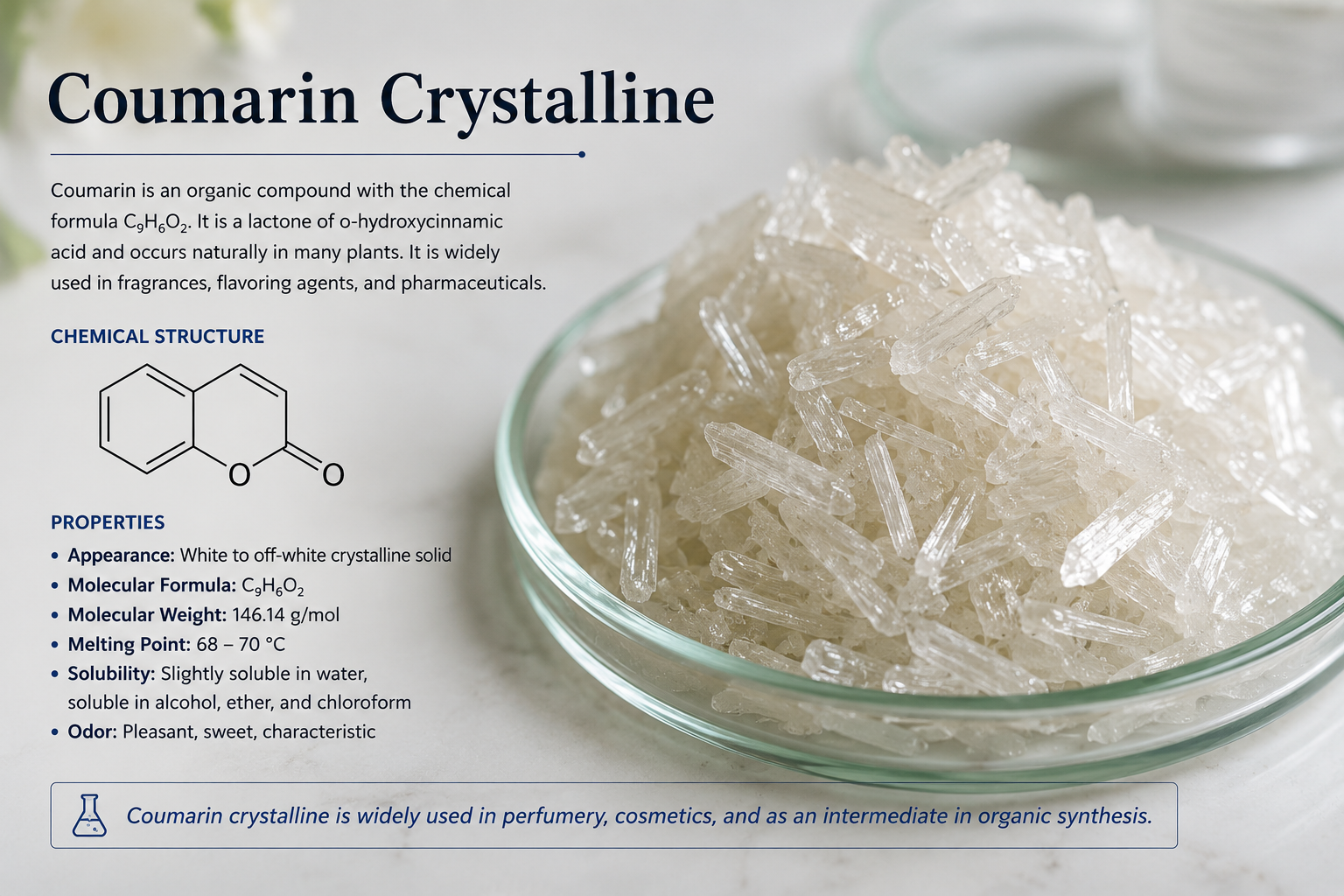
Coumarin is a natural, white crystalline substance extracted from tonka beans, known for its sweet, vanilla-like fragrance. Perfumers and soap makers use this botanical extract as a highly effective base note and fixative to enhance and prolong scent profiles in various fragrance compositions.
Finding the perfect base note for a fragrance formulation requires high-quality ingredients with reliable consistency. Fragrance creators constantly seek materials that provide depth, longevity, and a captivating scent profile. Plant-derived ingredients offer a rich complexity that synthetic alternatives often fail to replicate, making them highly desirable for premium products.
Natural coumarin stands out as a fundamental building block in modern perfumery and aromatherapy. This organic compound delivers a distinctive aroma that bridges the gap between sweet and earthy notes. Formulators rely on its predictable behavior and exceptional performance in complex blends.
By understanding the properties and applications of this versatile ingredient, you can significantly improve your product development process. This guide explores the characteristics, benefits, and practical uses of natural coumarin to help you make informed decisions for your fragrance creations.
What exactly is natural coumarin?
Coumarin is a crystalline substance that closely resembles standard white sugar in its raw physical form. It occurs naturally in a wide variety of botanical sources, most notably in tonka beans, cassia, cinnamon, and sweet clover. You can also find trace amounts of this compound in green tea, peppermint, celery, lavender, and honey.
The most sought-after commercial coumarin is extracted directly from high-quality tonka beans. This extraction process yields a pure, potent isolate that carries a distinctively pleasant, vanilla-like fragrance combined with a slightly bitter aromatic taste. The resulting white powder boasts an exceptional shelf life and maintains its aromatic integrity over long periods when stored correctly.
How does coumarin compare in fragrance blending?
Creating a balanced fragrance requires a deep understanding of how different notes interact over time. A successful composition needs a solid foundation that anchors the lighter, more volatile top and middle notes.
When developing a gourmand or sweet scent profile, selecting the right base ingredients becomes critical. Formulating with Coumarin Crystalline Powder and Vanillin Extra Powder provides a deep gourmand base that gives perfumes a luxurious, lingering finish. The coumarin contributes a powdery, sweet hay characteristic, while the vanillin adds a creamy, comforting sweetness.
Choose natural coumarin if your formulation requires a sophisticated, earthy undertone alongside sweetness. The natural complexity of the tonka bean extract provides a richer olfactory experience than heavily processed alternatives.
What are the main applications for natural coumarin extracts?
The versatility of this natural isolate makes it a staple ingredient across multiple industries, from fine perfumery to household product manufacturing.
How do perfumers use coumarin as a fixative?
A fixative is an ingredient that helps retain the scent of a fragrance, slowing down the evaporation rate of the more volatile components. Natural coumarin serves as an outstanding fixative in perfumes, colognes, and body sprays.
Because it acts as a base note, it remains on the skin long after the top and middle notes have dissipated. Perfumers frequently blend it with spicy notes like beta-caryophyllene or musky elements like galaxolide to create well-rounded, long-lasting products. Industry standards show that concentrations can safely range from up to 6.4 percent in fine fragrances down to under 0.5 percent in household detergents.
Why is solubility important for fragrance creation?
Working with raw crystalline materials requires efficient dissolving methods to ensure a smooth, uniform final product. The coumarin extracted from tonka beans offers excellent solubility in standard perfumery solvents.
Formulators can dissolve the crystals efficiently using gentle stirring or a magnetic stirrer, preventing any gritty residue in liquid applications. Many professionals intentionally blend Coumarin Crystalline Powder and Vanillin Extra Powder during the heated phase of their formulation process. This ensures both powders integrate flawlessly into the carrier oils or alcohol bases, resulting in a perfectly clear and stable aromatic liquid.
Where does high-quality coumarin come from?
The geographical origin and cultivation methods of the source plants heavily influence the quality of the final isolate. Premium coumarin is often processed in countries with advanced botanical extraction facilities, such as France, utilizing tonka beans harvested from regions like Brazil.
Reputable suppliers prioritize conventional cultivation and precise isolation techniques to ensure the resulting powder meets strict safety and quality standards. This rigorous process guarantees that the ingredient maintains its natural scent family classification—gourmand—and its specific scent profile of powdery, sweet hay, and vanilla-like notes.
Ready to elevate your fragrance formulations?
Natural botanical extracts offer unparalleled depth and character for your product lines. By incorporating premium tonka bean isolates into your inventory, you gain access to a reliable, versatile, and highly effective base note. The consistent performance and excellent fixative properties of this ingredient will help you create memorable, long-lasting fragrances that captivate your target audience.
Review your current formulation requirements and consider how a high-quality, natural base note could enhance your upcoming projects. Sourcing safety-certified, easily soluble ingredients will streamline your production process and elevate the final consumer experience.
Frequently asked questions about coumarin
What are the primary olfactory notes of coumarin?
Coumarin belongs to the gourmand scent family. It features a distinct vanilla-like, powdery aroma with warm, sweet hay undertones. It functions primarily as a base note in fragrance pyramids.
How do I properly dissolve coumarin crystals?
You can easily dissolve the white powder in standard cosmetic solvents and alcohols. For the most efficient integration, use a magnetic stirrer or apply gentle, controlled heat while stirring the mixture constantly until the liquid becomes completely clear.
Can I combine Coumarin Crystalline Powder and Vanillin Extra Powder in one formula?
Yes. Blending Coumarin Crystalline Powder and Vanillin Extra Powder is a standard practice in the fragrance industry. The combination creates a highly synergistic, sweet, and comforting base note that works exceptionally well in gourmand perfumes, premium soaps, and luxury candles.
What is the recommended usage rate for fine fragrances?
For fine fragrances and premium perfumes, industry guidelines suggest using coumarin at concentrations up to 6.4 percent. Always conduct small batch testing to determine the ideal ratio for your specific scent profile.
Is natural coumarin suitable for soap making?
Yes, it is highly recommended for cold process and melt-and-pour soap making. Its strong fixative properties help anchor lighter essential oils, ensuring the soap retains its scent for months after the curing process is complete.