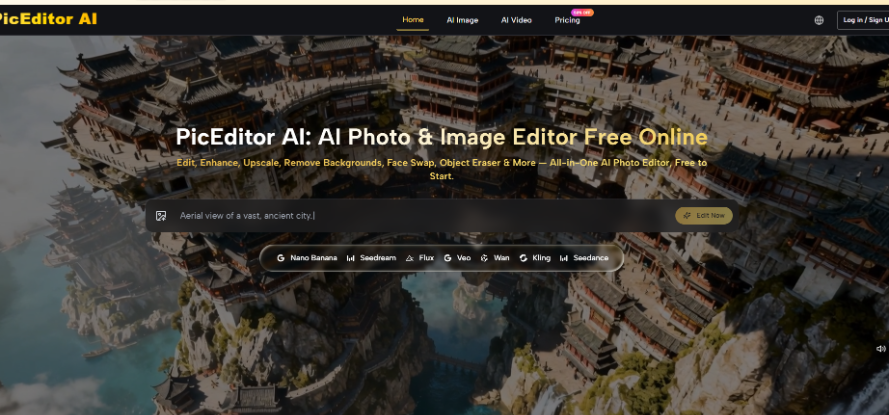
An art desk at a PC magazine pulls a hero shot for next issue’s cover feature, checks it on a monitor, and approves it without a second look, because on screen at half size the image looks sharp enough. The print house disagrees a week later, and the reject slip that comes back stamped “soft edge” points to a resolution gap that screen preview never had a chance to catch. Running that same file through an AI Photo Editor before it ever reaches the print house, specifically its Upscaler, is the step that closes that gap, and PicEditor AI’s version of that tool is built around exactly this handoff: upload a soft file, pick a target resolution, and generate before committing a print slot to it.
The gap between screen-ready and print-ready is not exotic. It shows up constantly on a desk juggling wire photos, reader submissions, and archive images that were never shot for a full-page spread in the first place. The fix is knowing when a file needs an Upscale pass before it goes anywhere near a press, not swapping in a better monitor.
A Soft Source File Passes Screen But Fails Print
A monitor renders most images at a fraction of their true pixel count, which flatters soft files in a way a printed page never will. An image that looks crisp shrunk down to fit a browser tab can fall apart the moment it is scaled up to fill a printed half-page, because the pixels that would have held that detail were never there to begin with.
Where The Reject Slip Actually Comes From
A print house checks files against the physical output size, not the file’s on-screen appearance, and a soft-edge reject slip is the print house’s way of saying the source did not have enough real resolution for the size it was asked to fill. That slip usually arrives after a full page has already been laid out around the image, which turns a resolution problem into a same-day layout scramble instead of a quiet fix made earlier in the week.
Why Screen Resolution Hides A Print Problem
A desk reviewing a photo at typical monitor resolution is looking at roughly a quarter or less of the pixel density a half-page print run will demand. That mismatch is exactly why a file can clear every screen-based approval on the way to layout and still bounce back from the print house days later. Screen approval answers “does this look fine right now.” Print approval answers a different question entirely: “does this file actually hold that many pixels.”
What The Upscaler Changes Before You Resend A File
PicEditor AI’s Upscaler takes a blurry or under-resolution upload and rebuilds it at a chosen target resolution, generating a version with enough real pixel density to survive an enlargement that the original file could not have handled on its own. Running that pass is the actual AI Photo Edit a desk needs before a soft file gets anywhere near a press, not a cosmetic touch-up after the fact.
| Output Slot | Resolution To Pick | Approx. Credits |
| Web thumbnail or sidebar | 1K | ~15 |
| Half-page print or tablet cover | 2K | ~15 |
| Full-page spread or print cover | 4K | ~15 |
Choosing 1K 2K Or 4K For The Target Slot
The resolution choice should match the actual output slot, not a habit of always picking the highest option available. A sidebar thumbnail upscaled to 4K wastes generation time without changing how the reader ever sees it, while a full-page cover run at 1K walks straight back into the same soft-edge problem the Upscaler was supposed to fix. Matching resolution to output slot, not defaulting to the biggest number, is the actual skill here.
Reading The Credit Cost Before You Commit
An Upscale pass runs at roughly 15 credits regardless of which target resolution gets picked, which means the cost of testing a file before committing a print slot to it is small compared to the cost of a rejected page. A desk that skips the Upscale check to save fifteen credits and instead loses a print slot to a same-day reject has made an expensive trade for a very small saving.
Building A Print Ready Check Around The Upscale Step
The fix is knowing which files are borderline and routing only those through the Upscaler before layout locks them in, not upscaling every file that comes through the desk.
Sorting Wire Photos From Reader Submissions
Wire photos usually arrive already sized for print and rarely need this check. Reader submissions and pulled archive images are the real risk category, since they were often shot on a phone for social posting, not a magazine spread, and nobody upstream ever confirmed the pixel count matched a print slot. A desk that treats every incoming image the same way ends up either upscaling files that never needed it or skipping the check on exactly the files that do.
What Happens When A File Gets Sent Back To Layout
Skip the check and the failure shows up downstream instead of upstream. A page that gets sent back to layout after a print house reject means re-laying the same spread around a replacement image on a compressed schedule, not a quiet single-file fix made earlier in the week. That downstream version of the same problem costs an entire afternoon of a layout editor’s time, compared to the few minutes and roughly fifteen credits spent catching it before the page was ever built.
Comparing The File At Full Size Not Thumbnail
In my testing across a month of cover candidates, the files that eventually bounced from the print house had one thing in common: nobody had opened them at 100 percent zoom before approval, only at thumbnail size in the layout grid. Opening a candidate file at full size for even a few seconds surfaces the same softness a print house will catch later, just days earlier and without a wasted press slot attached to it. One cover candidate looked fine as a thumbnail until it was opened at full size, where the edges turned out visibly soft, the kind of file that would have burned a same-day reprint slot if it had gone to print as-is. Held next to the original upload, the 4K pass from the Upscaler visibly recovered edge detail the thumbnail view had hidden, and running that pass before layout locked the page in cost about fifteen credits and a few minutes, against what would have been a lost print slot and a scrambled afternoon rebuilding the page around a replacement image.
Send Print Files Only After The Upscale Holds
A soft-edge reject slip is not a judgment call the print house is making about taste. It is a pixel count the file did not have, caught at the one stage where fixing it is still cheap.
Build the habit around the output slot, not the whole batch: check any file heading to a half-page or full spread at full-size zoom before it locks into layout, route the borderline ones through the Upscaler at the resolution the slot actually needs, and treat the credit cost of that check as cheap insurance against a reprint. PicEditor AI’s Upscaler will not rescue a photo that was never in focus to begin with, but for a file that is merely under-resolution for its slot, it is the difference between a clean page and a reject slip arriving the same week the issue closes.