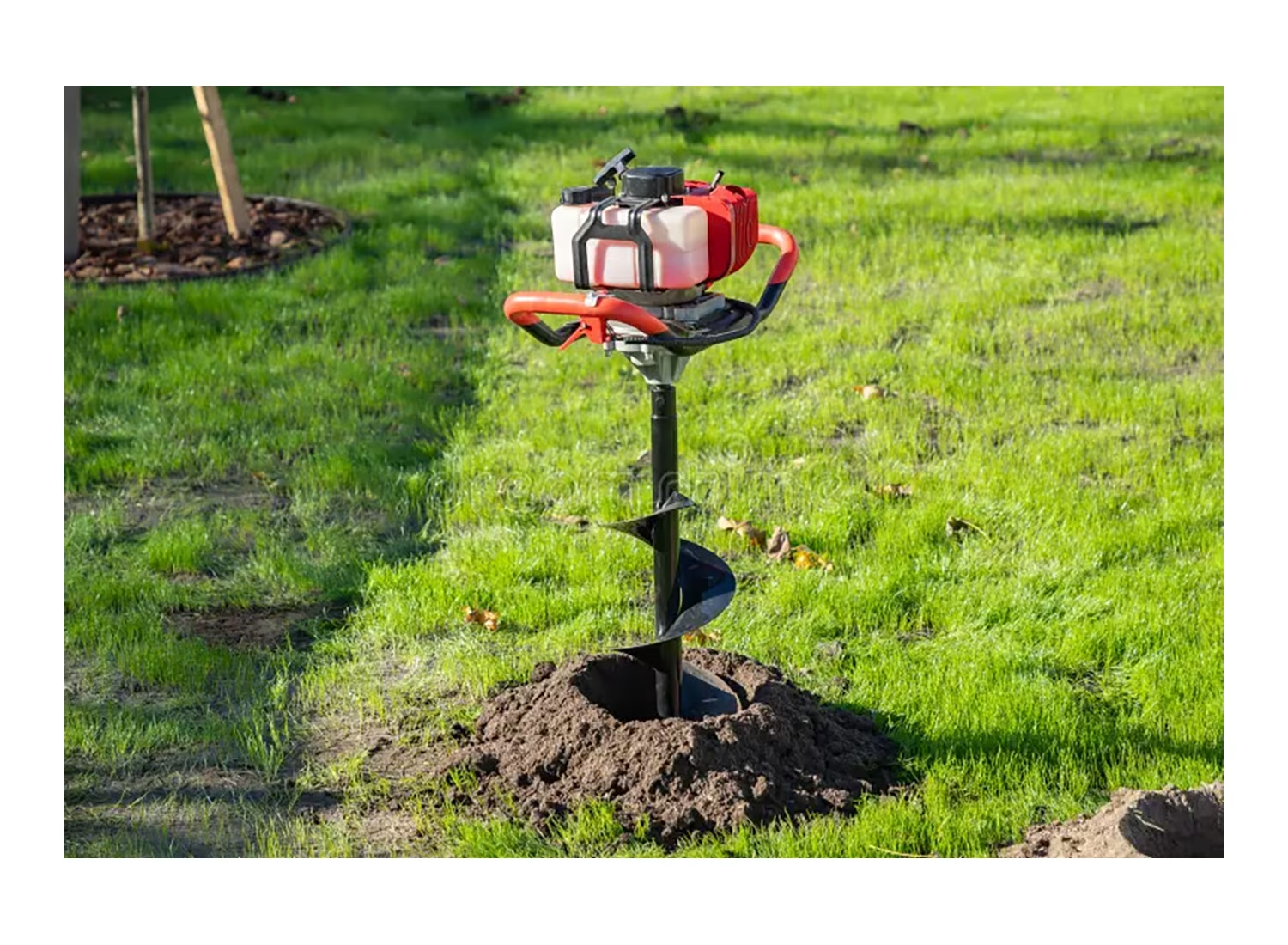
Auger attachments are widely used across construction, landscaping, and agricultural projects for drilling holes efficiently and accurately. While the equipment itself plays a major role in performance, soil conditions are often the defining factor in how effectively an auger operates.
Different ground types present varying levels of resistance, moisture, and stability. Understanding how these conditions affect drilling performance allows operators to choose the right setup, avoid unnecessary wear, and maintain consistent productivity on site.
Why Soil Conditions Matter
Soil is not uniform, and even within a single site, ground conditions can vary significantly. Factors such as density, composition, and moisture content all influence how an auger performs during operation.
Challenging soil conditions can lead to:
- Slower drilling speeds
- Increased strain on the drive unit
- Higher wear on cutting components
- Reduced hole quality and accuracy
By recognising these variables early, operators can make informed decisions that improve efficiency and reduce downtime.
Working in Soft and Loose Soils
Soft soils, such as sand or loose topsoil, are generally the easiest to drill. Augers can penetrate quickly with minimal resistance, allowing for fast progress.
However, these conditions can still present challenges. Loose material may collapse back into the hole, affecting depth accuracy and requiring additional passes.
To maintain efficiency in soft soils:
- Use augers designed for earth applications
- Avoid excessive drilling speed, which can reduce control
- Monitor hole stability during and after drilling
Although resistance is low, maintaining precision is key to achieving consistent results.
Handling Clay and Cohesive Soils
Clay based soils are more compact and cohesive, which can make drilling more demanding. These soils tend to stick to the auger flights, reducing efficiency over time.
Common issues include:
- Material buildup on the auger
- Increased torque requirements
- Slower extraction of spoil from the hole
In these conditions, using a well-matched auger attachment with appropriate cutting edges can improve performance.
Operators should also:
- Drill at a steady, controlled pace
- Periodically lift the auger to clear material
- Avoid forcing the attachment through dense sections
Managing buildup is essential to maintaining consistent drilling speed.
Dealing with Compact and Hard Ground
Compacted soils and dry, hardened ground present greater resistance, requiring higher torque to achieve penetration. These conditions are common on construction sites where ground has been previously disturbed or compressed.
In such environments:
- Drilling speed is naturally reduced
- The risk of stalling increases
- Equipment experiences greater mechanical stress
Using equipment such as a Skid Steer Auger can help maintain performance in tougher ground conditions.
It is also important to allow the auger to cut gradually rather than applying excessive downward pressure, which can strain both the attachment and the machine.
Operating in Rocky or Mixed Ground
Rocky soil or ground containing debris introduces additional complexity. Standard augers may struggle to cut through hard inclusions, leading to interruptions and potential damage.
Challenges in these conditions include:
- Impact stress on cutting teeth
- Irregular hole formation
- Increased wear and tear
To improve efficiency:
- Use augers fitted with rock specific teeth
- Drill slowly and monitor resistance
- Avoid continuous operation if excessive vibration occurs
Selecting the correct cutting configuration is essential for maintaining both safety and performance.
The Impact of Moisture Content
Moisture levels can significantly influence soil behaviour. Wet soils may become heavy and sticky, while extremely dry soils can harden and increase resistance.
For example:
- Wet clay can cling to the auger, reducing efficiency
- Saturated ground may collapse or lose structure
- Dry soil can require more torque to penetrate
Adjusting drilling technique based on moisture conditions can help maintain consistent results. In some cases, timing the work to avoid extreme conditions can improve overall efficiency.
Matching Equipment to Soil Conditions
Choosing the right auger setup for the ground conditions is one of the most important factors in achieving optimal performance.
Key considerations include:
- Selecting the correct auger bit type
- Ensuring the drive unit provides sufficient torque
- Matching the attachment to the host machine’s hydraulic capacity
A well-matched setup reduces strain on equipment and allows operators to work more efficiently across varying conditions.
Reducing Wear and Maintenance Issues
Soil conditions have a direct impact on wear rates. Abrasive or dense materials can accelerate the degradation of cutting edges and mechanical components.
To minimise wear:
- Inspect equipment regularly for damage
- Replace worn teeth and pilot bits promptly
- Avoid operating in unsuitable conditions without the correct setup
Preventive maintenance becomes even more important when working in challenging environments.
Improving Overall Drilling Efficiency
Understanding soil conditions allows operators to adapt their approach and maintain productivity across different sites.
Practical steps include:
- Assessing ground conditions before starting work
- Adjusting drilling speed and technique accordingly
- Using the correct attachment configuration
- Monitoring performance and making adjustments as needed
These small adjustments can have a significant impact on efficiency and equipment longevity.
Final Thoughts
Soil conditions play a critical role in determining auger attachment performance. From soft and loose ground to compacted or rocky terrain, each environment presents unique challenges that require the right combination of equipment and technique.
By understanding how different soil types affect drilling and selecting the appropriate setup, operators can improve efficiency, reduce wear, and achieve more consistent results. In demanding applications, this knowledge is essential for maintaining productivity and ensuring successful project outcomes.
READ ALSO: The Secret to Estate-Level Curb Appeal: Precision Lawn Care