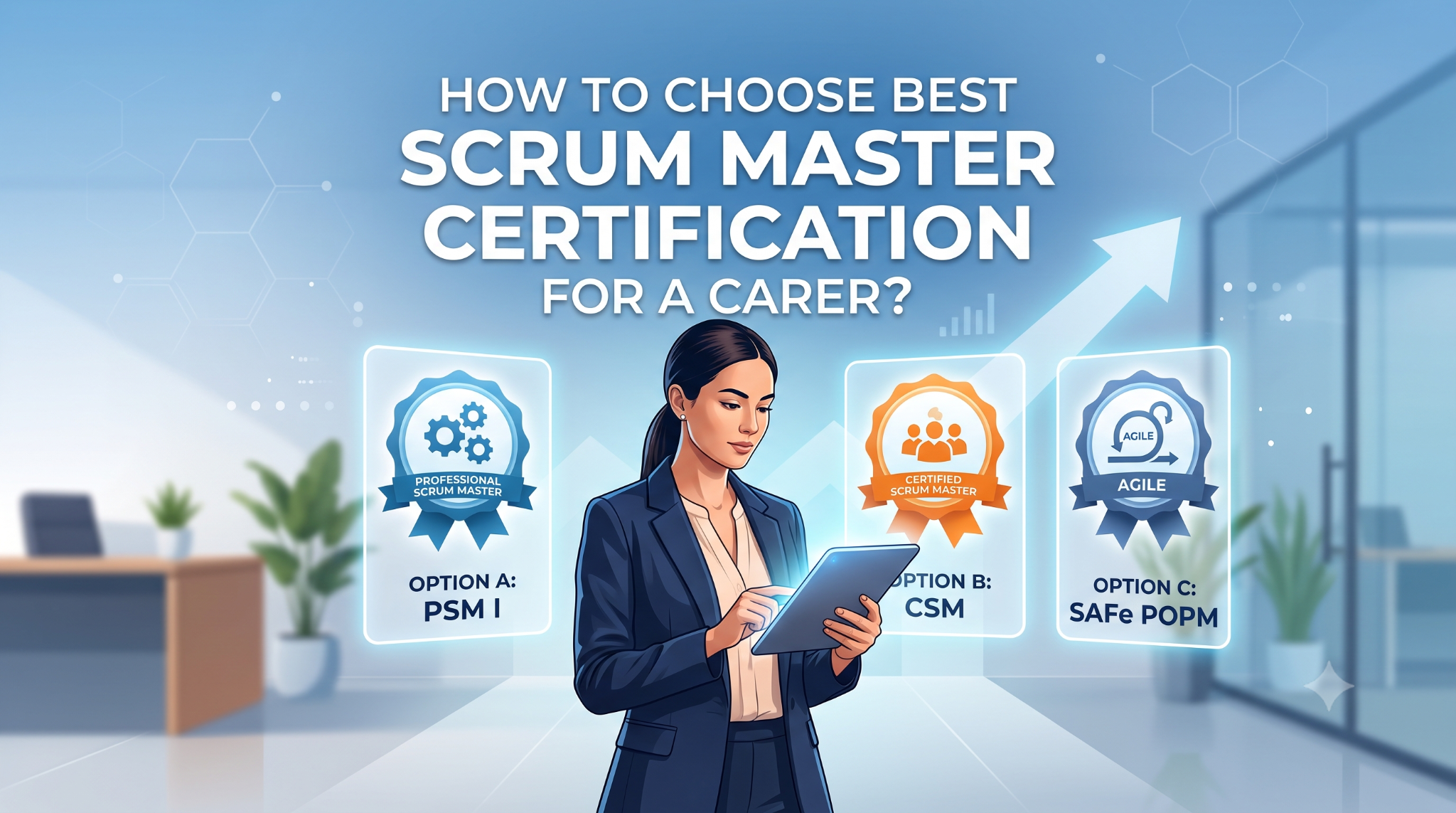
If you’re thinking of becoming a Scrum Master, you might find it confusing to choose among the various certifications available. Fortunately, you don’t have to base your choice on how popular a certification is; instead, your career objectives, the way you learn, your budget, and the requirements of the certification should all help you make your decision.
1. Begin by defining your career goal.
When deciding on a scrum master certification, you should first consider your own objectives. Are you entirely new to Scrum and hoping to transition into a Scrum Master position, or are you already working with Agile teams? For those who are beginning, a basic certification can assist in gaining an understanding of Scrum principles, events, artifacts, and accountabilities. On the other hand, people with more experience might find it useful to pursue advanced learning options.
2. Compare the Certification Providers
Scrum.org and the Scrum Alliance are two organizations that offer Scrum Master Certifications, but their certification routes have different requirements and methods.
For example, Scrum.org offers Professional Scrum Master certifications, including PSM I. The PSM I assessment tests knowledge and understanding of Scrum, and training is not required to take it. Scrum.org certifications do not require renewal fees.
The Scrum Alliance provides the Certified ScrumMaster (CSM) and other advanced Scrum Master certifications; for the CSM you need to complete an approved course and take a test, whereas the more advanced certifications have further requirements.
3. Look at What You Will Actually Learn
You shouldn’t choose a certification just because it looks good on your resume; you should carefully check the syllabus. Quality Scrum training should enable you to understand how Scrum works and the role of the Scrum Master within the team.
According to the Scrum Guide, the Scrum Master is a person who helps to establish Scrum, supports the team’s effectiveness, coaches the team, facilitates collaboration, and assists in the removal of impediments.
It is important to have practical experience since there is a difference between knowing the definitions and knowing how to apply Scrum in real situations.
4. The training provider should be considered.
If you prefer instructor-led learning, research the trainer and organization before enrolling. Agilemania Consulting is one example of a provider offering Agile and Scrum programs.
Choose training providers with relevant experience, practical examples, hands-on sessions, and clear course information. Avoid those promising guaranteed jobs or promotions.
5. Check the cost, format, and requirements
Consider the total cost, the duration of the course, the assessment fee, the requirements for renewal, and the way in which the learning is carried out and then decide which of the three options—live online classes, classroom training, or self-learning—you would prefer.
Make sure that the certification does not require training before you take the assessment since the requirements vary from one certification provider to another and so you should always check them on the official certification website before you register.
6. Consider More Than Just the Certificate
A certification may show that one knows about Scrum, but it doesn’t take the place of practical experience. You can develop your skills by taking on projects, using simulations, volunteering, or by getting the opportunity to work with Agile teams.
Final Thoughts
The best Scrum Master certification for you will vary according to your career goals, the way you like to learn, how much money you can afford, and the type of qualification you are looking for. You need to compare the official requirements and the course material, choose a legitimate training course, and focus on acquiring practical Scrum skills rather than just getting the certificate.