A plug-in hybrid van can be an excellent fit for the right business and an expensive compromise for the wrong one. The difference is rarely about the badge on the bonnet. It comes down to whether the vehicle can be charged consistently and whether its typical journeys allow the electric side of the drivetrain to do meaningful work.
That makes a plug-in hybrid less of a simple fuel choice and more of an operating decision. It has the flexibility of a combustion engine for longer trips, with the potential to complete shorter local journeys using charged battery power.
Businesses considering Volkswagen Transporter T7 hybrid options should begin with their own routine, not an advertised efficiency figure. A plug-in hybrid performs best when the business has a repeatable charging pattern and a journey profile that plays to its strengths.
A plug-in hybrid only works when it is plugged in
This is the central point. A plug-in hybrid van carries both an electric motor and a combustion engine, but it does not create its full potential automatically. The battery must be charged from an external power source.
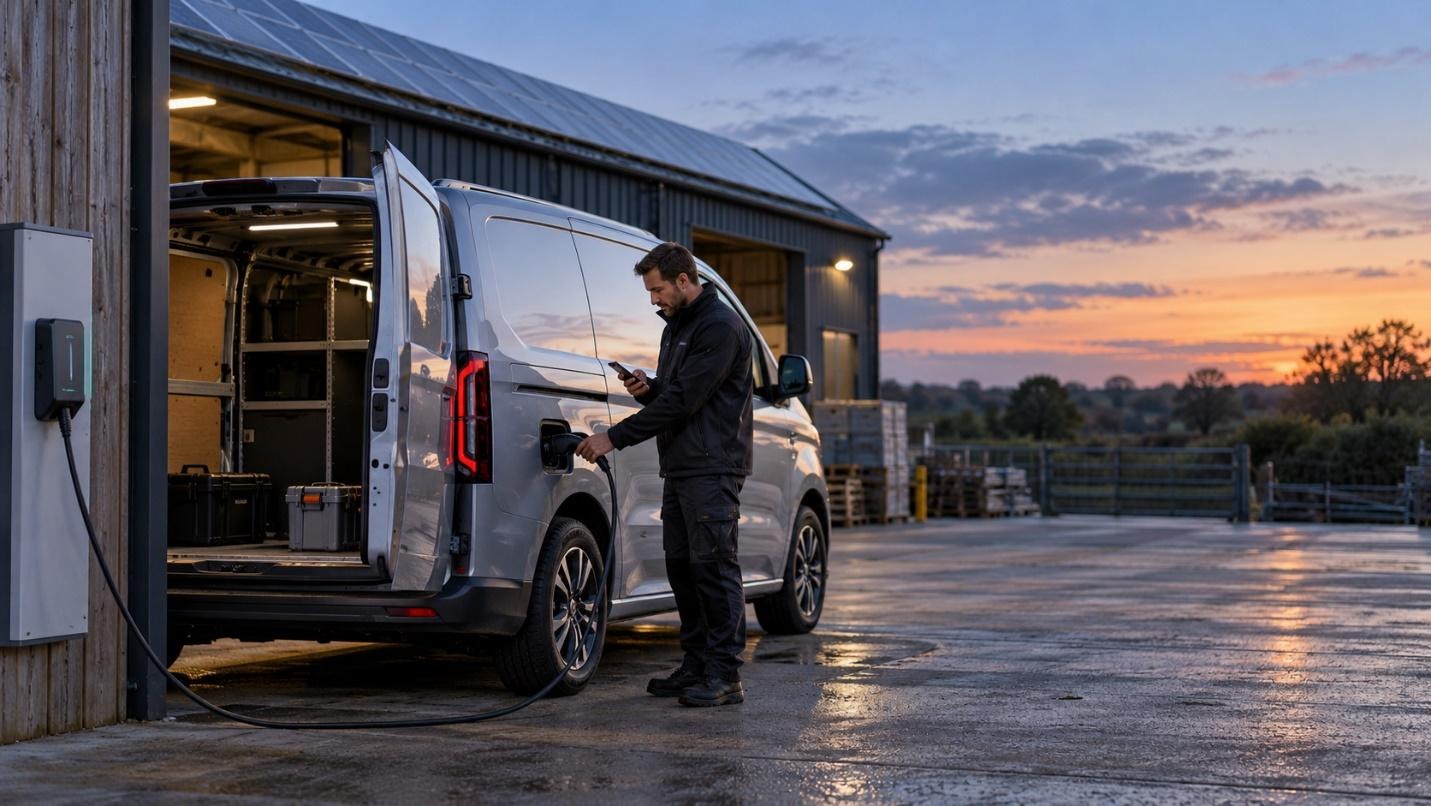
If a van returns to a depot, workshop, home base or secure parking space where it can charge reliably, the setup can be straightforward. The vehicle leaves each day with useful battery energy available for local calls, urban driving or short journeys between customer sites.
If the van is rarely charged, it will still operate, but the business may be carrying the weight and complexity of a hybrid system without making the most of the electric capability. That is why charging access should be decided before the vehicle is ordered, not treated as an improvement to make later.
For a small company, a practical charging routine may be as simple as plugging in at the end of the day. For a larger fleet, it may require designated bays, staff guidance, electrical capacity checks and a clear plan for who has priority access.
The route pattern matters more than the longest journey
Many businesses focus on their most demanding trip: the quarterly visit to another region, the occasional long-distance delivery or the rare day spent travelling between several counties. Those journeys matter, but they should not define the entire purchase.
Instead, review the ordinary pattern. How far does the van usually travel in a day? Does it make repeated short calls? Does it spend time in town centres? Does it return to base between jobs? Are there periods when the vehicle is parked for several hours?
A plug-in hybrid can make strong practical sense for a business that completes predictable local or regional work and returns to a charging point most evenings. Examples might include property maintenance companies, electrical contractors, estate-management teams, mobile health providers or local delivery services with a depot.
It may be less suitable for a van that covers unpredictable long distances every day, changes drivers frequently and spends nights at different locations. In that case, the business may find it difficult to maintain the charging discipline needed to make the hybrid system worthwhile.
A quick suitability check before you compare prices
Answer these four questions honestly:
- Can the van charge where it is normally parked overnight? If the answer is no, a plug-in hybrid needs much more investigation before it becomes a sensible choice.
- Are most working days made up of local or medium-distance routes? Regular short journeys are generally more compatible with charged battery use than constant long-haul driving.
- Will someone take responsibility for charging? A clear routine is more effective than assuming drivers will remember when they are busy.
- Does the work still require flexibility for longer journeys? This is where a plug-in hybrid can appeal, because the combustion engine remains available when the day extends beyond the planned route.
If the answer to the first three questions is consistently yes, it is worth requesting a detailed quote and configuration discussion. If they are mostly no, a conventional diesel, a fully electric van or another arrangement may suit the business better.
The depot is part of the vehicle specification
Businesses often spend time choosing trim, load lining, wheelbase and accessories, then leave charging until later. With a plug-in hybrid, the depot or parking location is effectively part of the vehicle specification.
Check whether charging can be installed where the van is kept. Consider the distance from the electrical supply, who controls the premises, overnight parking security and how often the bay may be blocked by another vehicle. If the company leases its premises, permission for installation may also be needed.
The charging point should suit the way the business works. A van that returns late and departs early needs an arrangement that fits that window. There is little value in an elegant sustainability plan that falls apart when the vehicle comes back from a long day with no available place to charge.
A practical business will also think about resilience. If the normal charging point is unavailable, is there a backup option nearby? Can the team adapt without turning every missed charge into an operational problem?
Do not judge the van on official economy alone
Official fuel-consumption and emissions figures are useful for comparison, but they are not a promise of how a specific business will perform. Results are influenced by charge level, outside temperature, load weight, route type, driving style, traffic and how frequently the vehicle is plugged in.
A simple way to think about the trend is this:
More regular charging + shorter predictable routes = greater opportunity to use electric power
Less regular charging + heavier loads + longer motorway journeys = greater reliance on the combustion engine
That does not make a plug-in hybrid unsuitable for motorway travel. It simply means the business case should not depend on the best possible laboratory-style figure. The relevant question is how the van will operate during a real month of work.
Track typical mileage, fuel spending, parking time and charging availability for four weeks before making a decision. This gives the supplier a much stronger basis for recommending a suitable vehicle and finance arrangement.
Load, towing and equipment still need scrutiny
Hybrid technology does not remove the usual commercial-vehicle checks. Payload, towing limits, rear access, wheelbase and storage still matter. In some cases, the battery and hybrid components may affect the weight available for equipment, so buyers should confirm the payload of the exact model they intend to order.
This is particularly important for vans fitted with racking, roof equipment, tool storage, passenger seating or specialist conversions. The calculation needs to include the weight of every permanent addition as well as the normal daily load.
The same principle applies to towing. If a business pulls trailers regularly, the permitted towing capacity and gross train weight must be checked for the exact hybrid variant, not assumed from another Transporter model.
A plug-in hybrid should fit the work first. Its lower-emission potential is valuable, but it cannot compensate for a van that is too small, overloaded or poorly configured.
Consider who benefits from the change
The strongest plug-in hybrid case usually has more than one benefit. The business may want to reduce fuel use on local work, operate more quietly around residential customers, respond to client sustainability expectations or prepare for changing urban access requirements.
Drivers can benefit too, particularly where much of the work involves stop-start local travel. But the change must be explained properly. If charging is essential, staff need a straightforward process and a clear understanding of why it matters.
This is not about adding another task to the end of an already busy shift. It is about building a routine that makes the vehicle more useful the following day.
Let the charging habit make the decision
A plug-in hybrid van is most compelling when the business can charge it consistently and use that stored energy on a meaningful share of its normal journeys. It is a flexible solution for organisations that need longer-distance capability but also have a stable base, predictable routes and a genuine intention to plug in.
Before choosing a Transporter T7 hybrid, confirm the current specification, charging requirements, payload and availability for the exact model. Then test the vehicle against the real working pattern—not the ideal one. That is the clearest route to deciding whether a plug-in hybrid will genuinely improve the business fleet.