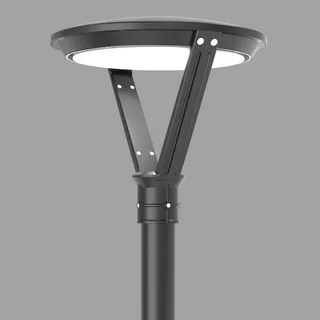
Outdoor lighting plays an important role in safety, visibility, and property appearance. Among the many outdoor lighting options available today, LED Post Top Lights are widely used in parks, residential communities, commercial properties, campuses, pathways, parking areas, and public spaces.
These fixtures sit on top of poles and provide broad, uniform illumination across open areas. Compared to older metal halide and high-pressure sodium fixtures, LED technology offers better energy efficiency, longer service life, and lower maintenance requirements.
What Are LED Post Top Lights?
LED post top lights are outdoor lighting fixtures mounted directly on top of poles. Their design allows light to spread evenly across surrounding areas while maintaining an attractive appearance.
These fixtures are often selected when both functionality and aesthetics are important. Unlike industrial flood lights that focus primarily on brightness, post top fixtures combine decorative appeal with reliable illumination.
Most modern models include:
- Integrated LED modules
- Weather-resistant housings
- Optical lenses
- Surge protection
- Durable aluminum construction
- Long-life drivers
They are available in various styles ranging from traditional lantern designs to modern architectural fixtures.
How LED Post Top Fixtures Work
LED post top fixtures use light-emitting diodes to convert electricity into visible light. The LEDs are mounted on boards inside the fixture and paired with optical systems that direct light where it is needed.
A built-in driver regulates power delivery to ensure consistent performance.
Unlike older technologies that waste significant energy as heat, LEDs convert a much larger portion of electricity into usable light. This improves efficiency and reduces operating costs.
Modern optics help distribute light evenly, reducing dark spots and excessive glare.
Benefits of LED Post Top Lights
The growing popularity of LED technology is driven by several practical advantages.
Energy Savings
LED fixtures consume significantly less electricity than traditional outdoor lighting systems.
In many installations, energy savings can reach 50% to 80% depending on the fixture being replaced.
Lower energy consumption helps:
- Reduce utility costs
- Lower operating expenses
- Improve sustainability goals
- Decrease carbon emissions
Long Service Life
Quality LED post top fixtures can operate for 50,000 to 100,000 hours or more.
This means many installations can run for years before requiring replacement.
Reduced Maintenance
Traditional lamps often require frequent bulb changes.
LED fixtures eliminate much of that maintenance burden, reducing labor costs and equipment rental expenses.
Better Light Quality
LED technology provides:
- Consistent brightness
- Improved visibility
- Better color rendering
- Enhanced pedestrian safety
People can recognize faces, objects, and obstacles more easily under LED lighting.
Improved Reliability
Modern fixtures are designed to withstand:
- Rain
- Snow
- Dust
- Heat
- Cold temperatures
- Wind exposure
This makes them suitable for a wide range of outdoor environments.
Common Applications
LED post top fixtures are used in many outdoor settings because they provide both functional and decorative lighting.
Parks and Recreational Areas
Public parks require safe lighting for pathways, seating areas, and gathering spaces.
Post top fixtures create welcoming environments while helping visitors navigate safely after dark.
Residential Communities
Homeowners associations and residential developments often use these fixtures to illuminate:
- Streets
- Sidewalks
- Common areas
- Clubhouses
- Entrances
Their decorative appearance complements landscaping and architectural features.
Commercial Properties
Businesses use LED post top fixtures to improve visibility and create a professional appearance.
Common examples include:
- Office complexes
- Retail centers
- Shopping plazas
- Hotels
- Restaurants
Educational Campuses
Schools and universities rely on outdoor lighting to improve safety and accessibility.
Post top fixtures are commonly installed along:
- Walkways
- Courtyards
- Parking areas
- Student gathering spaces
Municipal Projects
Cities frequently install post top lighting in:
- Downtown districts
- Public squares
- Streetscapes
- Pedestrian zones
- Community parks
Key Features to Look For
Not all fixtures offer the same level of performance.
Understanding important features helps ensure a better investment.
Fixture Construction
Look for durable aluminum housings with corrosion-resistant finishes.
Quality construction extends fixture life and improves reliability.
Optical Design
The optical system determines how light is distributed.
A good optical design provides:
- Uniform illumination
- Reduced glare
- Better visibility
- Improved efficiency
Surge Protection
Outdoor lighting systems are exposed to electrical surges caused by storms and utility fluctuations.
Integrated surge protection helps protect internal components.
IP Rating
Ingress Protection ratings indicate resistance to dust and water.
Outdoor fixtures typically benefit from ratings such as:
| IP Rating | Protection Level |
| IP65 | Dust-tight and water-resistant |
| IP66 | Strong water protection |
| IP67 | Temporary immersion protection |
DLC and Certification Standards
Look for products that meet recognized industry standards.
Certified fixtures often deliver better performance and efficiency.
Choosing the Right Wattage and Brightness
Selecting the correct wattage depends on the application and desired light levels.
Modern LED fixtures are typically measured by lumens rather than wattage.
| Wattage | Approximate Lumens |
| 30W | 3,000–4,500 |
| 50W | 5,000–7,500 |
| 80W | 8,000–12,000 |
| 100W | 12,000–15,000 |
| 150W | 18,000–22,000 |
Higher wattages are generally used for:
- Parking areas
- Large open spaces
- Roadways
Lower wattages often work well for:
- Walkways
- Gardens
- Decorative applications
Pole Height and Light Distribution
Pole height directly affects coverage and uniformity.
Common installation heights include:
| Pole Height | Typical Application |
| 8–12 Feet | Pathways and gardens |
| 12–16 Feet | Residential areas |
| 16–20 Feet | Commercial properties |
| 20–25 Feet | Large public spaces |
Higher poles cover larger areas but require careful optical design to prevent excessive glare.
Proper spacing between fixtures is equally important.
Poor spacing can create:
- Dark zones
- Uneven lighting
- Safety concerns
A professional lighting layout helps achieve optimal results.
LED Post Top Lights vs Traditional Fixtures
The differences between modern LED systems and older technologies are significant.
| Feature | LED Post Top Lights | Traditional Fixtures |
| Energy Use | Low | High |
| Lifespan | 50,000+ Hours | Shorter |
| Maintenance | Minimal | Frequent |
| Startup Time | Instant | Delayed |
| Light Quality | Excellent | Variable |
| Operating Cost | Lower | Higher |
LED technology delivers better long-term value in most outdoor lighting applications.
Installation Considerations
Proper installation improves performance and reliability.
Before installation, evaluate:
Existing Infrastructure
Determine whether existing poles and wiring can support the new fixtures.
Electrical Requirements
Verify voltage compatibility and driver specifications.
Local Regulations
Some municipalities have specific requirements regarding:
- Light pollution
- Fixture shielding
- Pole heights
- Energy efficiency standards
Environmental Conditions
Consider factors such as:
- Wind exposure
- Coastal environments
- Temperature extremes
- Corrosive conditions
Selecting fixtures designed for local conditions helps maximize lifespan.
Maintenance and Lifespan
One of the biggest advantages of LED lighting is reduced maintenance.
Routine inspections should include:
- Cleaning lenses
- Checking wiring connections
- Inspecting pole stability
- Verifying driver operation
Most quality fixtures require little attention beyond periodic cleaning.
Dirt accumulation can reduce light output over time, so occasional maintenance remains important.
A well-maintained LED system can provide reliable service for many years.
Common Buying Mistakes
Many buyers focus only on initial purchase price.
This often leads to disappointing results.
Common mistakes include:
- Choosing fixtures based only on wattage
- Ignoring optical performance
- Selecting poor-quality drivers
- Overlooking surge protection
- Using incorrect color temperatures
- Failing to evaluate pole spacing
- Buying fixtures without certifications
Considering total ownership cost often results in better long-term value.
Conclusion
LED Post Top Lights provide an effective combination of energy efficiency, attractive design, and reliable outdoor illumination. They are widely used in parks, residential communities, commercial properties, campuses, and public spaces because they deliver consistent lighting while reducing operating costs. By choosing the right wattage, color temperature, optical design, and pole height, property owners can create safer and more visually appealing outdoor environments. A well-designed LED lighting system not only improves visibility but also lowers maintenance demands, making it a practical long-term investment for nearly any outdoor lighting project