What are panoramic windows?
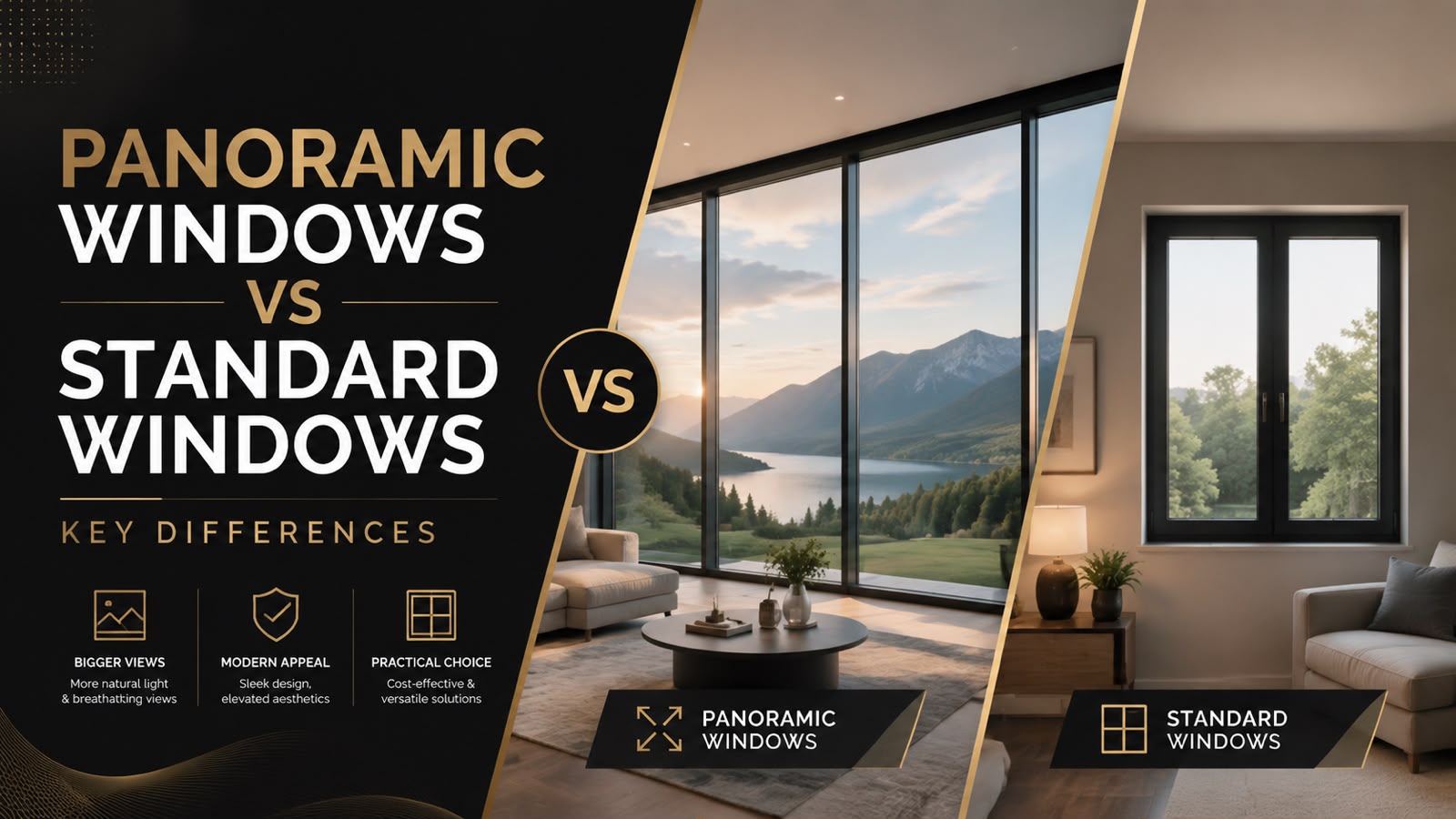
Panoramic windows are large-format glazing units built with aluminum frames and minimal sightlines, the narrow visible frame edge between glass and wall. They create wide, uninterrupted views by maximizing glass area and reducing the frame material that breaks a sightline. Standard windows are smaller units with more frame, a lower glass-to-frame ratio, and a lower price point. The two categories serve different design goals: one prioritizes the view, the other prioritizes simplicity and cost.
Panoramic systems rely on structural aluminum profiles because glass this large needs a frame strong enough to hold weight without sagging. Vision Art Aluminium, a New Jersey manufacturer-installer, builds panoramic windows on European thermal-break systems from suppliers such as Schüco, Reynaers, and REHAU. A *thermal break* is an insulating barrier inside the frame that stops heat from crossing the metal. Standard windows can use the same materials but in smaller sections, so the engineering demands are lower.
How do panoramic and standard windows differ in glass area?
Glass area is the clearest difference between the two window types. Panoramic units push the glass-to-frame ratio as high as the structure allows, so more of the opening is transparent and less is aluminum. Standard windows carry a thicker frame proportion, which reduces the visible glass and the amount of daylight that enters a room.
The visual result follows the ratio directly. A panoramic window in a living room can read almost like a glass wall, while a standard window of the same wall opening shows clear frame borders on every side. Vision Art Aluminium produces both formats and also builds related large-format systems, including the S50 sliding door, rated to 26 ft width and 129 inch height, with panels up to 800 lbs each. That sliding system shows how far aluminum framing can stretch a single opening when the profiles are engineered for the load.
More glass also changes how a room uses daylight. A panoramic unit pulls light deeper into a space and frames the outside as part of the interior, which is why designers place these windows on the wall with the best view. A standard window lights a room in a narrower band and keeps a clear separation between inside and outside. The glass-to-frame ratio is the single number that predicts which of these two effects a window will deliver.
Which type performs better on thermal efficiency?
Thermal performance depends on the frame system and the glass package, not on window size alone. Both panoramic and standard windows from a quality maker use a thermal break and insulated glass, so a well-built panoramic unit does not automatically lose more heat than a standard one. The larger glass area does mean more surface for heat transfer, which makes the glass specification more important in panoramic formats.
Vision Art Aluminium builds both types on European thermal-break systems, using double-glazed and Low-E (low-emissivity) glass. *Low-E* is a microscopic coating that reflects heat while letting light pass. The company’s sunroom line uses double-glazed tempered Low-E glass with a waterproof seal, and the same glass logic applies to panoramic windows. Standard windows reach comparable efficiency with a smaller glass field, so they can hit an energy target with less premium glazing.
Comparison table: panoramic vs standard windows
The table below compares the two window types across the factors that drive a real decision. Values describe the general category, not a single product line.
| Factor | Panoramic windows | Standard windows | Why it matters |
| Glass area | Large, high glass-to-frame ratio | Smaller, more frame | Sets how open the view feels |
| Frame / sightline | Minimal, slim aluminum | Wider, more visible | Thin sightlines read as a glass wall |
| Thermal performance | Strong with Low-E and thermal break | Strong, easier to reach | Bigger glass needs better glazing |
| Structural needs | Higher, heavier glass load | Lower, standard framing | Large glass requires engineered profiles |
| Cost | Higher per opening | Lower per opening | More glass and engineering add cost |
| Best use case | Feature rooms, scenic views | General rooms, budgets | Match the window to the room’s goal |
What structural requirements do panoramic windows add?
Structural demand is where panoramic windows separate most sharply from standard units. Large glass is heavy, so the aluminum frame and the surrounding wall must carry more load without flex. This is why panoramic systems use engineered profiles and why some openings need extra support built into the wall during construction or renovation.
Panoramic installation therefore benefits from a manufacturer-installer that handles design, permits, and fitting as one process. Vision Art Aluminium follows a seven-step path: consultation, design concept, site inspection, drawings and permits, manufacturing, and expert installation by factory-trained crews. Standard windows rarely need this level of structural planning, since their smaller glass units fit conventional framing. The heavier the glass, the more the install depends on correct measurement and support.
Vision Art Aluminium runs a panoramic project through a defined sequence, which keeps the structural checks in order:
- Initial consultation and design concept
- Site inspection to assess the wall and opening
- Drawings and permits for the local municipality
- Manufacturing of the aluminum frame and glass
- Expert installation by factory-trained crews
Wall preparation is the hidden part of a panoramic project. Because the opening is wider and the glass is heavier, the header above the window and the supports on each side may need reinforcement to spread the load. A site inspection catches this before manufacturing, so the frame arrives sized to an opening the wall can actually hold. Standard windows skip most of this step, which is one reason they install faster and cost less to fit.
Which window type costs more, and why?
Cost is higher for panoramic windows because more of the price sits in glass and engineering. A larger unit needs more glass, stronger aluminum profiles, and more careful installation, and each factor adds to the total. Standard windows cost less per opening because they use smaller glass fields and conventional framing that installs faster.
The cost gap reflects value delivered, not just size. Panoramic windows convert a wall into a view and change how a room feels, which fits feature spaces such as living rooms, sunrooms, and rooms facing water or landscape. Vision Art Aluminium serves New Jersey and New York as a local manufacturer-installer based in Montclair, and was featured on Fox8 News. Standard windows remain the practical choice for bedrooms, hallways, and openings where budget outranks the view.
Panoramic or standard: which fits your project?
Panoramic windows win where the view is the point. They deliver the widest glass area, the thinnest sightlines, and the strongest visual impact, and they suit living spaces, sunrooms, and scenic elevations. The trade-off is a higher cost per opening and a real structural requirement that a standard window does not carry.
Standard windows win on budget and simplicity. They cost less, install into conventional framing, and reach a solid energy target with less premium glass. Both types can share the same European thermal-break engineering when built by one maker, so the core quality need not differ. The decision comes down to three points: how much view the room deserves, how the wall can carry the glass, and where the budget lands. A single manufacturer-installer that measures, permits, and fits both formats keeps the result consistent across a whole home.
This content is for general informational purposes only. Product specifications, structural requirements, and pricing vary by project; confirm current details and suitability with a qualified professional before ordering or installing windows.
Frequently Asked Questions
What are panoramic windows?
Panoramic windows are large-format aluminum-framed glazing units with minimal sightlines that create wide, uninterrupted views. They maximize the glass-to-frame ratio, so more of the opening is transparent than in a standard window. The aluminum frame is engineered to carry the heavier glass, which makes these units a structural as well as a visual upgrade.
What is the main difference between panoramic and standard windows?
The main difference is glass area and frame. Panoramic windows use a high glass-to-frame ratio with slim sightlines, while standard windows carry more frame and less glass. This affects the view, the daylight, the structural load, and the cost. Panoramic units feel like a glass wall; standard units show clear frame borders on every side.
Are panoramic windows less energy efficient than standard windows?
Not necessarily. A well-built panoramic window uses the same thermal break and Low-E insulated glass as a quality standard window, so it can match the energy target. The larger glass area means more surface for heat transfer, so the glass specification matters more. Vision Art Aluminium builds both types on European thermal-break systems.
Do panoramic windows need special structural support?
Yes, in many cases. Large glass is heavy, so panoramic units use engineered aluminum profiles, and some openings need extra wall support added during construction or renovation. Standard windows fit conventional framing and rarely need this planning. A manufacturer-installer that handles design, permits, and fitting reduces the risk of a structural mistake.
When should you choose standard windows instead?
Choose standard windows when budget and simplicity outrank the view. They cost less per opening, install into conventional framing, and reach a solid energy target with less premium glazing. Standard units suit bedrooms, hallways, bathrooms, and any opening where the outside view is not the room’s main feature or where wall structure limits glass size.