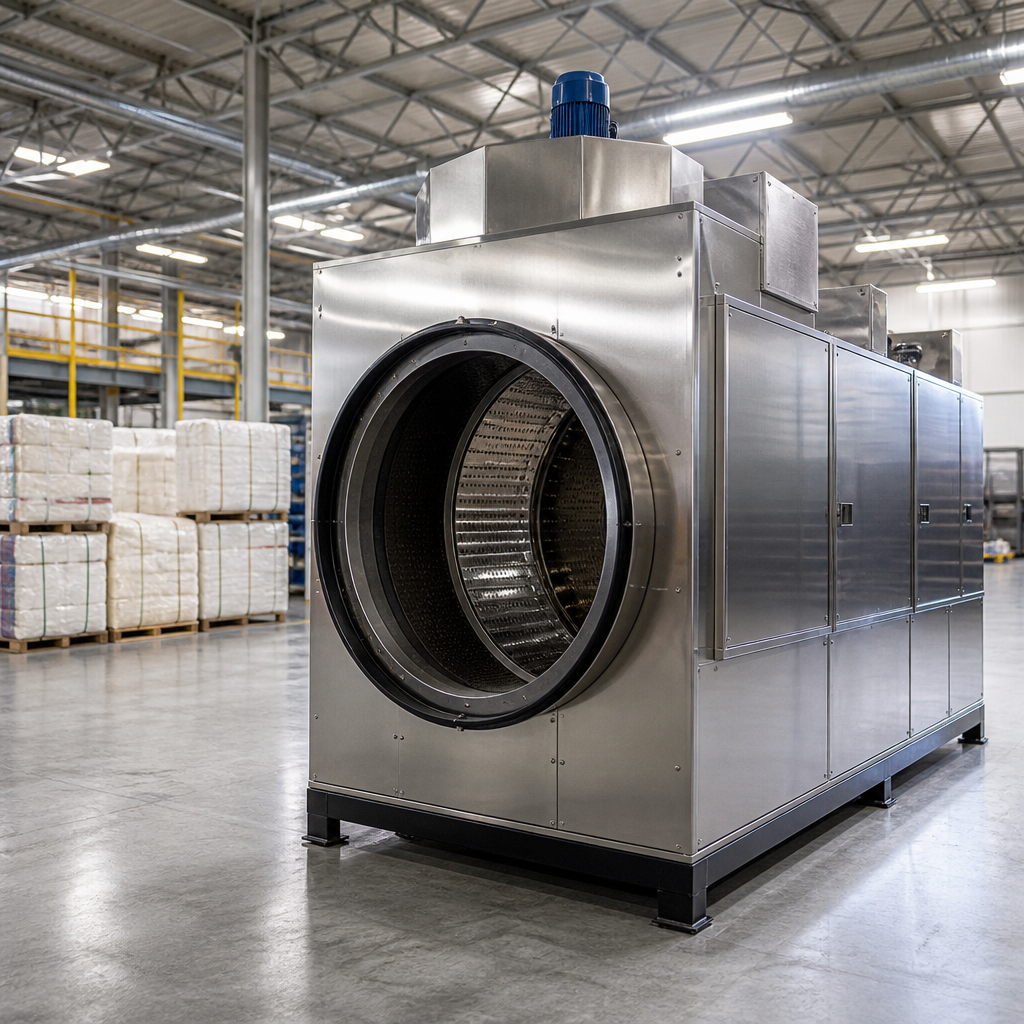
Industrial drying equipment represents one of the most significant capital expenditures a processing facility can make. Whether you operate in food production, chemical manufacturing, pharmaceuticals, or mineral processing, the efficiency and reliability of your drying systems directly impact your bottom line. For many operations, purchasing brand-new equipment is not always the most financially prudent path forward. The secondary equipment market has matured considerably over the past two decades, offering high-quality, thoroughly inspected machinery at a fraction of original cost. Understanding how to evaluate, source, and integrate pre-owned drying equipment is a skill that separates cost-conscious operations from those perpetually over budget.
The Growing Demand for Pre-Owned Process Equipment
The global industrial equipment resale market has expanded rapidly, driven by plant closures, capacity restructuring, and the increasing sustainability focus across manufacturing sectors. Facilities that once automatically purchased new machinery are now routinely evaluating refurbished and used alternatives. This shift is not merely about cutting costs — it reflects a broader recognition that well-maintained industrial equipment can deliver decades of reliable service beyond its initial installation. Rotary dryers, spray dryers, fluid bed dryers, and drum dryers are among the most commonly traded pieces of process equipment, and for good reason: their robust construction means they retain functional value long after original depreciation schedules have run their course.
Cost Advantages Without Compromising Performance
One of the most compelling arguments for sourcing pre-owned drying equipment is the dramatic reduction in capital outlay. A new industrial rotary dryer from a major OEM can cost hundreds of thousands of dollars, with lead times stretching six months to over a year. A comparable used unit, properly inspected and refurbished, may be available immediately at 30 to 60 percent of that cost. For smaller operations or those scaling up incrementally, this difference can be transformative. The freed capital can be redirected toward process optimization, workforce development, or complementary equipment upgrades — all of which contribute to a more competitive operation overall.
What to Look for When Evaluating Used Drying Equipment
Not all pre-owned industrial dryers are created equal. The condition of internal components, the integrity of seals and insulation, the state of drive systems, and the history of maintenance all play critical roles in determining whether a used unit represents genuine value or a costly liability. Before committing to any purchase, buyers should request full documentation of the equipment’s operational history, including any major repairs, component replacements, and the conditions under which it was last operated. Thermal efficiency ratings, material compatibility, and throughput capacity should all be verified against your specific process requirements.
Inspection Protocols and Due Diligence
A thorough physical inspection is non-negotiable. This should include a detailed examination of the dryer shell or chamber for corrosion, wear, or structural fatigue. Drive components — motors, gearboxes, and chains — should be tested under load where possible. Burner assemblies and heat exchange systems require particular scrutiny, as these are often the first components to show signs of degradation. Engaging an independent process engineer or equipment specialist to conduct or oversee the inspection adds an additional layer of assurance, particularly for high-value acquisitions. Reputable sellers will welcome this level of scrutiny and provide access to all relevant technical documentation.
Sourcing Reliable Used Industrial Dryers
Choosing a reliable source is just as important as evaluating the equipment itself. The used industrial equipment market includes a wide spectrum of sellers, from individual plant operators liquidating assets to specialized dealers who refurbish and warrant their inventory. Working with established dealers who have deep expertise in process equipment provides significant advantages: they typically offer equipment that has been inspected, cleaned, and tested, along with technical support during integration. International Process Plants is one such specialist, offering a broad inventory of process equipment across multiple industries. If you are in the market for a used industrial dryer, their inventory spans rotary, spray, fluid bed, and other dryer types, supported by detailed specifications and experienced technical staff who can help match equipment to your process requirements.
Integration Considerations for Purchased Equipment
Acquiring the right dryer is only the first step. Successful integration into an existing process line requires careful planning around utility connections, control system compatibility, and safety compliance. Older equipment may need to be retrofitted with modern instrumentation or updated to meet current regulatory standards. Budgeting for these integration costs upfront prevents unpleasant surprises during commissioning. In many cases, the total installed cost of a refurbished dryer — including transportation, installation, and any necessary upgrades — still comes in well below the cost of a new equivalent, making the investment case compelling even after accounting for these additional expenses.
Sustainability and the Circular Economy in Industrial Equipment
Beyond the financial rationale, there is a growing environmental argument for choosing used industrial equipment. Manufacturing new heavy process machinery is an energy-intensive process with a significant carbon footprint. Extending the operational life of existing equipment through resale and refurbishment reduces the demand for new production and keeps functional assets out of the waste stream. For companies with sustainability commitments or ESG reporting obligations, sourcing pre-owned equipment can contribute meaningfully to environmental performance metrics. This dimension of the used equipment market is increasingly recognized by procurement teams and sustainability officers alike.
Fluid Management and Ancillary Systems
Industrial dryers rarely operate in isolation. They are typically part of broader process systems that include conveyors, dust collectors, heat recovery units, and fluid management equipment. When evaluating a dryer purchase, it is worth considering the condition and compatibility of these ancillary systems. Pump systems, in particular, play a critical supporting role in many drying operations, managing condensate, process fluids, and cooling water. Just as solar-powered solutions are transforming fluid management in marine environments — as explored in this guide on keeping vessels dry with efficient pump technology — innovative fluid handling approaches are also reshaping how industrial facilities manage process water and condensate in drying operations.
Engineering Innovation Driving Equipment Longevity
The longevity of industrial process equipment is not accidental — it is the result of deliberate engineering choices made during original design and manufacturing. Advances in materials science, precision machining, and thermal engineering have produced equipment that, when properly maintained, can remain productive for thirty years or more. This engineering durability is precisely what makes the used equipment market viable. Innovations in pump and fluid system design, for example, have demonstrated that thoughtful engineering can dramatically extend service life and reduce maintenance requirements. A revised pump design by Sulzer that saved a nuclear power plant illustrates how engineering refinement can transform the reliability profile of critical industrial equipment — a principle equally applicable to drying systems.
Making the Right Decision for Your Operation
The decision to purchase used industrial drying equipment should be approached with the same rigor applied to any major capital investment. Define your process requirements precisely, establish clear performance benchmarks, conduct thorough due diligence on both the equipment and the seller, and plan comprehensively for integration and commissioning. When these steps are followed, the used equipment market offers exceptional value — enabling facilities to access high-quality, proven technology at costs that support rather than strain operational budgets.
Conclusion
The case for sourcing pre-owned industrial drying equipment has never been stronger. A combination of financial advantages, improved market transparency, growing sustainability awareness, and the inherent durability of well-engineered process machinery makes the used equipment market an increasingly attractive option for operations of all sizes. By partnering with reputable specialists, conducting thorough inspections, and planning carefully for integration, facilities can acquire reliable drying capacity that serves their production goals for years to come — without the capital burden of new equipment procurement.