Cryptocurrency payments are no longer something unusual for online businesses. Over the past few years, more companies have started accepting digital assets because customers want faster transactions and fewer banking restrictions. For international businesses in particular, crypto can simplify payments in ways traditional systems often cannot.
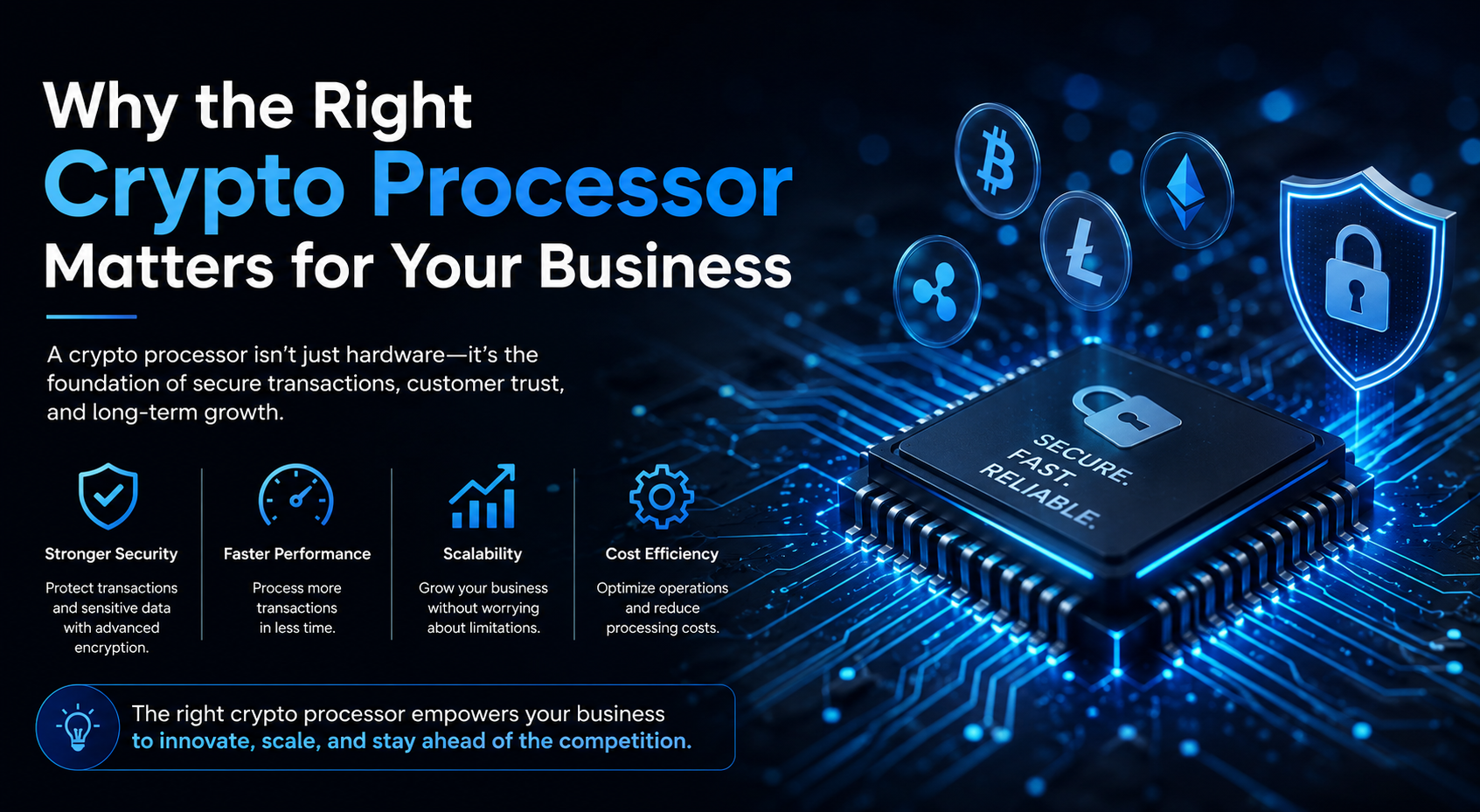
But accepting crypto is only part of the picture. The processor behind those payments matters just as much. A reliable crypto processor affects transaction speed, customer trust, security, and even how smoothly a business grows over time.
Many companies focus only on fees when choosing a provider, but that approach usually creates problems later. A processor is not just a payment tool. It becomes part of a business’s entire financial infrastructure.
Why Businesses Are Looking Beyond Traditional Payments
Traditional payment systems still dominate online commerce, but they also create plenty of frustrations.
International transfers can take several days. Banks may block transactions without warning. Card processors charge fees that can be expensive for businesses handling a large number of payments each month.
Crypto payments address some of these issues because blockchain transactions operate differently. Payments move directly between parties without relying on multiple intermediaries.
For businesses working with international clients, this can make a noticeable difference. Customers often prefer payment methods that are faster and more flexible, especially in regions where banking systems are less convenient.
That does not mean cryptocurrency completely replaces traditional finance. Most companies simply add crypto as an additional payment option to make transactions easier for certain customers.
A Good Processor Does More Than Accept Payments
A lot of people think a crypto processor only handles transactions, but in reality, its role is much bigger.
The processor manages payment requests, confirms blockchain transfers, tracks transactions, and sometimes automatically converts cryptocurrency into fiat. Without this infrastructure, businesses would need to handle everything manually.
Modern processors are designed to simplify the entire process. Customers choose crypto during checkout, send the payment, and receive confirmation within minutes. For the business owner, the process should feel almost automatic.
The quality of this system directly affects the customer experience. If payments are slow or confusing, buyers may leave before completing their purchase.
That is why businesses should pay attention not only to price, but also to reliability and usability.
Security Is One of the Biggest Factors
Every online business worries about payment security, and crypto transactions are no exception.
A weak processor can create serious risks, including failed payments, wallet vulnerabilities, or poor protection against fraud attempts. Security problems erode trust quickly, especially when customers are handling financial transactions.
Reliable processors usually offer features such as encrypted payment systems, two-factor authentication, transaction monitoring, and secure wallet storage.
Some businesses also work with additional financial services when managing larger crypto operations. For example, companies processing high-volume transfers may use an otc crypto trading desk to handle liquidity more efficiently and avoid unnecessary market fluctuations.
For most businesses, however, the main goal is simpler: secure transactions that work consistently without creating problems for customers.
Customer Experience Still Matters Most
Many companies become too focused on technical details and forget about the customer side of payments.
Most buyers do not care about blockchain mechanics. They only want the process to feel quick and simple.
If checkout becomes confusing, customers often abandon the purchase entirely.
A good processor makes crypto payments feel familiar even for people using digital assets for the first time. Clear instructions, fast confirmations, and smooth integration with websites all improve the experience.
This matters even more for international audiences. Different users may prefer different wallets, networks, or cryptocurrencies. Businesses that support multiple payment options usually create fewer barriers during checkout.
In online commerce, convenience matters almost as much as price.
Scalability Becomes Important Over Time
While a processor might work well for a small business, it may not be sufficient if transactions begin to increase.
Many companies don’t discover this until much later.
As businesses grow, they require a payment system that is able to manage increased traffic without experiencing delays or system failures. When the going gets tough, some weaker systems “slow down” or begin to fail.
This can cause transactions to fail and sales to be lost.
Scalable processors are designed for business expansion. Typically, they have more advanced reporting features, faster transaction processing and are available in multiple currencies and have better infrastructure.
Selecting the appropriate system at an early stage will help avoid many troubles during operation.
Regulation and Compliance Cannot Be Ignored
International crypto regulations are constantly evolving and companies must remain compliant.
A professional processor should adhere to financial rules, security measures, and anti-money laundering rules as appropriate.
Failing to address these issues could lead to significant issues in the future, particularly in an international business environment.
Compliance is often much easier with reliable providers as they have systems in place that comply with current legal requirements.
This helps businesses minimize risks and streamline their operations.
Choosing the Right Processor Is a Long-Term Decision
Various companies rush into cryptocurrency payments to go with the tide of the market. However, processor selection is not a “one and done” choice.
A payment system is integrated into the business. If the provider fails to be reliable, a later change can lead to technical problems and a loss of customers’ payments.
That’s why it’s crucial for businesses to research processors before selecting one.
The cost of the transaction is not the only thing that is important in the long run: Transaction speed, security, customer support, scalability and ease of integration are also important.
It is also a good idea to test the platform before going through full integration. Once real users begin to use the system, even minor problems are readily apparent.
Final Thoughts
As these solutions address the practical needs of businesses facing challenges in international payments, payment processing delays, and payment flexibility, they are gaining traction as viable payment methods.
However, the processor of those transactions is as important as the payment itself.
A dependable system will help gain the trust of customers, streamline operations, and facilitate long term growth. A substandard one can cause delays, technical and other risks.
Selecting the appropriate processor isn’t only a technical choice for businesses that wish to engage with crypto seriously. It is a component of the development of a stable and efficient payment system for the future.