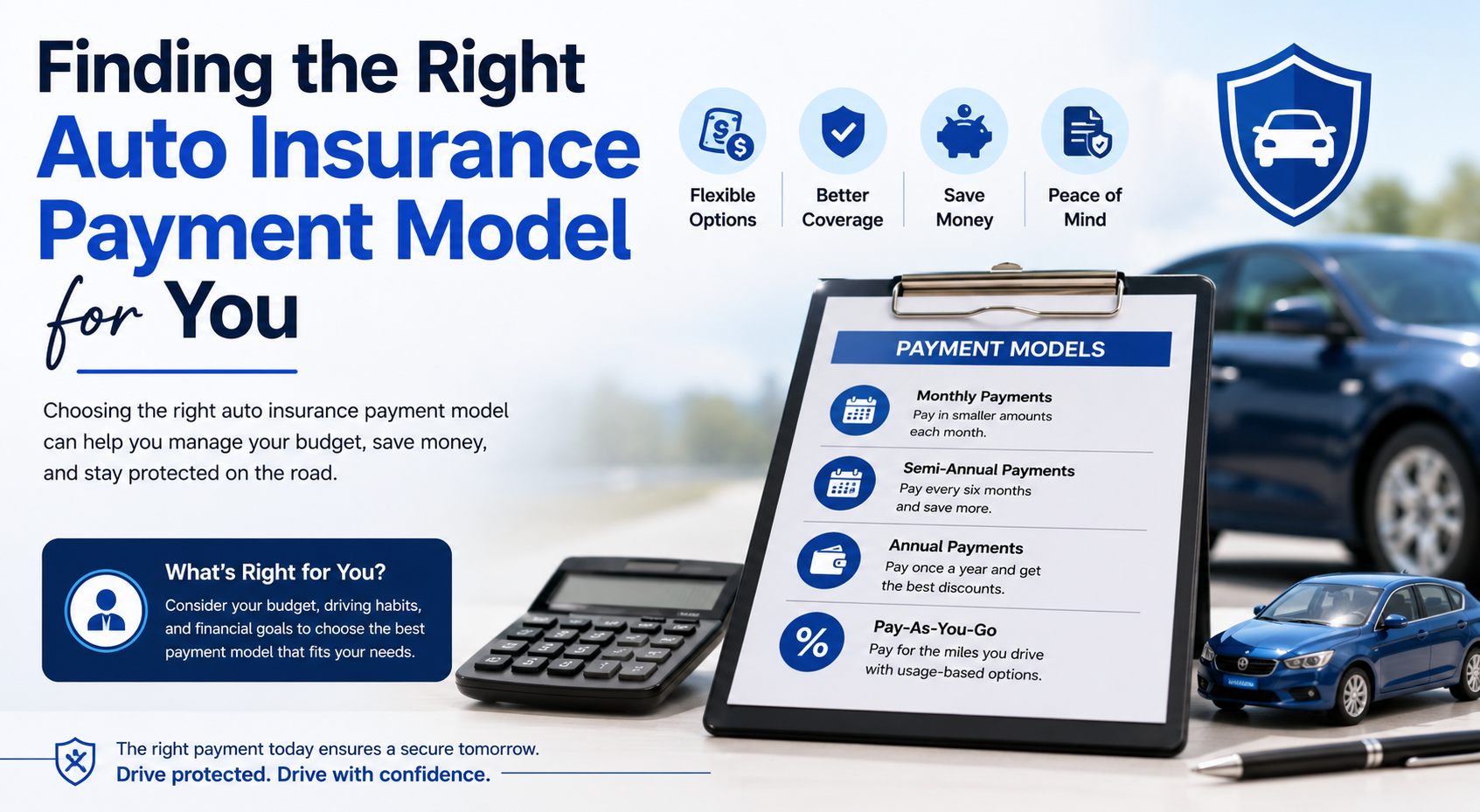
Auto insurance is one of those expenses most drivers know they need, but few people enjoy paying for. The challenge is that the “best” policy is not always the one with the lowest monthly price. How you pay for coverage can matter almost as much as the coverage itself.
Some drivers want the smallest payment possible today. Others prefer predictable monthly bills. Some would rather pay based on how much they actually drive. For many households, the right auto insurance payment option depends on cash flow, driving habits, savings, risk tolerance, and how quickly coverage is needed.
The good news is that auto insurance payment plans are not one-size-fits-all. Once you understand the main options, it becomes much easier to choose a setup that fits your budget without leaving you underprotected.
Auto Insurance Payment Options Compared
Before choosing a policy, it helps to compare the most common payment models side by side. The cheapest first payment is not always the cheapest policy overall, and the plan with the lowest total premium may not be realistic if it requires too much money upfront.
| Payment Model | Best For | Main Advantage | What to Watch For |
| Monthly payments | Drivers who want predictable bills | Easier budgeting month to month | Possible installment fees |
| Paying in full | Drivers with savings available | May reduce the total policy cost | Requires a larger upfront payment |
| Low upfront payment plans | Drivers who need coverage quickly | Smaller initial payment to start coverage | Remaining payments may be higher |
| Pay-as-you-go insurance | Low-mileage drivers | Can better match cost to usage | Costs may rise if driving increases |
| Telematics programs | Safe and consistent drivers | Possible discounts for good driving habits | Requires sharing driving data |
Why the Payment Model Matters
When people compare auto insurance, they usually focus on the total premium. That makes sense, but it does not tell the whole story. Two policies can cost about the same over six months but feel very different financially.
One policy may require a large upfront payment. Another may let you start coverage with a smaller first installment. One plan might reward low-mileage driving, while another charges a flat monthly rate no matter how often you use your car.
That difference can be important if your income changes from month to month, you recently moved, you are between jobs, or you just had a major expense. A payment structure that works well for one driver may feel stressful for another.
Quick tip: Do not compare only the first payment. Compare the total policy cost, monthly installments, fees, cancellation terms, deductibles, and coverage limits before deciding.
Monthly Auto Insurance Payments: Simple and Predictable
The most common auto insurance payment model is the standard monthly installment plan. Instead of paying the full policy premium upfront, you divide the cost into monthly payments.
This is popular because it is easy to budget around. You know when the payment is due, you know approximately how much it will be, and you can plan for it alongside regular expenses such as rent, utilities, phone service, and groceries.
Monthly plans are especially useful for drivers who want predictability. If you drive regularly, commute to work, take children to school, or use your car every day, a traditional monthly plan may be the most straightforward choice.
The main downside is that monthly payment plans can sometimes include installment fees. You may also pay more overall than someone who pays the full policy term upfront. Still, for many drivers, the flexibility is worth the extra cost.
Paying in Full: Best for Drivers Focused on Long-Term Savings
If you have enough cash available, paying your auto insurance premium in full can be a smart move. Many insurers offer savings when you pay the entire six-month or annual premium at once.
This option can reduce the total cost of your policy and remove the stress of monthly due dates. Once the premium is paid, you do not have to think about another insurance bill until renewal.
The challenge is the upfront cost. Paying in full may not be realistic if your budget is tight or if you need to keep cash available for emergencies. A lower total premium is helpful, but not if it leaves you short on money for rent, groceries, repairs, medical expenses, or other essential bills.
This model usually works best for drivers with stable income, emergency savings, and enough cash flow to handle a larger payment without creating financial pressure.
Low Upfront Payment Auto Insurance Plans
Some drivers care less about the total six-month cost at first and more about getting insured today. That is where low upfront payment options come in.
These plans are designed to reduce the amount due when you start the policy. Instead of paying a large deposit or a big first installment, you may only need to pay the first month or a smaller initial amount to activate coverage.
This can be helpful if you need proof of insurance quickly, are buying a car, reinstating coverage, or trying to avoid a lapse. However, it is important to read the details carefully. A lower first payment does not always mean cheaper insurance overall. In some cases, the remaining monthly payments are higher.
Drivers in certain states often look for flexible startup options, especially where insurance costs are already high. For example, people researching car insurance with no down payment in Texas are usually trying to understand how low-initial-payment policies work, what they actually cover, and whether the lower upfront cost is worth the trade-off over time.
The key is to look beyond the phrase “no down payment.” In many cases, you still need to make a first payment to activate coverage. The real question is whether the payment structure fits your current budget and whether the total cost still makes sense over the full policy term.
Pay-As-You-Go Auto Insurance
Pay-as-you-go auto insurance can be a useful option for drivers who do not spend much time behind the wheel. Instead of pricing your policy only around general risk factors, this model may factor in how much you actually drive.
That can make sense for remote workers, retirees, students, city residents who mostly use public transportation, or households with a second vehicle that rarely leaves the driveway.
With this kind of plan, your rate may be based partly on mileage. Some programs use a device, mobile app, or odometer reporting to track usage. If you drive less, you may pay less.
This model is not perfect for everyone. If your mileage changes often or you suddenly start commuting farther, your costs may rise. But for low-mileage drivers, pay-as-you-go insurance can be worth comparing against a traditional monthly policy.
Usage-Based and Telematics Insurance Programs
Usage-based insurance is similar to pay-as-you-go coverage, but it may look at more than mileage. Many insurers now offer telematics programs that monitor driving behavior through a mobile app or plug-in device.
These programs may consider habits such as braking, acceleration, speed, cornering, phone use, and nighttime driving. Drivers with safe and consistent habits may qualify for discounts.
This option works best if you are comfortable sharing driving data and you already have safe driving habits. If you brake hard often, speed frequently, or drive late at night, the discount may be smaller than expected. In some programs, risky driving could even affect your rate, depending on the insurer and state rules.
Before enrolling: Ask whether the telematics program can only lower your rate or whether it can also increase your premium. The answer can vary by company, state, and program type.
How to Choose the Best Auto Insurance Payment Plan
The best auto insurance payment model depends on your real life, not just the advertised price. A policy that looks affordable in an ad may not be the best deal once you consider total cost, fees, coverage limits, and renewal terms.
Before choosing a payment plan, ask yourself a few practical questions:
- Can I afford a larger upfront payment without hurting my emergency savings?
- Would monthly payments make my budget easier to manage?
- Am I choosing a low first payment because I need coverage now?
- How much do I actually drive in a normal month?
- Am I comfortable using an app or device that tracks driving behavior?
- Will this policy still be affordable after the first month?
- Are the liability limits and deductibles strong enough for my situation?
If your income is steady and you want simple budgeting, monthly installments may be the easiest fit. If you have savings and want to reduce the total policy cost, paying in full could be better. If money is tight right now, a low upfront payment plan may help you get covered sooner. If you barely drive, pay-as-you-go or mileage-based insurance may offer savings.
Do Not Sacrifice Coverage Just to Lower the Payment
A cheap payment can feel good today, but weak coverage can become expensive after an accident. Before choosing the lowest-priced plan, review your liability limits, deductibles, collision coverage, comprehensive coverage, uninsured motorist protection, and any state-required coverage.
For example, raising your deductible may lower your premium, but it also means you would pay more out of pocket after a covered claim. Choosing minimum liability limits may reduce your payment, but it could leave you financially exposed if you cause a serious accident.
The goal is not just to find the smallest bill. The goal is to find a payment structure that keeps coverage active while still giving you reasonable protection.
Final Thoughts
Finding the right auto insurance payment model is really about balance. You want coverage that protects you, payments you can keep up with, and a structure that matches how you use your car.
Do not choose a plan only because the first payment looks low. Compare the total policy cost, monthly payments, installment fees, cancellation rules, renewal terms, deductibles, and coverage limits. A good deal should work today and still make sense a few months from now.
The right model is the one that keeps you legally insured, financially comfortable, and confident every time you get behind the wheel.