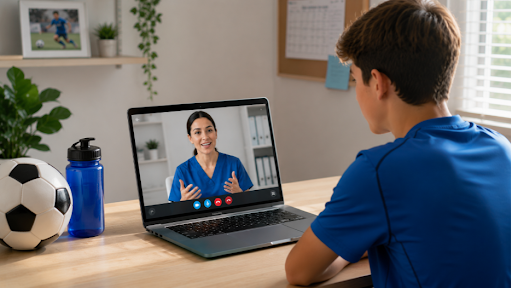
The school sports seasons can come sooner than later. One week, your child is discussing tryouts, and the next, you’re looking for medical forms, making appointments, and rushing to get things done in time. Meanwhile, many parents find it difficult to schedule physical exams due to their busy lifestyles. Waiting for a long time, problems with clinic availability, and last-minute paperwork can easily make a simple requirement a stressful process.
For this reason, more families are seeking out online sports physicals, which make the procedure easier. But many parents are still asking themselves, “What can really be done online, what will need to be done in person, and will schools and athletic programs accept virtual evaluations?
This article explains how online sports physicals work, what they include, and what you should prepare before your child participates in sports.
1. Online Sports Physicals Can Simplify the Process
Online sports physicals have become a popular choice for many families, helping them save time and avoid unnecessary trips to the clinic. Parents can fill out medical history, symptom reviews, and initial consultations virtually instead of doing it in person. This results in a more organized and streamlined overall process.
This is particularly useful during sports registration seasons. You don’t have to wait until the last week before tryouts to start collecting medical information. Virtual appointments also often enable health care providers to review previous injuries, medications, allergies, and family medical history prior to the physical exam.
However, it is also vital to remember that a completely virtual sports physical is not always sufficient. Many schools, leagues, and state athletic associations still have an in-person exam before allowing a student-athlete to compete. Hence, online services are typically utilized as a part of a blended process instead of replacing actual assessments.
Despite this, digital intake systems can minimize paperwork delays and streamline the intake process for families.
2. More Than Participation Forms

Many parents view sports physicals as another school requirement. But there’s a much bigger purpose to the examination. It can help to identify health issues that may impact an athlete’s ability to participate safely in physical activity.
In the evaluation, health care providers usually assess the health of the heart, breathing, flexibility, joint stability, vision, and previous injuries. They may also discuss concussion history, asthma, or any pain that may be recurring and may get worse during training.
These conversations matter because sports place significant physical demands on the body. What may seem like a harmless exercise during daily life can become a serious problem during an intense activity or competition.
For instance, an untreated knee injury may lead to future problems with the joint itself. Likewise, if someone has trouble breathing while conditioning, it could be a sign of a respiratory issue that needs medical care.
In addition, sports physicals create an opportunity to discuss healthy training habits. Depending on the sport and medical history, the provider might suggest a hydration plan, injury prevention plan, stretching plan, or recovery plan.
Consequently, the assessment will aid in short-term participation and long-term athletic health.
3. Some Situations Still Require In-Person Evaluation
Even with the increase in virtual healthcare, some components of a sports physical must be done in person. This is especially relevant if the healthcare provider has to evaluate movement, strength, balance, or cardiovascular function.
For instance, a provider may need to:
- Auscultate the heart and lungs
- Check blood pressure
- Evaluate posture and joint mobility
- Examine previous injuries
- Assess muscle strength and coordination
Video appointments do not always allow for these steps to be done correctly. For this reason, a lot of health care systems integrate online consumption with an in-person evaluation.
Additionally, parents should always review school or athletic program needs prior to appointments. Some organizations have very specific requirements for who should administer the exam and which forms are to be completed. Waiting till the last minute can cause unwanted hassles in case further tests or follow-up appointments are necessary.
In addition, an athlete with chronic medical conditions may require additional assessment prior to clearance. Children with asthma, diabetes, cardiac issues, or prior concussions may need further medical evaluation to ensure safe participation.
Early care of these requirements helps to provide flexibility and less pre-season stress for families.
4. Preparing Early Helps Avoid Last-Minute Problems

One of the most effective ways to simplify sports clearance is to prepare several weeks before practices begin. Many appointment delays happen because families wait until registration deadlines are close.
To make the process smoother, gather important information ahead of time. This may include:
- Vaccination records
- Current medications
- Previous injury history
- Allergy information
- School athletic forms
- Insurance details
It also helps to discuss symptoms openly with your child before the appointment. Young athletes sometimes ignore pain, dizziness, breathing difficulties, or past injuries because they worry about missing games or tryouts. However, accurate medical information allows providers to make safer recommendations.
In addition, parents should encourage healthy habits leading up to the evaluation. Proper hydration, consistent sleep, balanced nutrition, and injury recovery all contribute to athletic readiness.
If your child recently experienced illness or physical discomfort, mention it during the appointment even if symptoms seem minor. Early attention to potential issues may help prevent more serious complications during the season.
Conclusion
Sports seasons move quickly, and preparation often becomes stressful when medical requirements are left until the last minute. Fortunately, online healthcare tools are making the process more manageable for busy families. While some portions of sports physicals may still require in-person evaluation, virtual systems can simplify scheduling, paperwork, and medical history review.
At the same time, the purpose of a sports physical goes far beyond meeting school requirements. These evaluations help identify health concerns, support injury prevention, and protect athletes during training and competition.
By preparing early and understanding how the process works, you can help your child enter the season safely, confidently, and fully prepared for participation.