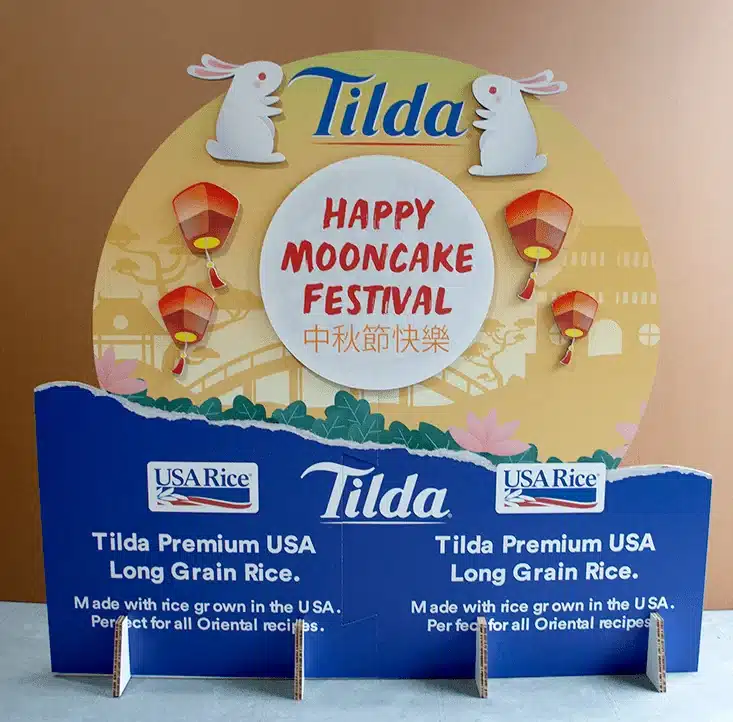
There is a moment every retailer wants to create: the shopper who was heading somewhere else stops, looks, picks something up. That moment does not happen by accident. It happens because something physical interrupted their path — a display they didn’t expect to see, a figure at the end of an aisle, a branded unit positioned exactly where foot traffic peaks. Knowing which format creates that moment, and how to brief and specify it correctly, is what separates a campaign that shifts product from one that just occupies floor space.
~70–76% of all purchase decisions are made in-store
Not before the shopper arrived. Not online. Right there, in the aisle — which is exactly why physical displays are still one of the most measurable marketing investments a brand can make.
~30% average sales uplift from well-executed off-shelf displays
Multiple retail studies consistently report double-digit percentage uplifts for new product launches supported by prominent floor-standing displays. (Source: industry research cited by multiple retail display market reports, 2024–2025.)
6 in 10 retail purchases involve an impulse element
In-store shoppers are roughly three times more likely to add impulse items to their basket compared to online shoppers — the physical environment simply does things digital cannot replicate.
What Makes a Life Size Cardboard Cutout Custom Worth Ordering?
The name sounds novelty. The application is anything but. A life size cardboard cutout custom produced to your specification — a branded mascot, a product ambassador, an oversized replica of your packaging — is one of the fastest ways to create a visual focal point in an environment where everything is competing for the same pair of eyes.
The psychology behind it is straightforward. The human brain is wired to notice figures that resemble people. A full-height figure placed at a store entrance, an aisle end, or a trade show stand interrupts the visual noise of standard shelving and draws the eye before the brain has consciously processed what it’s looking at. By the time the shopper registers the display, they are already looking at your brand.
This is why life size cutouts are used so widely — not just in retail, but in events, exhibitions, sport, hospitality, and education. The format travels well, installs without tools, and photographs brilliantly, which is its own secondary value in an era when shoppers routinely share interesting in-store encounters on social media.
Foamex vs cardboard: why the material distinction matters
Here’s something worth knowing before you order: what most people call a ‘cardboard cutout’ is not actually printed on cardboard if it’s made to a professional specification. High-quality standees are produced on 5mm Foamex — a rigid PVC foam board that is significantly more durable, moisture-resistant, and wipe-clean than corrugated or flat cardboard. The difference becomes apparent the moment it’s used in a busy retail environment. A cardboard cutout warps, creases, and deteriorates under normal shop-floor conditions. A Foamex cutout does not.
For outdoor use, or for displays that need to last across multiple events or store visits, 10mm Foamex is the right specification — it offers the rigidity of plywood at a fraction of the weight, with the same high-definition UV print quality on the surface. The fold-out rear strut ships flat, assembles in minutes, and keeps the figure stable without additional support.
Free Standing Display Units: The Silent Salesperson That Never Calls in Sick
The free standing display unit is arguably the most versatile tool in the retail marketer’s physical arsenal. It doesn’t need a wall. It doesn’t need a shelf. It doesn’t need a member of staff standing next to it explaining the offer. It holds products, carries branding, and communicates the campaign message from the moment the shopper enters the aisle — or the store entrance, or the checkout zone, wherever the brief says to put it.
The free standing display unit market globally was valued at approximately US$19.8 billion in 2024, with consistent mid-single-digit annual growth driven by sustained demand from FMCG brands, pharmacy retailers, and convenience stores. That growth reflects something simple: brands that use floor-standing displays sell more product than brands that rely on standard shelf placement alone, and the data consistently confirms it.
FSDU Types and When to Use Each One
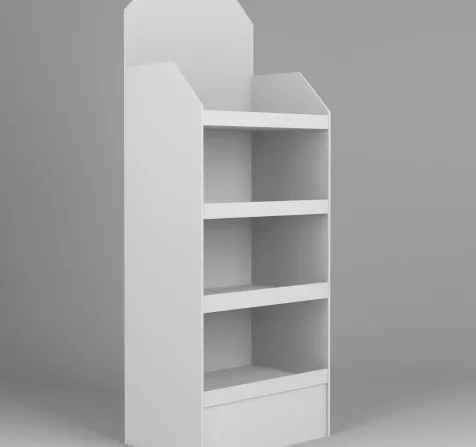
Not every product suits the same format. Here is a practical breakdown of the main FSDU configurations and the scenarios each handles best:
| FSDU Type | Best For | Typical Campaign |
|---|---|---|
| Shelved unit | Boxed, bottled, or bagged products needing organised presentation | New product launch, seasonal range, premium items |
| Dump bin | Small, irregular, or impulse items — snacks, toys, accessories | Clearance events, ‘grab and go’ promotions, low-price multibuy |
| Pallet display | High-volume, heavy, or fast-moving goods | Major seasonal campaigns, warehouse-club style promotions |
| Hybrid (shelf + header) | Mid-range products needing branding space above the product zone | Brand relaunch, NPD introductions with key messaging |
| Cutout standee alongside FSDU | High-visibility activation combining a figure with product display | Character-led brand campaigns, event tie-ins, sports sponsorship |
Placement Strategy: Where You Put It Matters as Much as What You Print
The most precisely printed, perfectly structured FSDU underperforms badly in the wrong location. Placement is not an afterthought — it is part of the campaign design.
End-of-aisle gondola ends are the prime real estate of the shop floor. Research from retail industry sources suggests that end-cap placement can increase a product’s visibility by up to 93% compared to standard mid-aisle shelf positioning. That single positional change — moving from the shelf to the gondola end — can justify the entire cost of the FSDU on its own.
Store entrances work well for new product introductions, where you want to reach every single customer who comes through the door before they have committed their basket to existing habits. Checkout areas suit smaller FSDUs and cutout standees that serve as the final nudge before payment — the moment when the ‘while I’m here’ decision happens.
Sustainability: What the Retail Sector Now Expects
Major UK grocery retailers have sustainability requirements written into their supplier agreements, and display unit specifications are increasingly part of that conversation. Most cardboard FSDUs are recyclable — corrugated board is one of the most successfully recycled materials in the UK — and suppliers who use water-based inks and FSC-certified board can provide the certification documentation retailers now routinely request.
Foamex FSDUs and standees are not recyclable in the conventional sense, which is a real consideration for brands whose retail partners have committed to specific sustainability targets. However, the longevity of Foamex — a unit that lasts across six or eight promotional cycles rather than one — means the material impact per campaign use can actually be lower than repeatedly producing fresh cardboard equivalents. That argument is increasingly accepted when the unit is reusable by design.
Making the Decision
If you are trying to move product in a physical retail environment, the floor is where it happens — not the shelf edge, not the website, not the social feed. The display formats that occupy that floor space, and how well they are designed and specified, directly determine whether a campaign generates a sales uplift worth talking about. Foamex Printing Company produces high-definition FSDUs and custom standee displays built for the realities of the shop floor, from brief through to delivery.
Disclaimer: Sales uplift statistics cited are drawn from published retail industry research and market reports. Individual campaign results will vary based on product category, store environment, placement, creative execution, and campaign duration. This article is for informational purposes only and does not constitute professional retail or marketing advice.
Author Bio: Nimesh Kerai
Nimesh Kerai is the Printing Expert at Foamex Printing Company, London. He has been in the printing industry for quite a few years, which reflects in the skill with which he executes each project. He has played a significant role in the company’s reputation as one of the highest-quality foamex printers in the vicinity. He often shares his far-reaching industry knowledge with curious readers through engaging blogs.